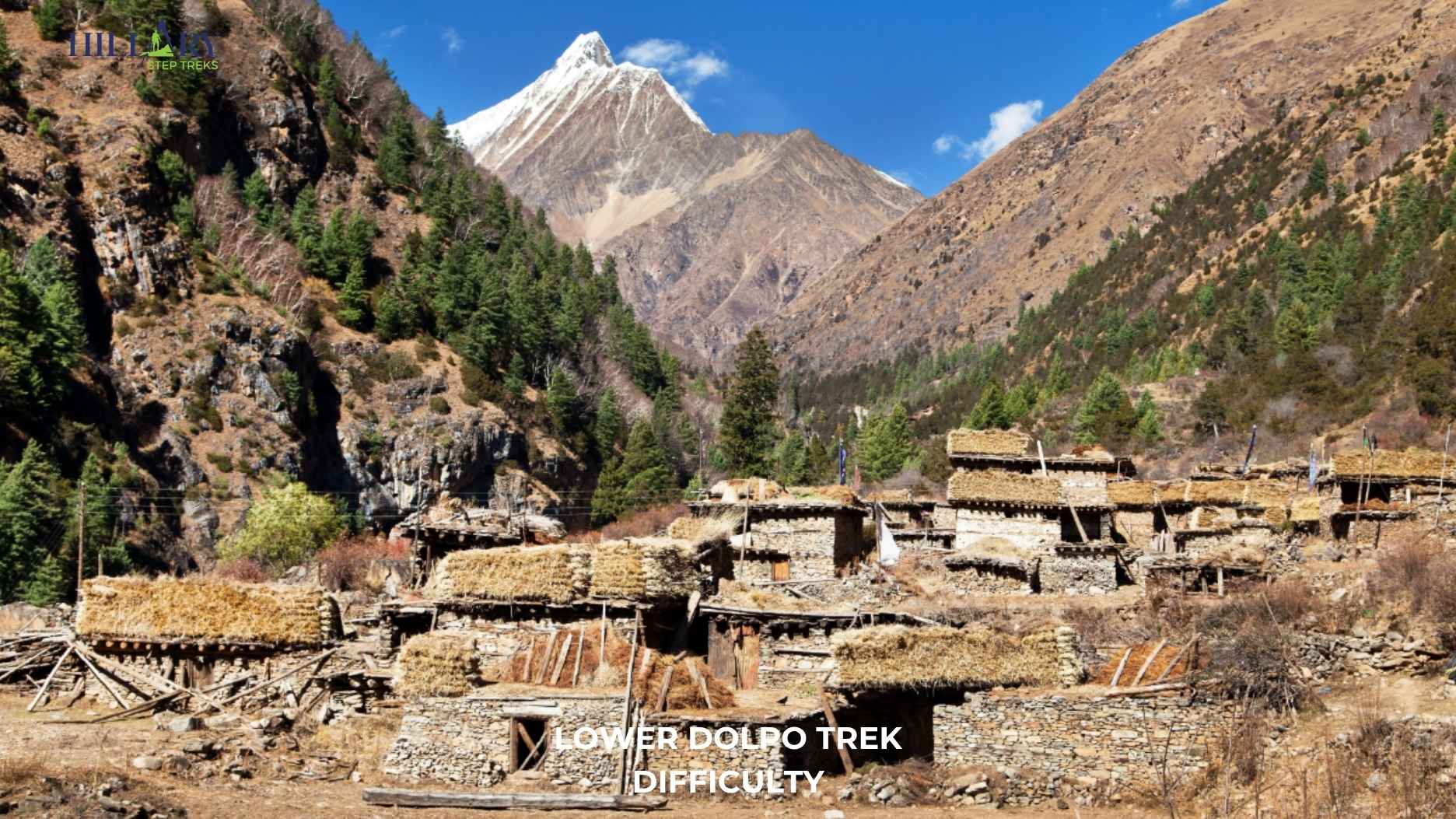
Our 15-day Lower Dolpo Trek is graded moderate to strenuous as the region is extremely remote, and you spend significant time at altitudes above 3,500m. On top of that, you have to cross two challenging passes: Numa La (5,190m) and Baga La (5,070m). This makes for an incredible journey for fit, prepared hikers, those who can handle the thin air, the isolation, and the very basic facilities along the way.
Where Exactly Is Lower Dolpo and Why Difficulty Feels Different Here
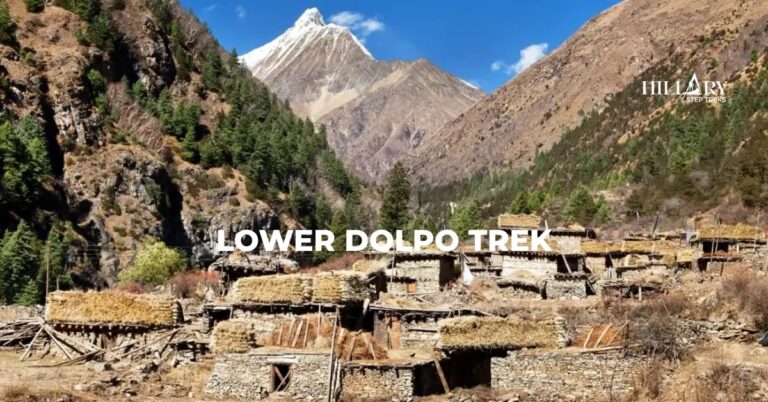
Lower Dolpo is in the Dolpa or Dolpo District of Karnali Province, near the Tibetan border. Most of this remote trekking is inside Shey-Phoksundo National Park, Nepal’s largest protected area. Because it’s in the rain shadow of the Dhaulagiri and Kanjirowa mountain ranges, the area is similar to a high-altitude desert, like Manang. You will see similar wind-eroded terrain, barren hillsides, and “Tibetan-style” dry plateaus.
Unlike Everest or Annapurna, trekking here is said to be difficult. Much of the trail stays above 3,500m, so you really need to prioritize proper acclimatizationto avoid altitude sickness. You’ll cross two high passes over 5,000m, Numa La and Baga La, which require stamina and careful pacing. The full trek covers around 150-200 km over 15 days. You have to walk 6 to 8 hours a day, mostly through areas with almost no infrastructure because of the extreme remoteness.
Thus, accommodation is limited here with basic tea houses or camping beyond Dho Tarap (4,080m). Mobile networks are scarce, electricity is unreliable, and help can be days away, so careful preparation is crucial for a safe and enjoyable journey.
How the Lower Dolpo Trek Itinerary Shapes Difficulty
Your Lower Dolpo journey begins with a dramatic flight into Juphal. Then, the trek begins officially. You start trekking in the rugged terrain of Dolpa right after that. The first few days follow the Thuli Bheri River through deep forested gorges toward Dunai, Tarakot, and Laini. The altitude is manageable, but you can immediately feel the challenge of walking in “Nepal Flat”. These constant climbs and drops on rocky trails leave your legs burning long before you even reach higher elevations.
As you arrive at Nawar Pani, the green valleys fade, and the dry, high-altitude desert terrain of Shey Phoksundo National Park starts. You’ll witness barren cliffs and wind-swept plateaus stretch endlessly around you. At Dho Tarap (4,080m), a rest day becomes essential. You may feel headaches, waves of nausea, or unusual fatigue due to Hypoxia (Oxygen Deprivation) and Acute Mountain Sickness (AMS). If you don’t, that’s good. Either way, from this point on, you spend nearly a week above 4,000 meters, where your body can not fully recover between days.
On your way to the isolated campsite, Numa La Base Camp at 4,350-4,440m, you pass the Crystal Mountain School and a small Buddhist monastery. Then comes the ascent to Numa La Pass. This 4-hour climb on loose scree tests your endurance. With heavy legs and shallow breaths, you finally reach the summit at 5,190m. You can momentarily enjoy yourself with views of Churen and Dhaulagiri peaks stretching across the horizon, before making your way upto Danigar. The descent is steep and challenging, testing both your knees and focus. Upon reaching, you finally get some relief, though you still camp in freezing conditions.
The next day, Baga La Pass demands another sharp 600-meter ascent across open, windy terrain. From the top, you get your first glimpse of Phoksundo Lake (3,612m) far below. The descent trail follows a tricky, dusty path along frozen streams to Yak Kharka. Here, you finally get to enjoy warm food and a proper bed at a tea house after three nights of camping.
After that, you continue the journey to Phoksundo Lake through Ringmo, where you pass pine forests and one of Nepal’s highest waterfalls, Suligad Waterfall, also known as Phoksundo Waterfall. You camp beside the lake for two nights, explore Ringmo village (3,660m), and visit the Tshowa monastery. Then, the next day, the trail drops through cedar forests toward Chepka and Shyanta, marking the final stage of the trek. However, you still feel the fatigue from the high passes lingering in your legs and lungs.
The final walk to Juphal follows narrow cliff-side paths and birch forests shared with mule caravans. By the time you board your flight out, you understand why Lower Dolpo is genuinely challenging. The sustained altitude gains, remote terrain, basic conditions, and back-to-back high passes on the trail test your endurance in every way.
Key Altitude Milestones
| Location | Elevation | What to Expect |
|---|---|---|
| Dho Tarap Village | 4,080m | Acclimatization base, the highest tea house lodge |
| Numa La Base Camp | 4,350-4,440m | First tent camp, cold and exposed |
| Numa La Pass | 5,190m | Highest point, 4-hour climb over scree |
| Danigar Camp | 4,510m | Second tent night after a long pass day |
| Baga La Pass | 5,070m | Second 5,000m+ pass within 24 hours |
Seasonal and Weather-Related Difficulty Factors
The season you choose to trek in directly affects the difficulty of the Lower Dolpo trek. Changes in weather, temperature, and trail conditions can make the same route feel easier in some months and much more challenging, or even dangerous, in others.
When Lower Dolpo Feels Easier vs Genuinely Hard
Like any other trek in Nepal, the best time for the Lower Dolpo trek is autumn (September-November) or spring (March-May). The weather is most stable, the skies are clear, and the trails are safer and easier to navigate.
In autumn, you can enjoy dry trails, great visibility, and comfortable daytime temperatures. The air feels crisp, the mountain views are sharp and stunning against clear skies. Nights at high camps like Numa La Base Camp and Danigar are freezing, but the hiking itself feels smooth and rewarding.
Similarly, spring offers milder daytime temperatures. It also brings blooming rhododendrons that color the valleys, so the trails feel alive. The views are stunning under clear skies. Nights above 4,000m are still cold, so you feel the chill in your tent, but the overall experience is refreshing and beautiful.
It is also possible to trek in Lower Dolpo during the monsoon or the rain-shadow summer. But you may need to deal with wet, slippery trails in the lower regions up to Nawar Pani, and later on the descent through Chhepka and Shyanta. The air also feels heavy with humidity, and nights at high camps remain chilly. It’s quieter on the trails, but you have to be ready for slower progress and muddier paths.
In winter, the trek transforms into a harsh, high-altitude expedition. The cold is biting, heavy snow can block the trail, and the passes and tea houses are often closed. Every step feels tougher, and only very experienced trekkers with full support should attempt it.
Weather, Climate, and What They Mean for Perceived Difficulty
On the Lower Dolpo trek journey, daytime temperatures around 3,000-4,000m stay pleasant in spring and autumn, usually between 10-20°C. Winter is a different story, with days feeling bitterly cold. Nights above 4,000m often fall to -5 to -15°C, especially at exposed camps like Numa La Base Camp and Danigar. The wind on the high passes makes the cold feel even sharper and drains your energy fast. Thus, you need to pack a good amount of layers, a windproof jacket, and a -15°C sleeping bag for all seasons.
 USD 300 OFF
Practical Challenges on the Lower Dolpo Trek
Lower Dolpo’s challenges go beyond high altitude and long hiking days, due to the trek’s remote nature, limited infrastructure, and strict permit rules. Knowing these practical challenges helps you prepare mentally and physically for the trek.
Remoteness, Access Flights, and Restricted Area Permits
For the starter, you need to fly to Lower Dolpo, which requires two flights: first from Kathmandu to Nepalgunj, then from Nepalgunj to Juphal. Both flights are highly weather-dependent. Delays or cancellations are common, so you need flexibility and extra days in your schedule. Plus, Lower Dolpo, being a restricted area, requires a special permit, a licensed guide, and an organized group trek. Independent trekking isn’t allowed. These rules and travel logistics add another layer of challenge beyond the trail itself.
How Accommodation Affects Trek Strenuousness
You stay in basic tea house lodges for most nights. These lodges offer shared rooms, simple meals, and limited heating. Here, comfort is minimal but still manageable. The main challenge is camping for at least 2 nights at Numa La Base Camp and Danigar. Here, cold, wind, and basic pit toilets make rest much harder, especially when your body is already tired from long days and high altitude.
Numa La and Baga La Passes Explained
The Numa La Pass climb on day 9 is often the hardest part of the trek and also the highest point you will reach on the journey. The ascent is steep. You start before dawn and climb over 800-900m over loose rock to reach the 5,190m summit. The struggle doesn’t end there. The long descent to Danigar is bound to tire you out. Hence, cold winds, thin air, and fatigue make this a 6-7 hour mental and physical test.
Less than 24 hours later, you face Baga La Pass. You climb another600+m to the 5,070m summit, then descend to Yak Kharka, putting your knees and quads under serious strain. These two consecutive high passes are the most demanding section of the trek, testing both fitness and acclimatization. These days determine whether your Lower Dolpo feels manageable or overwhelming. In This Baga La Pass & Numa La Pass contribute to Lower Dolpo Trek’s major difficulty.
Fitness Requirements for Lower Dolpo Trek
Now that you know Lower Dolpo is not a casual hike, you must be curious about whether you’re ready and how to prepare. Here are the trek’s physical demands and how to prepare for them.
Physical Benchmarks
To enjoy the trek rather than just survive it, your body needs to handle long days at high altitude:
- Walk 6-7 hours daily on uneven, rocky trails with a light daypack.
- Porters carry your main luggage, but you need stamina for continuous movement on constantly climbing and descending trails.
- Handle 800-1,000m of elevation gain on pass days in thin air, which feels much harder than at sea level.
- Function effectively at 4,000-5,300m where oxygen is low and cold sap energy.
8-12 Week Training Framework for Lower Dolpo Trek
If you really want to take on the Lower Dolpo Trek, this structured training plan will get your body ready for the tough days ahead:
- Phase 1 (Weeks 1-4)- Cardio endurance: Hiking, trail running, cycling, or stair climbing 3-5 times per week for 4+ hour sessions.
- Phase 2 (Weeks 5-8)- Leg and core strength: Squats, lunges, step-ups, and core exercises to handle steep climbs and knee-straining descents.
- Phase 3 (Weeks 9-12)- Back-to-back long days: Schedule consecutive full-day hikes on weekends to simulate tackling Numa La and Baga La on consecutive days.
If you can manage two 6-hour hikes on consecutive days without breaking down, you’re ready for the trek in the Lower Dolpo region.
Who Lower Dolpo Trek Is Perfect For
The Lower Dolpo trek route is perfect for trekkers ready for a remote, high-altitude adventure. It suits those with prior high-altitude experience, especially if you’ve already completed routes like Everest Base Camp or the Annapurna Circuit and are looking for something wilder and less crowded. You can also enjoy the trek if you’re a strong hiker doing your first restricted-area trek with cultural immersion in Tibetan Buddhist villages.
Similarly, if you’re a photographer or culture-seeker who values solitude, pristine landscapes, and access to places like Phoksundo Lake over modern comforts, you will enjoy this trek. In short, it’s ideal for you if you prioritize authentic wilderness and cultural depth over hot showers, WiFi, or luxury.
Who the Lower Dolpo Trek is not for are those who prioritize high comfort. If you want warm lodges, reliable electricity, or cozy dining rooms every night, you’ll likely be disappointed on this trek. You will need to camp at least two nights in freezing conditions at Numa La Base Camp and Danigar, which can be tough if you aren’t prepared.
Likewise, if you’re on a tight schedule, you need to be cautious about this trek because Kathmandu-Nepalgunj-Juphal flights are weather-dependent and often delayed. Most importantly, beginners or anyone without prior high-altitude trekking experience must avoid this trek. Ultimately, Lower Dolpo demands that you can handle sustained high-altitude exposure and basic camping conditions.
Preparation, Safety, and Support
To tackle the Lower Dolpo Trek difficulty, you will need proper preparation. The right training, safety knowledge, and guided support don’t remove the challenge, but they give you the tools to handle it confidently and safely.
Pre-trek gear testing, mental preparation
Beyond structured training, practical preparation makes the difference between struggle and success. Test all your trekking gear on training hikes, boots, sleeping bag, layering system, and backpack, so you spot issues at home, not at 5,000m. Prepare mentally, too. Imagine camping in freezing conditions, using pit toilets, and pushing through fatigue when your body wants to quit.
Additionally, if possible, arrive in Kathmandu a few days early and do local acclimatization hikes around Nagarkot, Champadevi, or Shivapuri to get your lungs ready before flying to Juphal. These help you try out practice altitude-breathing techniques, slow, deep belly breaths that maximize oxygen intake. These small steps bridge the gap between training and Trek’s reality.
Safety, Risk, and How to Manage Lower Dolpo Trek Difficulty Responsibly
Lower Dolpo is a remote, high-altitude trekking region with long treks and real risks. Here are the major risks and how to manage them as a beginner trekker:
- Altitude sickness: Manage it with gradual ascent, acclimatization days, constant hydration, and a high-carb diet.
- Early warning signs: If you feel headaches, nausea, dizziness, or unusual fatigue, rest. If it doesn’t get better, descending is the only remaining option.
- Slips and falls: Steep, loose terrain is risky. Make sure to use trekking poles and proper footwear on pass days.
- Cold and exposure: Tent camps at high altitude are freezing; a -15°C rated sleeping bag, proper layering, and windproof gear are essential.
- Logistical disruptions: Flights and trail conditions can be delayed by weather. Travel insurance with helicopter evacuation coverage is mandatory.
- Guided support: A licensed guide and porters reduce physical strain, pace the group safely, and respond to altitude symptoms early.
- Route planning: Study the trekking map in advance to understand pass locations, river crossings, and high camps. This helps you mentally prepare for the hardest days.
How Guided Support Reduces Lower Dolpo Trek Strenuousness
We at Hillary Step Trek offer a fully supported trek with a licensed local trekking guide and porters to carry gear, set up camps, prepare meals, and navigate trails. This isn’t just about convenience. It reduces difficulty and increases safety. Our local expertise helps pace you, choose safer lines on passes, and respond early to altitude symptoms before they become emergencies. They can also adjust logistics based on weather or health issues without derailing your trek.
This support lets you focus only on walking and acclimatizing. You don’t have to carry heavy bags, navigate tricky trails, or worry about setting up camp. Thus, it reduces your physical and mental stress, which can determine whether you suffer through Lower Dolpo or actually enjoy it.
Using the Lower Dolpo Trek Map to Plan Around Difficulty Hotspots
You can study the Lower Dolpo trek map before departure. With this, you can visualize elevation profiles, distances, and high camps and know which days will be the longest and hardest. Make sure you check the pass locations, river crossings, and side trips around Shey Phoksundo Lake or Dho Tarap. Once you understand the route layout, you can mentally prepare for the tough sections and train better for what’s ahead.
Why Lower Dolpo’s Difficulty Is Worth It
The Lower Dolpo Trek is a remote circuit that loops through high passes, wild valleys, and traditional Tibetan-influenced villages. It is a tougher journey, but it is also a deeply rewarding Himalayan experience. You’ll cross two 5,000+ m passes, camp high, and walk beside the stunning Phoksundo Lake, one of the deepest lakes in Nepal, all far from mainstream crowds.
Check our 15-day Lower Dolpo trek package and contact us to plan your Dolpo adventure with confidence.