Every year, thousands of trekkers and climbers head to Nepal to experience the Himalayas, and many are drawn to the famous Annapurna region. And among those travelers to Annapurna, one of the most asked and most searched questions on the internet is “Is Annapurna dangerous?“
To answer that question accurately, we have to clear up a major misconception right away. Routes like the Annapurna Base Camp Trek and Annapurna Circuit are highly manageable, well-marked paths for standard hikers. By contrast, Annapurna I (the actual mountain peak, the 10th-highest peak in the world) is a technical nightmare reserved only for elite mountaineers. So, if you see the internet claiming that Annapurna is dangerous, know that it’s referring to the expedition to the summit of Annapurna I, not the trekking trails.
Now, answering Why is Annapurna so Dangerous, Annapurna is a mix of extremely avalanche-prone slopes, unpredictable weather, vertical ice walls, and long exposure in the death zone, where low oxygen and extreme conditions greatly increase the risk of fatal accidents.
In this guide, we’ll explore why Annapurna is considered dangerous, the biggest dangers climbers face, how it compares with other 8,000 m peaks, and why trekking in the Annapurna region is a completely different experience from climbing the mountain itself.
Is Annapurna Really Dangerous or Just Misunderstood?
Yes, Annapurna I is genuinely one of the most dangerous mountains in the world to climb. However, its dangerous reputation is often misunderstood because many people confuse the summit of the mountain with the popular trekking routes in the Annapurna region.
Annapurna I is an 8,091 m expedition peak that requires advanced mountaineering skills, technical ice and rock climbing, weeks of acclimatization, and the ability to travel through avalanche-prone terrain. The summit of Annapurna I is especially dangerous because of its frequent avalanches, unstable glaciers, steep ice slopes, unpredictable weather, and the extreme conditions above 8,000 m in the death zone. Even the most skilled, experienced climbers face serious risks every time they attempt the climb.
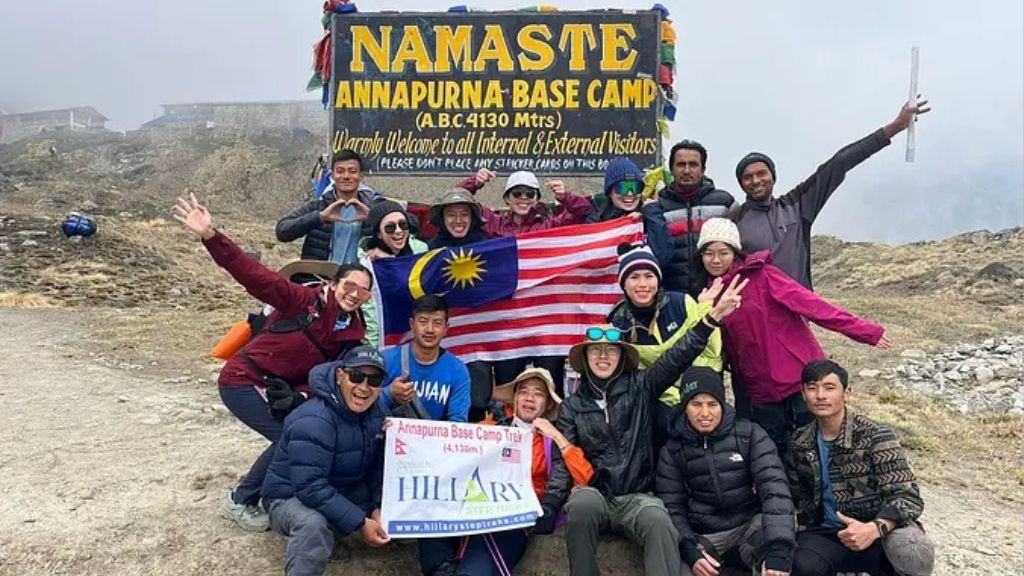
For trekkers, the situation is completely different. Popular routes in the Annapurna region, like Annapurna Base Camp, Poon Hill, Annapurna Circuit, etc, follow well-established trails with teahouses, guides, and rescue services. But, trekkers still need to prepare for altitude, changing weather, and long walking days. If you plan properly, follow gradual acclimatization, and practice sensible trekking practices, you can complete this trek comfortably.


What is the Death Rate of Annapurna?
As of May 2026, Annapurna I has a cumulative fatality-to-summit ratio of approximately 13.42%. And based on the latest expedition records, around 75 climbers have died while about 559 successful summits have been recorded since the first ascent in 1950. The fatality-to-summit ratio is calculated by dividing the total number of recorded deaths by the total number of successful summits. It is a historical statistic, not the probability that a climber will die on a modern expedition.
Annapurna I earned its reputation as one of the deadliest mountains during early Annapurna expeditions, when weather forecasts were poor, climbing equipment was basic, knowledge of avalanches was limited, and rescue options were almost nonexistent. Today, safer climbing gear, better weather forecasting, experienced Sherpa support, improved route management, and faster helicopter rescues have made climbing the mountain much safer than in the past.
Annapurna I Death Rate Over Time
The table below shows how the mountain’s historical fatality-to-summit ratio has steadily decreased over the years as climbing technology and expedition safety have improved.
| Period | Fatality-to-Summit Ratio |
|---|---|
| 1950 – 2006 | 38.7% |
| 2012 | 31.9% |
| 2022 | 19.7% |
| 2024 | 15.3% |
| May 2026 | 13.42% |
The figures show a clear downward trend. In the early years of Himalayan mountaineering, Annapurna I had a fatality-to-summit ratio of nearly 39%. As more successful ascents were made and expedition safety improved, the ratio gradually fell to 13.42% by May 2026.
Thus, if you come across sources claiming that Annapurna I has a 40% death rate, know that those figures are based on older historical data and are no longer accurate. While Annapurna I remains one of the most dangerous 8,000-m peaks, its cumulative fatality-to-summit ratio has declined significantly over the past two decades.
What makes the Annapurna terrain so difficult?
Annapurna’s terrain is difficult because it combines steep rock and ice faces, broken glaciers, unstable snow slopes, and massive serac bands. These hazards leave very few places where climbers can safely rest or retreat, making the climb physically exhausting and mentally demanding from the lower camps to the summit.
Additionally, Annapurna’s approach routes are more remote and less developed than those to peaks like Everest. Climbers need to navigate difficult terrain, often with fewer fixed ropes, fewer established camps, and more complicated route-finding than on Everest’s standard routes. Let’s talk about these details more:
Dangerous Avalanches That Can Strike Without Warning
Avalanches are the biggest danger on Annapurna I and have caused many of the mountain’s climbing deaths. Heavy snowfall, strong winds, overhanging snow (cornices), and large blocks of ice (seracs) can collapse without warning, especially after storms or sudden changes in temperature.
Furthermore, the danger is amplified by the structure of the mountain itself. Many climbing routes pass below hanging glaciers or through steep gullies where snow naturally builds up. Because of this, climbers cannot completely avoid avalanche-prone areas. Instead, they try to spend as little time as possible in these high-risk sections by climbing during good weather and moving efficiently.
Some climbers also believe that climate change is making snow and ice less stable, although scientists are still studying its long-term effects. On Annapurna I, avalanche risk affects every climbing decision, making careful planning, weather checks, and good timing essential for a safe ascent.
Steep, Demanding Terrain That Requires Technical Climbing Skills
Annapurna I is not a mountain that can be climbed with basic high-altitude trekking experience. Its steep slopes require advanced technical skills on rock, ice, and mixed terrain. Climbers must be comfortable using crampons and ice tools, climbing on hard ice, and safely handling ropes in difficult conditions.
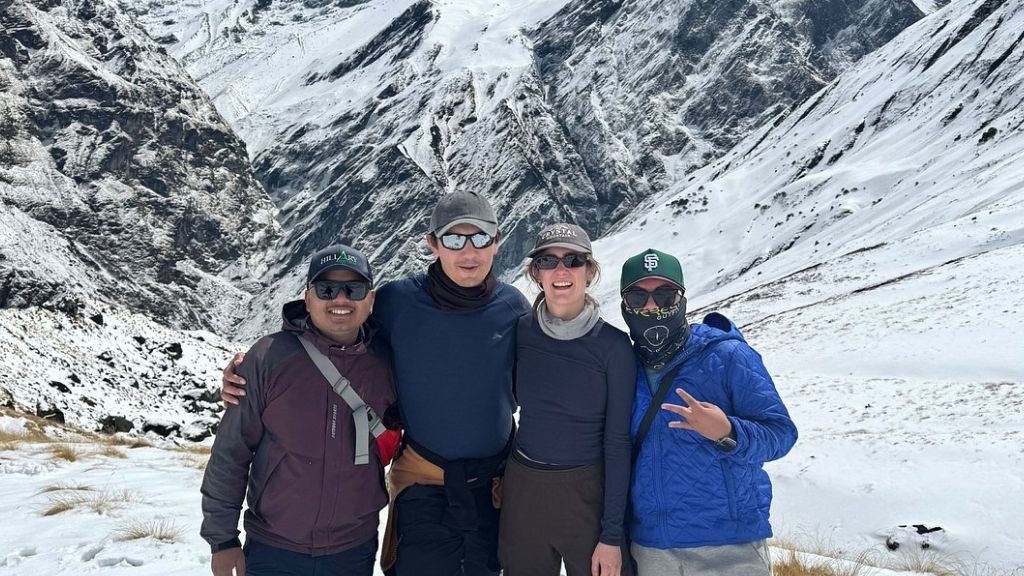
Some routes, especially the South Face, include long sections of steep ice and mixed climbing where a fall could be fatal. Even the less technical parts are often exposed and physically demanding, leaving little room for mistakes.
Likewise, although K2 is generally considered more technically difficult, Annapurna presents a different challenge. Its steep terrain, combined with constant hazards such as avalanches, rockfall, and unstable seracs, makes even moderate sections highly dangerous. This steep, demanding terrain also explains why Annapurna is one of the world’s most demanding mountain to climb.
Unpredictable Weather at Extreme Altitudes
Another factor that makes Annapurna so deadly is unpredictable weather. The weather on Annapurna I can change very quickly. Clear skies can turn into strong winds, heavy snowfall, or whiteout conditions within a few hours. These sudden changes increase the risk of avalanches, frostbite, and hypothermia.
Annapurna Mountain is also strongly influenced by the South Asian monsoon, making it difficult to predict safe climbing windows. Even during the main climbing seasons, unexpected storms or unseasonal snowfall can force teams to delay their ascent or climb in less-than-ideal conditions.
Also, since there are very few safe places on the mountain, bad weather can quickly turn a difficult climb into a life-threatening situation. This is why climbers closely monitor weather forecasts and only attempt the summit when conditions are as stable as possible.
Long Periods of Exposure in the Death Zone
Above 8,000 m, known as the death zone, the human body can no longer adapt to the lack of oxygen and gradually begins to weaken. And on Annapurna I, climbers spend many hours at this extreme altitude, which increases fatigue and makes it harder to think clearly and make good decisions.
To add to this difficulty, Annapurna’s routes are long and complex, so delays caused by bad weather, difficult route finding, or damaged fixed ropes can keep climbers in the death zone even longer. The extra time at high altitude increases the risk of frostbite, High-Altitude Cerebral Edema (HACE), and High-Altitude Pulmonary Edema (HAPE).
To reduce these risks, modern expeditions carefully plan their summit pushes to spend as little time as possible above 8,000 m. If conditions worsen or progress is too slow, turning back is often the safest decision.
Limited Rescue Support and Remote Mountain Infrastructure
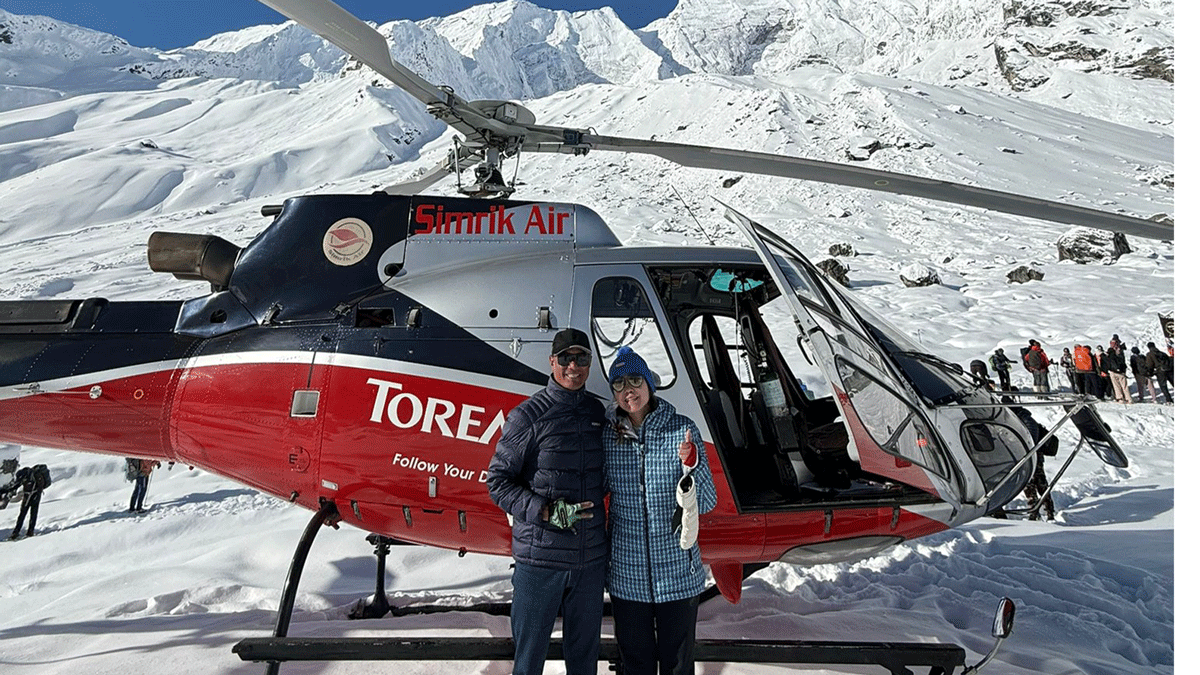
Although rescue services on Annapurna I have improved greatly in recent years, they are still more limited than on Mount Everest. Helicopter rescues are possible, but they depend on good weather, clear visibility, and safe flying conditions, making them unreliable at high altitudes.
Usually, on the upper mountain, climbers have to rely on themselves and their teammates. Annapurna has fewer high camps, less fixed infrastructure, and fewer climbing teams than Everest, so help may take a long time to arrive or may not be possible at all if conditions are too dangerous.
Hence, due to its remote location and limited rescue options, careful planning, good judgment, and the ability to make safe decisions without outside assistance are essential for anyone attempting Annapurna I.
Multiple Natural Hazards Creating a High-Risk Environment
As already said, what makes Annapurna I especially dangerous is not just one hazard, but several hazards occurring at the same time. Climbers must deal with steep terrain, avalanches, unstable seracs, deep crevasses, sudden storms, and long hours in the death zone throughout the climb.
Unlike some mountains where certain dangers can be avoided, Annapurna often forces climbers to pass through high-risk areas because there are few safer alternatives. If weather conditions worsen or the route becomes unstable, these sections can quickly become too dangerous to continue, which is why experienced teams are often willing to turn back.
This combination of technical climbing and constant natural hazards gives Annapurna one of the highest overall risk levels among the world’s 8,000-meter peaks. Success depends not only on climbing ability but also on good timing, careful planning, and sound decision-making.

Human Mistakes That Turn Risk into Disaster
Many accidents on Annapurna are also caused by human mistakes. This includes poor decision-making, such as climbing in unstable weather, ascending too quickly, using inadequate gear, or pushing for the summit despite dangerous conditions. These mistakes often turn manageable risks into life-threatening situations. Let’s talk more briefly:
- Rushing acclimatization: Ascending too quickly doesn’t give the body enough time to adjust to lower oxygen levels. This significantly increases the risk of Acute Mountain Sickness (AMS), High-Altitude Pulmonary Edema (HAPE), and High-Altitude Cerebral Edema (HACE), all of which can become fatal if ignored.
- Ignoring weather forecasts: Weather conditions on Annapurna can change within hours. Attempting the summit during unstable weather greatly increases the risk of avalanches, strong winds, and poor visibility.
- Underestimating the mountain: Annapurna requires advanced technical climbing skills and extensive high-altitude experience. Climbers who are not fully prepared face a much higher risk of accidents.
- Using inadequate equipment: Reliable crampons, boots, ropes, clothing, and oxygen systems are essential. Faulty or poorly maintained gear can quickly become life-threatening.
- Summit fever: Pushing for the summit despite bad weather, exhaustion, or altitude sickness is one of the biggest causes of climbing accidents. A successful summit is not only about summiting, but it’s also about returning safely.
- Poor team communication: Successful expeditions depend on clear communication. Ignoring teammates, climbing alone, or hiding symptoms of altitude sickness can quickly escalate into an emergency.
The Safest Ways to Experience Annapurna
You don’t need to climb Annapurna I to enjoy its spectacular landscapes. Trekking routes such as Annapurna Base Camp, the Annapurna Circuit, and Ghorepani Poon Hill offer incredible views of the Annapurna massif with a fraction of the risk associated with summit expeditions.
For travelers, these trekking routes provide the perfect balance of adventure, scenery, and safety. They pass through traditional Gurung and Thakali villages, rhododendron forests, alpine meadows, and glacier-fed valleys while offering close-up views of Annapurna I, Machhapuchhre, Hiunchuli, and other Himalayan giants.
Annapurna Base Camp Trek
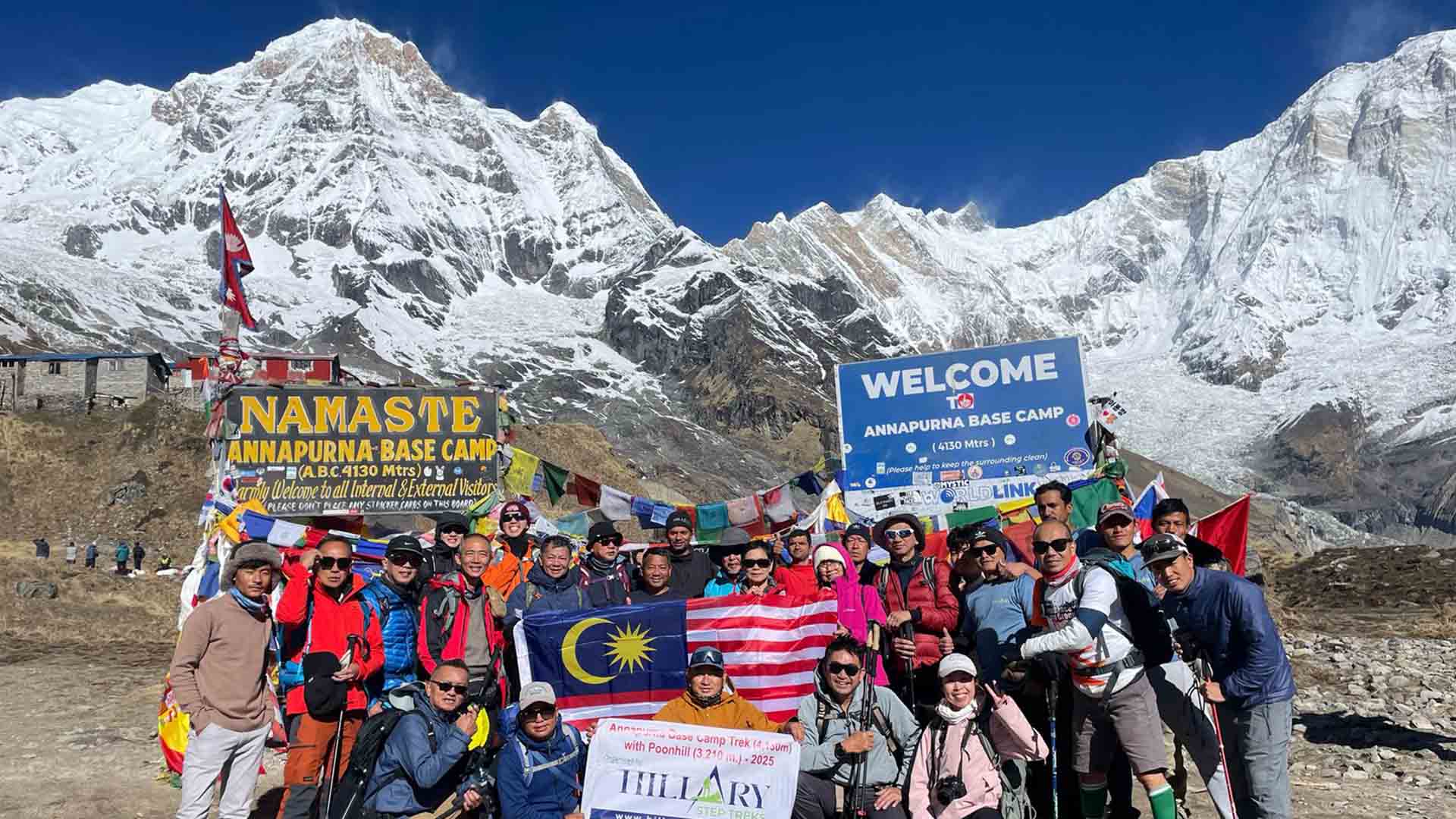
The Annapurna Base Camp (ABC) Trek is the most popular trekking route in the Annapurna region in Nepal. The trek reaches the maximum altitude of 4,130 m at ABC itself. It follows a well-established trail that thousands of people complete every year. The Annapurna Base Camp (ABC) Trek difficulty is at a moderate level, but it is still suitable for first-time trekkers with a good fitness level.
The main risks during the trek include altitude sickness, slippery trails after rain or snowfall, cold weather during winter, and temporary avalanche risk in a few sections after heavy snowfall. Fortunately, these risks can be minimized by trekking in the right season, following a gradual pace, staying hydrated, and trekking with an experienced guide.
Annapurna Circuit Trek
The Annapurna Circuit Trek is a moderate to challenging trek, not a mountaineering expedition. Its highest point is Thorong La Pass (5,416 m), where proper acclimatization is essential. Most trekkers complete the circuit safely by allowing enough time to adjust to the altitude. The main hazards are altitude sickness, changing weather, occasional landslides, and snow on the pass during certain seasons.
Ghorepani Poon Hill Trek
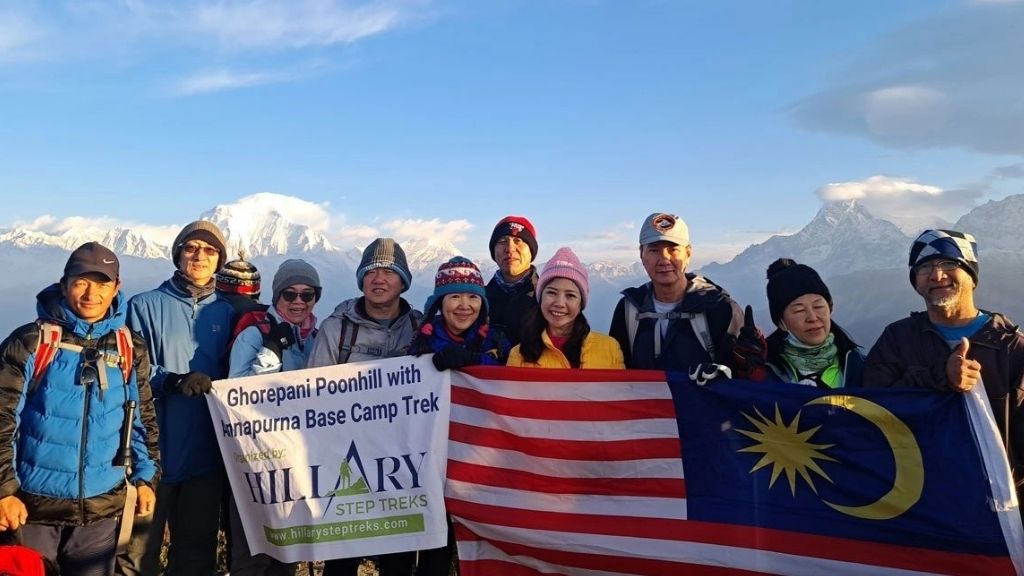
If you’re looking for stunning Annapurna views with minimal altitude risk, the Ghorepani Poon Hill Trek is one of the best options. The trek is suitable for beginners, families, and photographers, with sunrise views over the Annapurna and Dhaulagiri ranges being the main highlight.
Other Safe Ways to See Annapurna
For travelers who want close-up mountain views without high-altitude trekking, village hikes around Ghandruk and Chhomrong are great options. These routes stay at lower elevations, offer comfortable teahouse accommodation, and provide easier access in case of emergencies.
An Annapurna Helicopter Tour is another excellent option for travelers with limited time or those who prefer not to trek.
Best Time to Trek Annapurna Safely
The best time to trek in the Annapurna region is spring (March to May) and autumn (late September to November). These seasons offer stable weather, clear mountain views, comfortable temperatures, and the best trail conditions. Teahouses, transportation, and trekking services are also fully available, making the trek easier and safer. The Annapurna region can be visited throughout the year, but each season offers a different experience.
In monsoon (June to August), heavy rainfall makes trails muddy and slippery. Landslides are more common in lower valleys, mountain views are often blocked by clouds, and leeches can be found in forested areas. Although places like Upper Mustang remain relatively dry, most Annapurna trekking routes are less suitable during this season.
During winter (December to February), the trails are quieter, and the mountain views are often excellent. However, temperatures drop below freezing at higher elevations, snow can make trails icy, and heavy snowfall may temporarily close high passes such as Thorong La Pass. Winter trekking is best for experienced trekkers who are prepared for cold conditions.
| Season | Trail conditions | Safety level (1-5) | What to expect |
|---|---|---|---|
| Spring (March-May) | Stable | 5/5 | Warm weather, blooming rhododendrons, and clear mountain views |
| Monsoon (June- August) | Wet and slippery | 2/5 | Heavy rain, muddy trails, landslides, leeches, and limited visibility |
| Autumn (Late September-November) | Dry and stable | 5/5 | Clear skies, pleasant temperatures, and the best trekking conditions |
| Winter (December-February) | Cold with snow | 3/5 | Quiet trails, beautiful snow scenery, but colder weather, and possible pass closures |
Tips: Regardless of the season, always check the latest weather forecast before crossing high passes or heading toward Annapurna Base Camp. Himalayan weather can change quickly, even during the best trekking months.
How Operators Reduce Risk: the 2026 Safety Stack
Modern guided expeditions and trekking companies use multiple safety systems to reduce risk before and during every trip. This includes using satellite communication devices (InReach, Thuraya, etc.), GPS tracking of teams, and real‑time weather updates from multiple forecasting models.
Experienced local guides play the biggest role in keeping trekkers safe. They set a comfortable pace, monitor for altitude sickness, adjust plans when weather changes, assess trail conditions, and coordinate emergency assistance if needed. Most professional operators also use GPS tracking and satellite communication devices, allowing guides to stay connected in remote areas where mobile networks are unavailable. These systems help teams share their location, receive weather updates, and contact rescue services during emergencies.
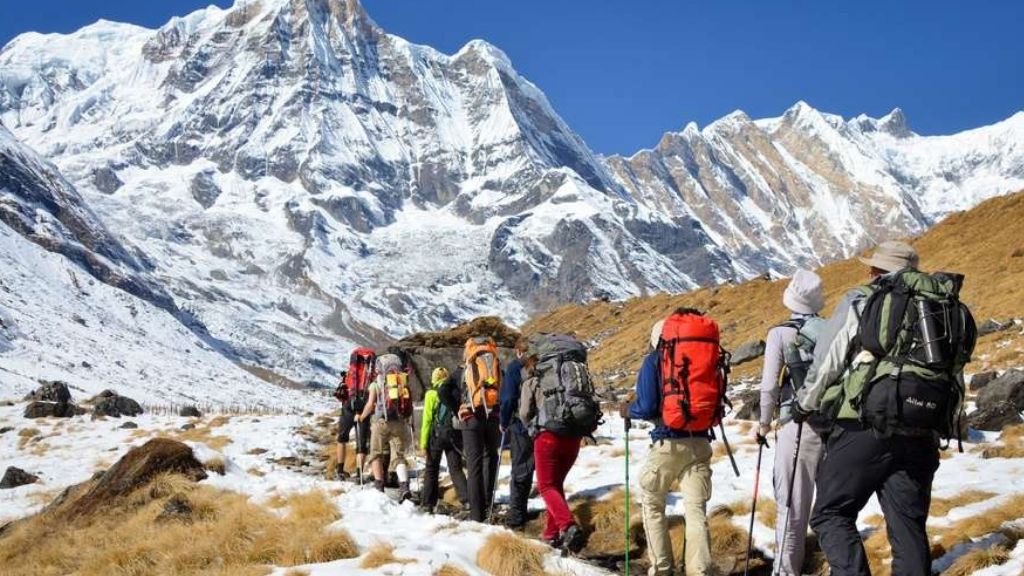
Weather forecasting is another important part of trip planning. Guides monitor wind, snowfall, temperature, and storm forecasts to make informed decisions and avoid dangerous conditions whenever possible. A well-planned itinerary also helps reduce risk. Reputable operators include gradual altitude gain, acclimatization days, and flexible schedules so trekkers have enough time to adjust to higher elevations. Guides closely watch for symptoms of altitude sickness and can change the itinerary or descend if necessary.
For Annapurna I expeditions, safety measures are more extensive. Operators coordinate with helicopter providers and local rescue agencies, and pre‑identify landing and pickup zones. They also equip camps with emergency oxygen and medical kits. Teams often carry redundant communication devices, pre‑set turnaround times, and agree on strict weather thresholds for summit attempts.

Notable Climbers Who Have Summited Annapurna
Annapurna I has witnessed some of the most remarkable achievements in mountaineering history. From the first successful ascent to record-breaking alpine-style climbs, these expeditions have shaped how climbers understand and approach one of the world’s most dangerous mountains.
Some of the notable climbers who have summited Annapurna include:
| Climber / Expedition | Year | Why it matters |
|---|---|---|
| Maurice Herzog & Louis Lachenal | 1950 | First successful ascent of Annapurna I and the first 8,000 m mountain ever climbed |
| Arlene Blum’s All-Women Expedition | 1978 | Vera Komarkova and Irene Miller became the first women to summit Annapurna I |
| Ueli Steck | 2013 | Completed a legendary solo ascent of the South Face in about 28 hours using alpine style |
| Nepali Women’s Team 2021 | 2021 | Historic all-Nepali women’s team reached the summit, highlighting Nepal’s growing leadership in mountaineering |
| Nima Rinji Sherpa | 2024 | Summited Annapurna I without supplemental oxygen before becoming the youngest person to climb all fourteen 8,000 m peaks |
| Warren Neil Eva | 2025 | Became the first South African to summit Annapurna I |
The 1950 French expedition led by Maurice Herzog and Louis Lachenal made history by completing the first ascent of an 8,000 m mountain. Their success came at a high cost, as both climbers suffered severe frostbite during the descent, showing that getting down safely can be as challenging as reaching the summit.
Later, in 1978, the expedition led by Arlene Blum became another milestone when Vera Komarkova and Irene Miller became the first women to stand on the summit of Annapurna I. Swiss climber Ueli Steck raised the standard of alpine climbing in 2013 with his solo ascent of Annapurna’s South Face in about 28 hours. His climb is widely regarded as one of the greatest alpine-style ascents ever completed.
More recently, the 2021 all-Nepali women’s team, Nima Rinji Sherpa’s record-setting climb in 2024, and Warren Neil Eva’s historic summit in 2025 show that Annapurna continues to be the setting for important achievements in modern mountaineering.
High-Altitude Rescue Stories on Annapurna
Rescues on Annapurna are among the most difficult in the Himalayas due to extreme altitude, unpredictable weather, and technical terrain. While not every rescue ends successfully, several remarkable survival stories have demonstrated how experienced Nepali guides, modern rescue systems, and better emergency planning have improved survival chances in recent years.
Anurag Maloo: The 72-Hour Crevasse Miracle
In April 2023, Indian climber Anurag Maloo fell into a deep crevasse while descending from Camp III on Annapurna. Against the odds, he survived for nearly 72 hours before a team of Nepali rescuers located him and carried out a complex high-altitude helicopter evacuation.
Iñaki Ochoa de Olza and an Extraordinary International Rescue Attempt
Spanish climber Iñaki Ochoa de Olza became seriously ill with high-altitude complications during an expedition in 2008. Some of the world’s strongest mountaineers, including Ueli Steck, Denis Urubko, and Simon Anthamatten, joined an extraordinary rescue effort, climbing through dangerous terrain in an attempt to reach him. Although the rescue ultimately could not save Ochoa, it remains one of the most respected examples of teamwork and selflessness in modern mountaineering.
Baljeet Kaur: Resurrected Against the Odds
In 2023, Indian climber Baljeet Kaur was initially believed to have died during her descent after summiting Annapurna. Rescue teams later found her alive at high altitude and evacuated her safely by helicopter after weather conditions improved. Her survival underscored both the unpredictability of Annapurna and the increasing capability of Nepal’s high-altitude rescue system.
Chin Wui Kin: Surviving 43 Hours in a Crevasse
In 2024, Malaysian climber Chin Wui Kin survived approximately 43 hours after falling into a crevasse on Annapurna before being rescued. The incident highlighted two important realities: first, that crevasses remain one of the mountain’s most serious hazards; and second, that advances in rescue coordination, satellite communication, and helicopter operations have significantly improved survival chances compared to previous decades.
Annapurna vs Everest: Comparing the Real Risks
Although Mount Everest is the world’s highest mountain, Annapurna I is more dangerous than Mount Everest based on historical fatality ratios and objective hazard level. Annapurna has more frequent avalanches, steeper terrain, unstable glaciers, and fewer safe route options. It also has a higher fatality-to-summit ratio than Everest.
On the other hand, Everest’s standard routes benefit from decades of route development, experienced Sherpa support, and extensive expedition logistics. Annapurna receives far fewer climbers each year, making route finding, rescue operations, and decision-making more challenging.
Many people assume Everest is the most dangerous mountain because it is the tallest. In reality, experienced mountaineers often consider Annapurna the more difficult and unpredictable climb.
Here are the main differences:
| Factor | Annapurna I | Mount Everest |
|---|---|---|
| Avalanche risk | Very high, with several unavoidable avalanche-prone sections | High in the Khumbu Icefall, but lower on most of the standard route |
| Technical difficulty | Steeper snow, ice, mixed terrain, and complex route finding | Mostly follows fixed ropes on standard routes, with some technical sections |
| Infrastructure | Fewer expeditions, limited fixed ropes, and less support | Well-established camps, fixed ropes, weather forecasting, and rescue services |
| Summit opportunities | Fewer safe weather windows each season | More stable summit windows during the spring climbing season |
Conclusion
It is not surprising that Annapurna I in Nepal remains the deadliest 8,000 m peak in the Himalayas based on fatality rate. As of 2026, 75 deaths have been recorded against 559 ascents, resulting in a high fatality ratio of 13.42%. Climbing Annapurna involves a high degree of mountaineering risk where avalanches, difficult terrain, bad weather, and human errors come together in disastrous ways.
On the flip side, the wider Annapurna region has turned into the most popular trekking destination in Nepal. Each year, tens of thousands of trekkers complete the Circuit, ABC, and shorter routes safely.
Frequently Asked Questions for Why is Annapurna so Dangerous
Expand AllWhat is the safest route in the Annapurna region?
Can a non-climber see Annapurna safely?
Is Annapurna becoming more dangerous because of climate change?
How do people prepare for Annapurna?
How much does it cost to climb Annapurna I?
What are the main risks of trekking in the Annapurna region?
Who was the first to summit Annapurna I?
Is Annapurna more dangerous than Everest?