Thorong La is one of the most famous high-altitude passes in the Annapurna Region, sitting at 5,416m (17,769ft). It serves as the main connection between Manang on the eastern side and Muktinath on the western side, linking the Annapurna Circuit to the Mustang region. This pass is not only the highest point of the trek but also the point where trekkers feel the full effects of high-altitude conditions, thin air, strong winds, and rapidly fluctuating temperatures that can change within hours.
What is Thorong La Pass? Its Geography and Location
Thorong La (also written Thorung La) is a high mountain pass in the Damodar Himal of central Nepal, just north of the main Annapurna range and inside the Annapurna Conservation Area. It links the dry Manang Valley in the east with Muktinath and Mustang in the west, forming a natural gateway between the Marsyangdi and Kali Gandaki river systems. It sits in the Himalayan rain shadow, where landscapes shift from green valleys to semi‑arid, high‑altitude desert.
Table of Contents
Most trekkers cross it counterclockwise, from Manang through Yak Kharka or Ledar, and Thorong Phedi or High Camp to Thorong La, then down to Muktinath. This east‑to‑west direction gives a more gradual, safer ascent and a long, knee‑friendly descent on the Mustang side.
Thorong La Pass at a Glance
- Elevation: 5,416 m (17,769 ft).
- Range/region: Damodar Himal, within the Annapurna Conservation Area.
- Location: Between Manang (Annapurna side) and Muktinath/Ranipauwa in Mustang.
- Climate zone: Himalayan rain shadow with dry, semi‑desert high‑altitude terrain.
- Role on the trek: The highest point of the classic Annapurna Circuit and one of the world’s most popular trekking passes.
- Preferred direction: East to west (from Manang to Muktinath) for better acclimatization and a more manageable descent.
Why Is Thorong La Pass Often Known as Highlight of the Annapurna Circuit Trek?
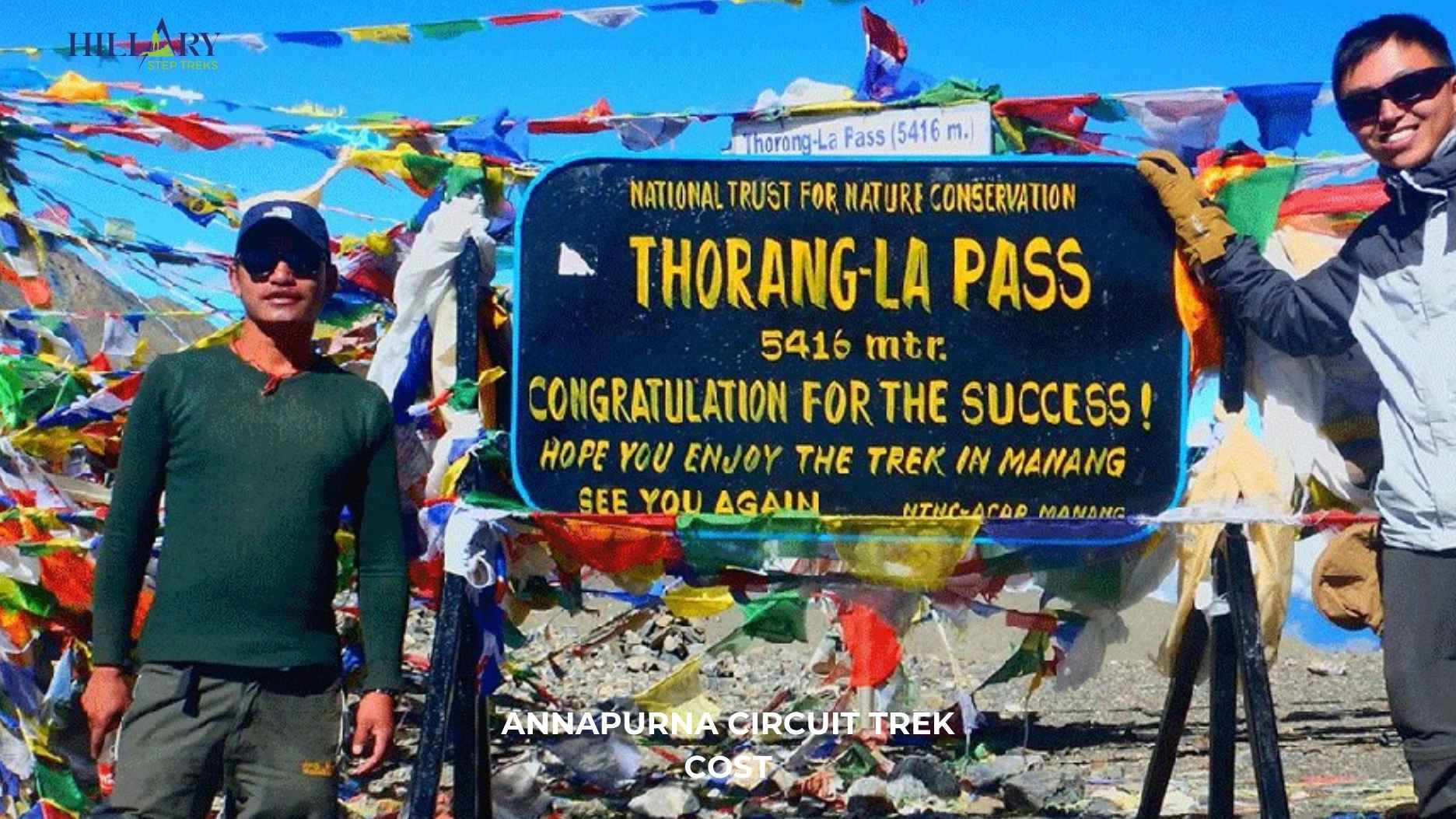
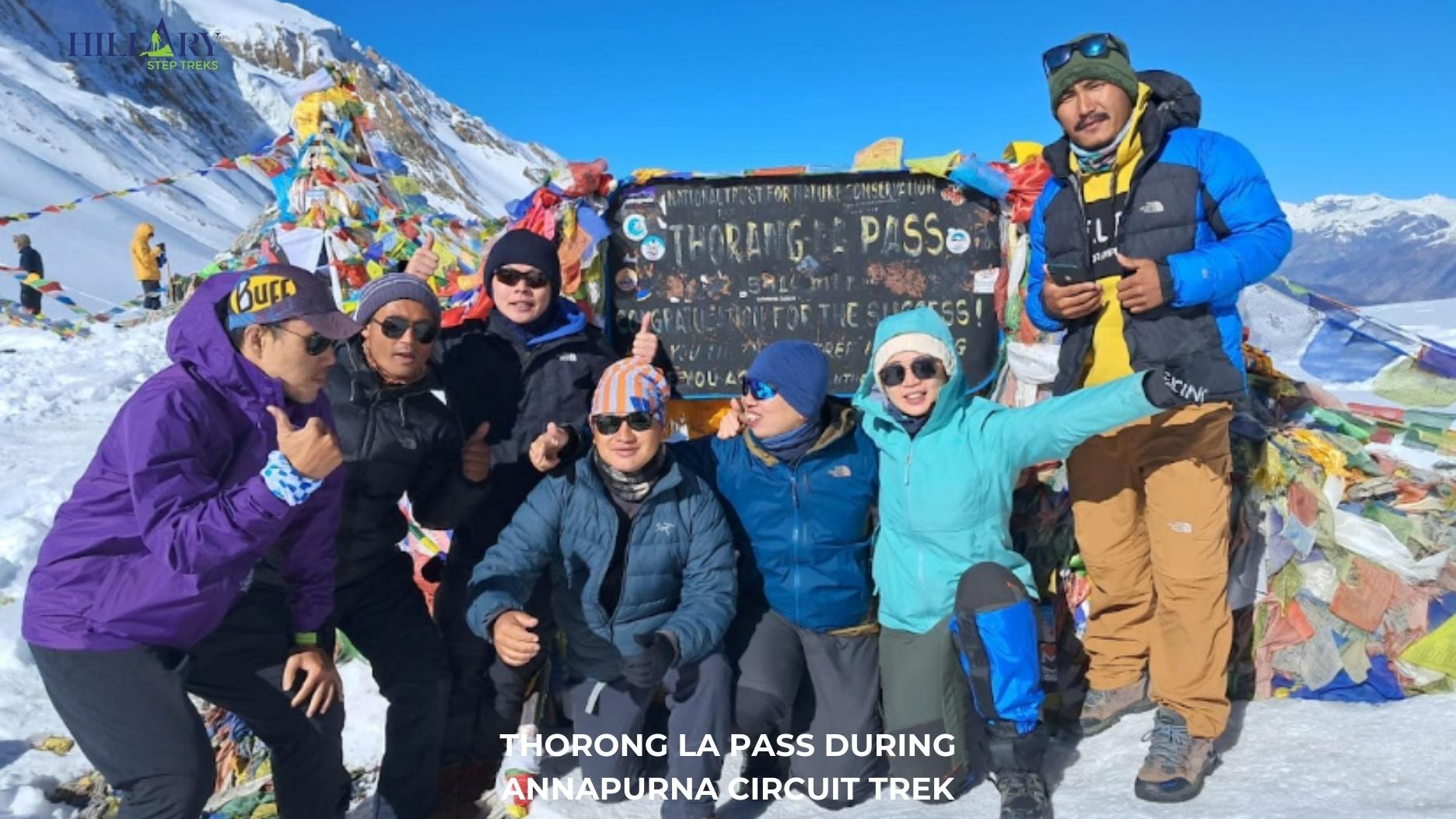
Thorong La Pass is widely seen as the emotional and physical “summit day” of the Annapurna Circuit Trek. At 5,416 m, there is roughly half the oxygen available compared to sea level, so every step feels heavier. This makes reaching the top of the pass and seeing the sign genuinely feel like a major mountaineering achievement for non‑climbers.
From the top, you get wide panoramas of the Annapurna and Dhaulagiri ranges, two different mountain giants facing each other across the sky. Alongside, you get dramatic views of the dry Mustang side, which many trekkers remember as the single best viewpoint of the trek. The contrast is also huge over the course of this one day. You leave the high, cold alpine world above Manang, cross a stark, wind‑swept pass, then drop into a spiritual landscape around Muktinath, with temples, prayer flags, and the start of the Kali Gandaki corridor.
On top of that, Thorong La is where weeks of steady ascent, an acclimatization day in Manang, and careful pacing all pay off. Handle this day well, and you’ve essentially conquered the Annapurna Circuit, everything leading up to it comes together in a single, unforgettable high‑altitude achievement.


Best Time to Cross Thorong La Pass
Most trekkers cross Thorong La between 3:00 and 5:00 AM. From Thorong Phedi, departures are usually around 3:00-4:00 AM, while those starting from High Camp leave closer to 4:00-5:00 AM. The aim is to reach the pass by 8:00-9:00 AM, leaving enough daylight for the long descent to Muktinath. Expect 8-10 hours of trekking, which is why this day is considered the toughest and most carefully planned stage of the Annapurna Circuit trek in Nepal.
The early start isn’t just tradition, it’s strategy. Leaving well before dawn lets you beat the “wind tunnel” effect that often hits the pass by mid-morning. As the sun rises, temperature differences between valleys and peaks create strong, freezing gusts that can turn an already tough hike into a real struggle. Timing also protects your footing. In the pre-dawn cold, rocks and snow are firm underfoot, but once the sun climbs, they soften into slippery slush and mud.
Basically, those early hours give you a key weather window. As the day warms, Himalayan peaks pull in clouds and fog, so starting in the dark lets you reach the summit while the air is still clear. Hence, you get those sweeping 360-degree views of Dhaulagiri I, alongside its sister peaks Dhaulagiri II, III, and V, Tukuche Peak, and the Nilgiri range to the west, while the massive walls of Annapurna II, III, and IV, Gangapurna, and Tilicho Peak guard the valley behind you. It is one of the few places on Earth where you can stand at 5,416m and feel like you are at eye-level with 8,000-meter giants.
The rule is simple: start early, no matter the season. That said, guides often push start times closer to 3:00 AM from Phedi in autumn, especially in October. The challenge is racing the wind because of the sharp temperature difference between the warm Mustang desert and the cold peaks, which sends freezing winds through the pass by mid-morning.
Then, in spring, it’s a race against the sun. The winds are much calmer, but winter snow still lingers along the trail. So, you can start a little later, 4:00 AM and 5:00 AM. Leaving in the pre-dawn cold keeps the snow frozen and firm underfoot. Wait until later, and the sun softens the snow, turning the trail into heavy, knee-deep slush that makes every step much harder and more exhausting.
Common Mistakes Trekkers Make on Thorong La Pass During the Annapurna Circuit Trek
Crossing Thorong La is the pinnacle of the Annapurna Circuit, but at 5,416m, strategy matters more than sheer fitness. Trekkers often falter not from lack of strength, but from ignoring the subtle “high-altitude rules” of the Himalayas. Following them, you can separate a memorable summit from a grueling struggle.
Starting too late
Many people underestimate how long the day feels at altitude and set off around sunrise instead of in the dark. By then, you lose the calm early window, hit stronger winds higher up, and risk getting caught in cloud or bad weather before you reach the top. This also shrinks your daylight for the descent, where tired legs and poor visibility are a bad combination.
Skipping acclimatization day
Manang is specifically used as a primary acclimatization hub on the circuit. Most itineraries include at least one rest day with a side hike to Gangapurna Lake or nearby viewpoints. Many trekkers attempt to bypass this day, but this ‘shortcut’ is a gamble. Pushing directly toward Ledar and High Camp without allowing your body to adjust gradually increases the risk of altitude sickness. This section of the trek is precisely when you are most vulnerable.
Ignoring mild AMS symptoms
Headache, nausea, loss of appetite, and poor sleep are classic early signs of Acute Mountain Sickness (AMS), and they shouldn’t be ignored. Trekkers often push on from Manang to Ledar or High Camp just to keep pace with the group, thinking it’s no big deal. But, at altitudes above 5,000m, this can quickly turn what might have been manageable AMS into serious, life-threatening conditions like HAPE (high-altitude pulmonary edema) or HACE (high-altitude cerebral edema). Hence, it is important to inform the guide during the early stages and listen to them.
Underestimating descent fatigue
Once trekkers reach the pass and take their photos, they begin to relax mentally. But the journey is not finished yet. The descent to Muktinath is long, dusty, and extremely demanding on knees and quads. Many slips, sprains, and falls tend to occur when concentration fades and muscles are fatigued. Thus, you shouldn’t neglect trekking poles. Failing to support old knee injuries with tape or braces, or skipping food and hydration, all increase the risk on this critical part of the trek.
Thorong La Pass vs Other High Himalayan Passes
Thorong La is often compared with passes like Larkya La on the Manaslu Circuit and the high Khumbu passes such as Kongma La or Cho La (in the Everest region). These passes differ in altitude, remoteness, technicality, and infrastructure. Thorong La is actually higher than Larkya La, but it’s generally seen as more beginner‑friendly. The trails are better maintained, lodges are more frequent, and the standard Annapurna Circuit allows for a gradual, well‑established acclimatization schedule.
By contrast, Larkya La feels wilder despite being lower in altitude. Days are longer and rougher, facilities are scarce, and the trekking pace is more demanding. High passes in the Everest region tend to be more technical, often covered in snow or ice, and usually require trekkers to have prior high-altitude experience before attempting them safely.
| Aspect | Thorong La (Annapurna Circuit) | Larke La (Manaslu Circuit) | Kongma La/Cho La (Everest region) |
|---|---|---|---|
| Rough altitude | 5,416m | ~5,100-5,160m | ~5,360-5,535m |
| Trail character | Clear, well‑trodden path | Rougher, rockier tracks | Steeper, often icy/glaciated sections |
| Lodges & support | Many lodges, easy logistics. | Fewer lodges, limited services. | Good overall; thinner on actual pass days. |
| Remoteness | Busy corridor, road access not far away. | More remote and isolated. | Moderate-remote; air access via Lukla. |
| Acclimatization | Strong hub in Manang, gradual steps. | Fewer ideal acclimatization stops. | Built into the EBC schedule (Namche, Dingboche, etc.). |
| Technical feel | Non‑technical trekking pass. | Tough trekking, still non‑technical. | More technical when snowy/icy. |
| Typical pass‑day length | About 8-10 hours. | Often 8-10+ hours, feels long. | Similar or longer on Three Passes itineraries. |
| Crowds | Busiest of the three in peak season. | Quietest, fewer groups. | Moderate, busy region, but fewer on each pass. |
| Best season | Autumn/spring are relatively stable and well-documented, making it easiest to plan safely. | Also autumn/spring, but bad weather impacts you more due to remoteness. | Autumn/spring are best, but snow/ice can still make them feel serious. |
Unexpected Difficulties Crossing Thorong La Pass
I didn’t underestimate Thorong La because I thought it would be easy. I underestimated it because I thought I understood it. On paper, the day was clean and logical: leave High Camp in the dark, climb steadily to 5,416m, take the photo under snapping prayer flags, descend to Muktinath. Hard, sure. Long, obviously. But the plan was straightforward. What I didn’t account for was how the pass drains you in layers, so gradually you don’t notice until you’re already running on empty.
The first layer was physical, and it showed up before sunrise. My water bottle had frozen solid despite sleeping with it inside my jacket. Breakfast felt like cardboard in my mouth, as altitude stole my appetite without permission. My boots were stiff, and my fingers so clumsy that even tightening my pack straps felt like a chore. Then the climb began, a series of slow, methodical switchbacks in the beam of a headlamp. The trail itself wasn’t technical, no scrambling, no risky drops. Even so, my lungs demanded a pause every ten or fifteen steps. I leaned on poles and took deep breaths, gasping for air that never felt enough. At that altitude, every single move you make is a slow, constant drain.
Then the sky shifted from black to indigo, and that’s when I started noticing how small symptoms sneak in. A faint headache. A slight wave of nausea. Nothing alarming, just enough to blur the edges of your focus. Around me, people were quieter than usual, each of them locked in their own rhythm of breath and step. It wasn’t one hard part that got us. It was doing the same hard thing over and over until we were empty. Thin air. Slow progress. The mental strain of knowing you’re moving, but barely gaining ground. Hours stretch differently up there, and time feels heavy.
When daylight finally hit the saddle, the wind arrived like it had been waiting for us. It came straight through the gap between peaks, slamming into us without warning. Every time I paused for more than a minute, the cold bit fast, leaving my fingers tingling and my toes stiffening. Taking rest stopped feeling restorative and started feeling risky. Small frozen patches on the trail demanded attention here and there. Nothing about the terrain screamed “danger,” yet the margin for error felt thinner than it had all trek. Tired legs, slippery trails, and fatigue don’t mix well. Your balance wavers, reactions slow, and even easy stretches of trail can suddenly feel risky when your energy runs out. That’s exactly what I did.
After a while, reaching the sign at the top felt powerful. The flags cracking in the wind, the wide Himalayan horizon, that quiet internal “I made it” moment. The scenery made me forget that the descent to Muktinath was equally unforgiving, or maybe a lot worse. It was longer than I expected, steeper in sections, and relentlessly dusty with occasional icy spots hiding in the shade. My legs, already drained from the climb, had to absorb every step. Going downhill wasn’t a relief. It was all about control and being careful. By the time the tea houses finally came into view, my knees were shaking, and I could barely think.
Looking back, the real challenge of Thorong La wasn’t a single dramatic obstacle. It was the cumulative weight of altitude, cold, wind, and duration, a slow unraveling that taught me respect the hard way.
Final Say
The Thorong La Pass Trek isn’t just about reaching the highest point on the Annapurna Circuit. It’s a test of how well you’ve prepared. Starting early, usually between 3:00 and 5:00 AM, helps you stay ahead of the wind, cross firm snow, and keep moving safely. Go slow, pace yourself, and pay attention to how your body reacts to altitude. Doing so will make the climb less overwhelming. Nonetheless, crossing the pass is an important highlight of the trek. The wind, thin air, and prayer flags make it feel like another world, and the reward isn’t just reaching the top, it’s getting there safely and enjoying every moment of the high‑Himalayan crossing.