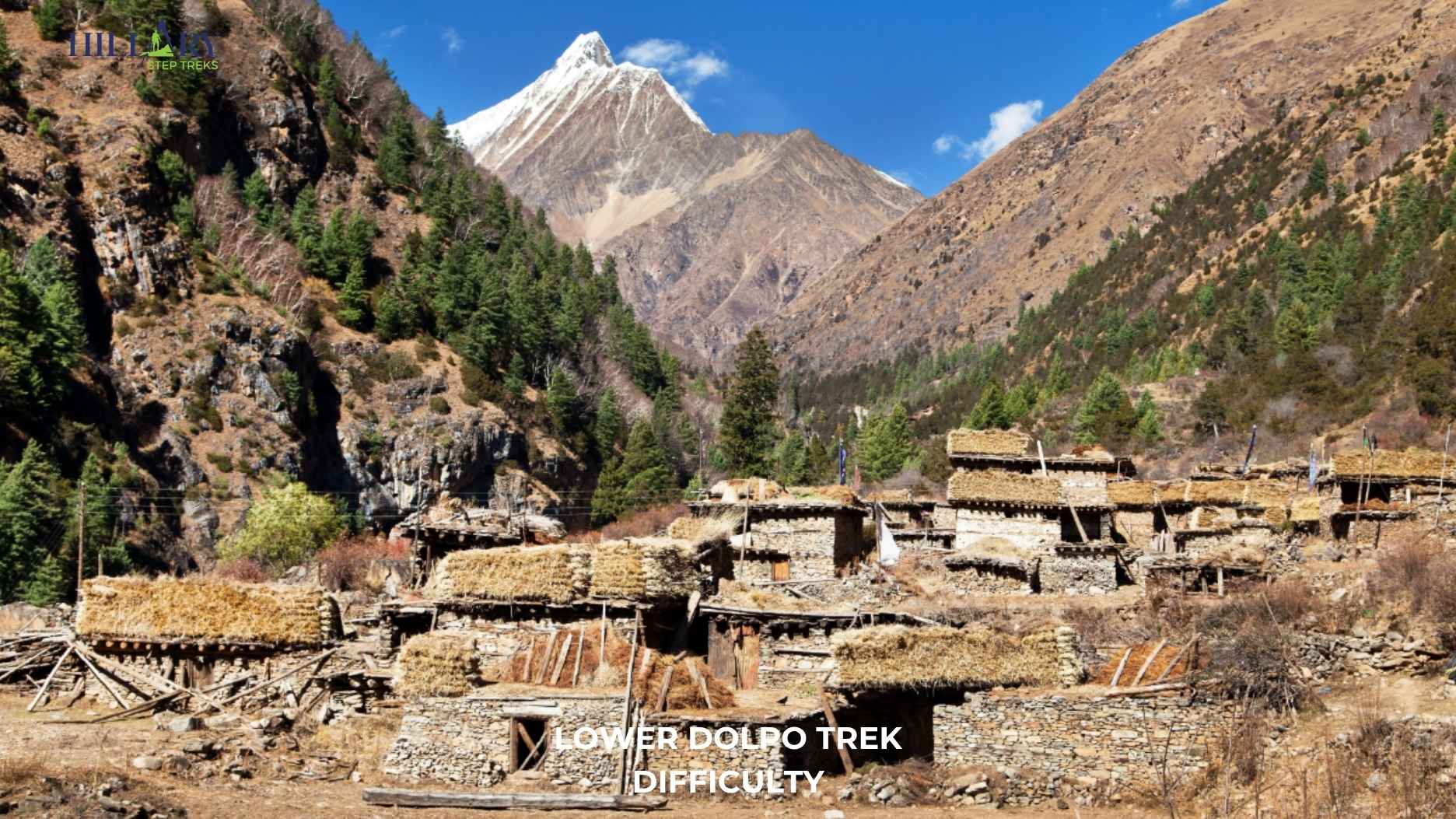

Dho Tarap village is one of the highest human settlements in Nepal, lying at 3,900-3,950m in the heart of the Dolpo Restricted Area. It is a large, permanent village that houses around 1,500 people and preserves centuries-old culture and traditional agriculture, making it stand out among higher settlements that are often seasonal, tiny, or industrial. Nestled in a wide, high-altitude valley, Dho Tarap serves as a central hub between surrounding hamlets, fields, and key passes, with minimal infrastructure but a strong, enduring local community.
Read more to understand the best season, altitude challenges, weather conditions, and how to prepare properly for your trek to Dho Tarap.
The High, Remote World of Dho Tarap
Dho Tarap lies in the upper Tarap Valley of the Dolpa District of Nepal, within Shey Phoksundo National Park. It is not a single settlement but a cluster of three villages that serve as the region’s cultural and administrative center of Dolpo Buddha Rural Municipality. The main village, Dho, lies at about 3,800-3,900 m, Tokyu, around 4,100-4,300m, and Lang slightly higher than Dho. Together, they create a wide, high-plateau landscape shaped by the Tarap Khola.
Set within the Himalayan rain shadow, the valley links the lower Bheri River basin with the high passes of Inner Dolpo. Most trekkers reach Dho Tarap midway through a 15-day Lower Dolpo trek journey. The valley serves as an important acclimatization stop before crossing demanding passes such as Numa La at 5,309m and Baga La at 5,169m. Then, you proceed northwest towards the sacred Shey Gompa “Crystal Monastery”. It also serves as a southern gateway to remote regions such as Saldang, Tinje, Ringmo, and Charka village on longer, caravan-style circuits for the Upper Dolpo Circuit Trek.
Despite its isolation and simple infrastructure, the valley supports around 1,500 permanent residents. It stands out as a rare high-altitude settlement where long-standing Buddhist traditions and old trans-Himalayan trade routes continue to shape daily life. Beyond this point, trekking becomes more challenging. The trail leaves the deep gorges of the Tarap Khola and climbs into the exposed, treeless terrain of the upper plateau.
Why Dho Tarap Is Ideal for Acclimatization
Dho Tarap sits at an ideal mid-high altitude of around 4,000m. So, it is high enough to keep your acclimatization progressing, but not so extreme that rest and recovery feel overwhelming. On the Lower Dolpo route, it comes after a significant ascent from Nawar Pani at about 3,450m and before the steep push to Numa La Base Camp, often between 4,600 and 4,800m, and eventually over Numa La.
At this elevation, your body is still adjusting. Breathing becomes deeper and more frequent, blood chemistry gradually shifts, and red blood cell production increases to improve oxygen delivery. You spend two nights at Dho Tarap to give your system time to stabilize after the steady climb through Tarakot, Laini, and Nawar Pani. This pause lowers the risk of acute mountain sickness and prepares you for the higher passes ahead, including Baga La.
On the acclimatization day at Dho Tarap, you can do light activities like village walks, short ridge hikes, and gentle exploration to encourage adaptation without adding significant altitude gain. The layout of Dho Tarap makes this easy, offering plenty of low-intensity options to stay active.
Why stopping at Dho Tarap helps with acclimatization:
- A natural pause after several days of steady altitude gain.
- Two nights at nearly the same sleeping elevation to strengthen adaptation before the jump to Numa La Base Camp.
- Short “climb high, sleep low” routes on nearby ridges and side valleys.
- Reliable access to water, shelter, and basic supplies while monitoring how everyone feels.
- Cultural sites, monasteries, and village paths that keep you gently moving instead of remaining inactive.
Dho Tarap Trek Route, Altitude Profile, and Acclimatization Plan
The Lower Dolpo trek starts in Kathmandu. From there, you take a flight to Juphal via Nepalgunj. Then the trekking starts. You walk through Dunai and Tarakot, gradually gaining altitude to Nawar Pani, then to Dho Tarap, where you stop to acclimatize. After this rest and adjustment point, the route crosses the high passes of Numa La and Baga La and descends toward Phoksundo Lake for a loop back to Juphal for the return flight to Kathmandu.
Route Segment and Acclimatization Around Dho Tarap
The first section involving Dho Tarap comes on day 6 of the Lower Dolpo trek. You trek from Nawar Pani (3,450m), which takes around 6-7 hours and involves a steady climb of about 500m. The trail is generally good, but the thinner air becomes noticeable near the final approach. You should pace yourself steadily and stay hydrated to prevent fatigue and lower the risk of altitude-related issues after several days of continuous ascent. Also, make sure to use sun protection regularly.
The next day in Dho Tarap is reserved for acclimatization. You can take short hikes of 2-5 hours to nearby ridges or monasteries like Ribo Bhumpa or Kakar Labrang. These walks follow the “climb high, sleep low” principle without increasing your sleeping altitude. It’s a good day to monitor mild AMS symptoms, organize your gear, and mentally prepare for the colder, more exposed terrain ahead. Keep activity light and conversational. Avoid overexertion, but don’t stay completely inactive.
After acclimatizing in Dho Tarap, you climb to Numa La Base Camp (4,600-4,800 m) over a 4-6 hour trek. This section represents a significant gain in sleeping altitude (650-850 m), so attempt only after proper preparation in Dho. Expect colder temperatures, stronger winds, and limited shelter or water sources at base camp. Pace yourself carefully, wear layered clothing, and monitor your body regularly to handle the thinner air and be ready for the high passes beyond, including the challenging Baga La.
| Day | From → To | Hours | Start → End Elevation | Gain/Loss | Notes |
|---|---|---|---|---|---|
| 6 | Nawar Pani → Dho Tarap | 6-7 | 3,450 → 3,944m | +500m | Steady climb, thinner air near top. Pace, hydrate, sun protection. |
| 7 | Dho Tarap → Dho Tarap | 2-5 optional | 3,944 → 3,944m | 0m | Short hikes for “climb high, sleep low.” Monitor altitude, prep gear. |
| 8 | Dho Tarap → Numa La Base Camp | 4-6 | 3,944 → 4,600-4,800m | +650-850m | Big altitude gain, cold, windy, limited shelter. Pace carefully. |
Acute Mountain Sickness & When to Descent
Acute Mountain Sickness (AMS) is your body’s early warning that it isn’t adapting quickly enough to the altitude. Catching it early and making conservative choices usually prevents more serious problems. Typical signs include a headache, often throbbing and worse at night or with exertion. Other symptoms include nausea or poor appetite with occasional vomiting, unusually restless or fragmented sleep with vivid dreams, heavy fatigue even on easy terrain, and dizziness or a “foggy” feeling that makes you feel unlike yourself.
If you experience these symptoms, do not continue. Spend an extra day at Dho Tarap to rest, hydrate, and reassess after 24 hours. However, if the symptoms worsen to a severe headache that doesn’t improve with rest or medication, confusion, difficulty walking straight, or breathlessness at rest, the only option is to descend 300-500m. Always inform your guide or crew immediately, and avoid making solo decisions while your body may already be mildly hypoxic.
 USD 300 OFF
Follow these gear tips to manage oxygen, hydration, and temperature at the 3,950 m altitude of Dho Tarap:
- Down Jacket & Neck Gaiter: Keep both in your daypack to prevent a drop in core temperature and protect your lungs from the dry, cold air.
- Health Monitoring: Use a pulse oximeter daily and carry a medical kit with doctor-approved altitude medication, ibuprofen for headaches, and rehydration salts.
- Water Safety: Maintain a dual treatment system, filter plus chemical tablets, to safely consume the 3-4 liters of water each day for proper acclimatization.
- Eye & Skin Protection: Use Category 3 or 4 mountain sunglasses and high-SPF sunblock to prevent snow blindness and reduce fatigue from intense UV exposure.
- Night Warmth: Bring a four-season sleeping bag and a Nalgene bottle filled with hot water to keep your body warm at night, so you can focus on oxygenating your blood while you sleep.
Weather and Best Time to Visit Dho Tarap
Sitting at roughly 4,000m between the Lower and Upper Dolpo regions, Dho Tarap has a dry, high‑mountain climate similar to that of Tibet. The air is thin, the sun is strong, nights are cold, and temperature swings between day and night are large. It can be chilly even on clear, calm, and stable nights. So you need to pack a sleeping bag, layers, and wind protection, which play a key role in sleep quality and comfort during acclimatization.
Autumn (Sept-Nov) is widely considered the best time to trek to Dho Tarap, as monsoon rain clears the air, offering stunning views of the rugged Dolpo landscape. The days are generally pleasant, allowing you to trek comfortably. However, the air can get very dry, leading to regular frost in Dho-Tarap. The temperatures can drop to 0 °C or lower in the mornings and evenings. That said, the high passes like Numa La and Baga La are usually free of deep snow, so you can reliably complete the full circuit if you’re well prepared.
Similarly, spring (Mar-May) offers a quieter, more private experience as the region emerges from winter. The weather gradually stabilizes, and daytime temperatures rise between 8°C and 14°C. Yet nights at Dho Tarap still dip below freezing through April and early May. You may find lingering snowon the 5,000m passes, which can make the trek more physically demanding. But you also have an advantage in choosing the spring season to trek. The trails are much quieter than in autumn, giving you a peaceful, solitary experience of the upper plateau.
You can also visit Dho Tarap during the monsoon (Jun-Aug). Although it’s off-season and can be challenging, it’s still doable if you’re prepared. The main reason it’s possible is that Dolpo lies partially within the Himalayan rain shadow, which means it stays relatively dry. The lower valleys, however, become lush, muddy, and leech‑prone. Also, flights to Juphal can be unreliable, and some trails are riskier due to landslides and swollen rivers. That said, the plateau is at its greenest, and the temperatures are the warmest of the year. It rarely drops below freezing temperatures at night, so you’ll enjoy a vibrant, if adventurous, trek.
Lastly, winter (Dec-Feb) is the harshest season, making Dho Tarap nearly inaccessible for most trekkers. Night temperatures can get as low as -15°C to -20°C, and the high passes are likely blocked by deep snow. In addition, most locals move to lower elevations, leaving the village empty and frozen due to the extreme cold and off-season. Hence, unless you have full expedition support and flexible timing, trekking in winter is extremely risky due to frostbite, closed teahouses, and limited help.
Culture, Village Life, and Accommodation
Dho Tarap is like a living museum of Tibetan culture, deeply rooted in the Khampa heritage of its residents. You’ll notice it in the men’s long, red-tasseled hair and the intricate turquoise and coral jewelry worn by the women. Here, Buddhism and the ancient Bon-po religion coexist, with monasteries like Ribo Bhumpa and Shipcho Gompa offering vivid glimpses of centuries-old rituals. You can witness locals spin prayer wheels, their chants echoing through the thin, crisp mountain air, and colorful prayer flags fluttering and carrying blessings across the valley.
Upon reaching the village, you can witness a high-altitude subsistence life, as famously captured in the film Himalaya (Caravan). Stone houses cluster tightly against the windswept plateau, built with thick mud walls to insulate against the biting cold. Villagers follow a strict seasonal rhythm. In summer, they carefully tend barley and potato fields, manage yak and goat herds, and navigate the rugged terrain daily. As winter approaches, most migrate to lower valleys to escape the severe cold, which can drop to –20 °C. You can really sense the grit and endurance required to thrive at 4,000m, as you observe the herds move across the valley floor and children run between houses.
Accommodation reflects this rugged, authentic lifestyle. Teahouses are simple, often centered around a communal kitchen with a yak-dung stove providing the only source of warmth once the sun sets. Rooms are unheated, facilities are basic, and toilets are typically outdoor pit facilities. Here, most teahouses use solar power, which is limited and usually reserved for basic lighting. Even with the basic conditions, staying in Dho Tarap is very rewarding. Sharing butter tea, hearing stories from local families, and experiencing daily life at high altitude make your visit memorable and truly immersive.
Things to Do in Dho Tarap
Among the many highlights of Dho Tarap Valley, there’s a variety of activities you definitely shouldn’t miss on your acclimatization day. Each of them gives you a deeper connection to the culture, landscape, and high-altitude life in north-western Nepal.
- Visit Ribo Bhumpa and Shipcho Gompa: Explore these ancient spiritual hubs to compare Bon-po and Buddhist culture. Remember to walk clockwise at Ribo Bhumpa and counter-clockwise at Shipcho.
- Stroll to Tokyu hamlet: Take a gentle, flat walk to the neighboring village of Tokyu to keep your blood oxygenated without overexerting your lungs at 3,950m.
- Hike a ridge viewpoint: Climb 200-300m above the village for a bird’s-eye view of the clustered stone rooftops.
- Golden hour photography: Head out at sunrise or sunset when the low light creates dramatic geometric shadows across the valley walls and flat-roofed houses.
- Share salt butter tea: Sit with a local family by their yak-dung stove to learn about the grit of high-altitude farming and their winter migration patterns through your guide.
- Observe village life and the commute: Spend time watching daily chores, such as grain winnowing, and the return of yak caravans from the high pastures.
Important Note: If you want to photograph or document the locals and traditions of Bon and Lama community, ask first. While you are staying in the village, dress as modestly as possible and move respectfully around religious sites such as stupas and mani walls. You can also support families by buying tea or snacks.