The troubles are over, and the country is safe again. Look at this video to see how kindly tourist buses were treated even during the protest.

Plan Your Trip
Langtang Gosaikunda Trek

Langtang Gosaikunda Trek - 13 days

Starting from

$945

users

Group Size 1+

sort amount

Trip Grade Moderate

stats up

Best Season March to May & September to December

apartment

Accommodation Hotel/Tea House

pyramids

Max Elevation 4610m/ Lauribina Pass

dinner

Meals Breakfast, Lunch & Dinner

car

Transportation Private Vehicle/Public Bus

travel

Trek Route Syabrubensi - Langtang Village-Kyanjn gompa-Gosainkunda Lake- Chisapani

Highlights of Langtang Gosaikunda Trek

  • Enjoy a peaceful trek on a less-crowded but still exciting route in Nepal.
  • Get a close look at the culture, traditions, and daily life of the friendly Tamang community.
  • Walk through the rhododendron forests and spot Himalayan wildlife and unique bird species inside the Langtang National Park.
  • Visit historic monasteries like Kyanjin Gompa and Shin Gompa, both known for their cultural importance and stunning surroundings.
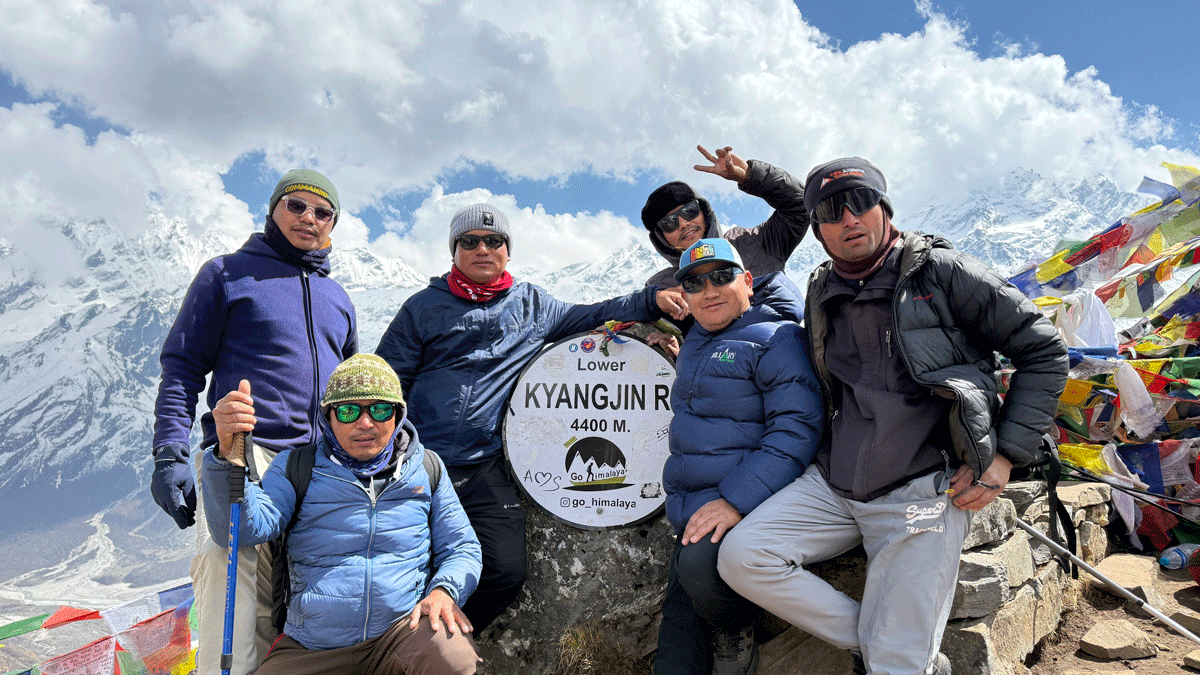
  • Hike to Kyanjin Ri, Tsergo Ri, or Langshisha Kharka for wide, stunning views of the Langtang Himalayas.
  • See the sacred Gosaikunda Lake and nearby alpine lakes such as Bhairav Kunda and Saraswati Kunda.
  • Witness the massive Langtang glaciers, including Langtang Lirung and Yala Glacier, which add drama to the mountain scenery.
Private Group Discount Cost
Person(s) Price per Person
1 Pax USD 945
2 Paxes USD 745
3 Paxes USD 715
4 - 6 Paxes USD 695
7 - 12 Paxes USD 675
13 - 18 Paxes USD 645

Langtang Gosaikunda Trek Overview

Deep within the majestic Himalayan range, the Langtang Gosaikunda Trek is a hidden gem for those who crave a peaceful yet thrilling adventure. If you’re looking to escape the crowds of Everest Base Camp or Annapurna Base Camp, this trek is the perfect alternative. Along the way, you’ll wander through lush forests, charming mountain villages, and breathtaking landscapes, all leading up to the sacred lake of Gosaikunda.

With Hillary Step Treks, this journey takes you straight into the heart of Langtang National Park. You walk past flowing rivers, dense greenery, and rugged peaks with wildlife sightings like musk deer, red pandas, monkeys, and the vibrant Danfe, Nepal’s national bird. Stops like Kyanjin Ri, Langshisha Kharka, and Tsergo Ri offer some of the absolutely unforgettable views of the Langtang range.

But the trek isn’t just about scenery. You’ll also get a taste of the warm, welcoming Tamang community and its culture. They are always eager to share their stories, traditions, and daily lives. Thus, your Langtang journey will have a richer, more personal feel. Keep reading to discover the full itinerary of the trek package, essential permits, difficulty, and other handy tips to get ready for this epic Himalayan adventure.

Langtang Gosaikunda Trek Itinerary

Collapse All
Day 01

Drive from Kathmandu to Syabrubensi

9 hours drive by Public Bus L.D Lodge 1,450m/4,757ft

Your Langtang Gosaikunda journey begins with a classic drive from Kathmandu. Outside, you can see the shops, temples, kids in their uniforms, and office crowds along the roads. Then slowly, the noise fades, and the hills take over as the bus moves north along the Trishuli River. You pass small towns like Galchhi and Trishuli Bazaar. Once you start climbing toward Dhunche, the landscape opens up, and if the weather’s on your side, you will be able to see distant, dreamy views of Ganesh Himal and even Manaslu shining above terraced hills.

Finally, the last stretch to Syabrubesi dives into a deep valley with tight bends, steep cliffs, and the occasional waterfall cutting across the rock. The road can get rough, especially during the monsoon. Syabrubesi itself is small but lively enough, packed with basic lodges, gear shops, and the check-post you’ll need to clear. It sits where the Bhote Koshi and Langtang Khola or River meet, giving it that fresh, river-side mountain energy. Stay overnight at Syabrubesi.

Kathmandu Drive
Kathmandu Drive
Day 02

Trek to Lama Hotel from Syabrubensi

B.L.D Lodge 2,480m/8,136ft

On the 2nd day of the trek, you leave Syabrubesi and cross the Langtang River. After that, you follow a riverside trail that instantly feels calmer and more wild. At first, the trail passes through mixed woods. Then you enter into dense rhododendron and oak forest, which turns bright with red, pink, and white blooms in spring. The river follows you the whole way. It’s sound hums in the background as you pass Bamboo, a popular spot for lunch or a quick tea break.

From Bamboo onward, the trail climbs toward Rimche. Here, you cross various suspension bridges, and then the path narrows. You may see grey langur monkeys swinging through the trees, keeping the walk interesting. As you trek uphill through a series of steady ascents, the air turns cooler and fresher. When you see a tiny cluster of lodges tucked into dense forest, you reach the Lama Hotel for the first night in the high hills on your Langtang Gosaikunda trip.

Day 03

Trek to Langtang Village from Lama Hotel

7 hours trek B.L.D Lodge 3,430m/11,253ft

Leaving Lama Hotel, you follow the Langtang River upstream and climb into a quiet forest. Soon after, the trees thin out. The valley slowly widens, offering clearer views ahead. Once you near Ghoda Tabela, the landscape shifts into a broad glacial valley with open yak pastures and low stone walls. You’ll also cross a small wooden bridge here. This one’s simple and sturdy, a nice change from the long suspension bridges you used earlier.

From Ghoda Tabela, you can witness Langtang Lirung along with its hanging glaciers shining high above the valley. The trail then continues through Thyangsyap and Chyamki to the new Langtang Village. In this section, you witness mani walls, prayer flags, memorials, and signs along the open meadows, quietly reminding you of the history and resilience of the people who rebuilt their homes here after the old village was destroyed in the 2015 earthquake in Nepal. Stay overnight at Langtang Village.

Way to langtang village
Day 04

Trek to Kyanjin Gompa from Langtang Village

4 hours trek B.L.D Lodge 3,865m/12,680ft

Today, you walk for a shorter period, but the journey is incredibly scenic. You start with a gentle climb through open yak pastures and small hamlets. Then, a broad valley floor shaped by ancient ice follows. Here, you’ll witness long mani walls, chortens, and water-driven prayer wheels, all backed by towering peaks. As you move forward, Langtang Lirung Glacier and the rugged moraines below it become more visible.

Continuing, the valley widens even further. You can see a ring of snowy summits surrounding you and pass the largest mani wall on the entire trek. Just before Kyanjin Gompa, you’ll also cross a final bridge. Like its name, it is an old monastery located against the backdrop of Langtang Lirung, Kimshung, and Yubra. If you look behind, you can see a long, grey, rocky glacier terrain, including the Kyanjin Glacier, which melts to form the Langtang River. After checking into your lodge, you can stroll to the gompa, climb a nearby ridge for sunset, or simply sit in a teahouse watching clouds drift over the snow-capped peaks. Stay overnight at Kyanjin Gompa.

Way to Kyanjin Gompa
Day 05

Explore Day in Kyanjin Gompa

3-6 hours B.L.D Lodge 3,865m/12,680ft

Day 5 marks a well-deserved rest day on our Langtang Gosaikunda trek, 13 days journey. Kyanjin Gompa is a perfect place for acclimatization, helping your body adapt to higher altitudes. After having breakfast, you will explore the culturally beautiful Kyanjin Gompa. Here, you can witness ancient Buddhist paintings in the artistic surroundings.

In the region, you can visit the nearby cheese factory. As you step inside, freshly crafted cheese greets you with a delightful aroma. You witness the traditional cheese-making process where skilled producers transform the milk from the Himalayan region into delicious dairy products.

After exploring the cheese factory, you can choose to explore Langshisha Kharka, Tsergo Ri, or Kyanjin Ri. These breathtaking surroundings present you with a stunning view of towering mountains, frozen lakes, and attractive valleys. After enjoying the charming nature there, you will descend back to the teahouse at Kyanjin for an overnight stay.

Travellers enjoying Cheese at Kyanjin Gompa
Day 06

Trek to Lama Hotel from Kyanjin Gompa

7 hours trek B.L.D Lodge 2,480m/8,136ft

Leaving behind the majestic Kyanjin, the Langtang Gosaikunda trek route descends towards Lama Hotel today. You’ll pass again through Kyanjin’s surrounding yak pastures, then Langtang Village. The memorials and mani walls feel different now that you know more of the valley’s story as you walk along the edge of the huge landslide scar.

As you continue downhill through Ghoda Tabela, you can feel the air getting warmer. Then, you descend down the thick forest trails surrounded by oak, rhododendron, and maple trees. Here, you may spot grey langurs and small birds. The sound of the Langtang River grows louder again as you walk toward the river. You’ll again cross familiar bridges to go back at the Lama Hotel for a night’s stay.

Lama Hotel
Day 07

Trek to Thulo Syabru from Lama Hotel

6 hours trek B.L.D Lodge 2,210m/7t251ft

Waking up early in the morning, you will continue the trek on the descending forest trails. You’ll pass places like Rimche, Bamboo, and Pahiro (a.k.a. Landslide). On this day, you’ll often notice more birdlife, terraced fields, and small side trails dropping down to the river. From Pahiro, you can clearly see two route splits: one path that returns to Syabrubesi, and another that climbs toward Thulo Syabru.

You take the latter path, which includes a steep ascent. The climb zigzags up through pine and rhododendron woods. As you trek higher, you can view the Langtang Valley and Ganesh Himal. After a while, you reach Thulo Syabru, a traditional Tamang village perched high on a hillside. It is spread along a balcony of terraced fields, with carved wooden houses, small monasteries, and a friendly village atmosphere. In the evening, you can experience local culture and try home-style Tamang dishes in the lodges. Stay overnight at Thulo Syabru.

Thulo Syabru
Day 08

Trek to Cholangpati from Thulo Syabru

7 hours trek B.L.D Lodge 3,654m/11,988ft

Leaving behind the comforts of Thulo Syabru on our Langtang Gosaikunda trek,  you will begin to ascend towards higher altitudes. The day’s trek begins with a steady walk through scattered houses and the farmland of Foprang Danda and Durdagang villages. Then, you’ll enter a thick hemlock, rhododendron, and oak forest, where you may just sight the elusive red panda. The vibe changes from lively to mysterious, almost like a cloud forest, especially in the monsoon and post-monsoon time of the year.

After some time, you reach Shin Gompa (Chandanbari). It is home to a small monastery and a well-known cheese factory that produces excellent, local, and fresh yak cheese. Above the Gompa, the trees slowly thin and the views expand to show Ganesh Himal, Langtang Himal, and distant peaks toward Manaslu on clear days. Continuing, the final stretch to Cholangpati follows a ridge with a distinctly alpine feel. Here, you’re above most of the forest, with low shrubs, and sweeping vistas on both sides. Stay overnight at Cholangpati.

Cholang Pati
Day 09

Trek to Gosainkunda Lake from Cholangpati

B.L.D Lodge 4,380m/14,370ft

Leaving Cholangpati on day 9 of the Langtang Gosaikunda trek, you climb steadily on a rocky high-altitude trail through Langtang National Park, passing terrain that is part of the wider red panda habitat. The ascent has some steep sections that can feel demanding, but expanding views of the Langtang and Ganesh Himal ranges help keep you motivated as the landscape turns more barren and alpine.​

Reaching Lauribina (Lauribinayak), you can pause at this beautiful viewpoint to rest and enjoy sweeping Himalayan panoramas before the final approach to the lakes. From here, the trail continues across rocky slopes, small streams, and high pastures toward the Gosaikunda basin. You can feel the air thinning and the terrain becoming increasingly stark and dramatic.​

Once you arrive at Gosaikunda, the main sacred lake revered by Hindus and Buddhists, you’ll witness the rugged peaks and colorful prayer flags all around. You can see people doing pujas or praying at the lakeside Shiva shrine while some circumambulate, collect water, and take a dip. After spending some time here, you can go explore nearby lakes such as Saraswati Kunda, Bhairav Kunda, and Surya Kunda. Stay overnight at Gosaikunda.

Gosaikunda Lake
Day 10

Trek to Gopte from Gosaikunda Lake via Lauribina Pass(4610m)

8 hours trek B.L.D Lodge 3,440m/11,286ft

Today, you will trek back to Gopte, waving farewell to the sacred shores of Gosaikunda Lake. The trail leads you on a steady but still challenging ascent toward the rugged Lauribina Pass (4,610m). Here, you can notice the air getting thin and patches of snow or ice here and there, especially in the colder season. Once you’re at the top, you can enjoy the breathtaking views of Mt. Langtang, Ganesh, and even distant peaks toward the Annapurna and Manaslu regions on a clear, dry day.

From Lauribina, you first have to cross broken rocks and glacial terrain before beginning a long descent that can get steep and rough in places. The scenery gradually shifts from bare rock and alpine tundra back into low scrub and forest. You’ll pass by a few small shelters and a lone teahouse at Phedi. Eventually, you reach Gopte, a small cluster of lodges surrounded by firs and rhododendron trees. It feels quiet and remote, with nothing but wind and distant streams breaking the silence. Stay overnight at Gopte.

Gosaikunda Pass
Day 11

Trek to Kutumsang from Gopte

7 hours trek B.L.D Lodge 2,470m/8104

Today, the Langtang Gosaikunda Trek takes you from the quiet village of Gopte to the peaceful hamlet of Kutumsang. You start the morning by walking through a thick rhododendron and fir forest. Moss-covered rocks line the path. Here, you also encounter small openings in the trees that give quick views into the deep Helambu valleys. After that, you trek uphill towards Tharepati, which sits on an open ridge. As a result, you can see the Jugal and Rolwaling ranges, and even the Langtang Himal, on clear days.

Then you continue the trek downhill, leaving the high alpine zone behind. This path leads to Magin Goth, a calm spot with prayer flags and small chortens. From here, the hills give way to terraced fields and scattered farmhouses. The air feels warmer. Soon, you reach Kutumsang village from where you can enjoy wide views stretching toward Kathmandu Valley. Stay overnight at Kutumsang village.

Kutumsang
Day 12

Trek to Chisapani from Kutumsang

7 hours trek B.L.D Lodge 2,165m/7,103ft

Today, the trekking trails take you toward Chisapani from Kutumsang village. The trekking trail is filled with green hills, oak and rhododendron forests, and small village settlements. It starts with a steep descent to Pati Bhanjyang, a large village with a police check post. From there, you climb again through terraced fields and pass Chipling before heading up the final ridge to Chisapani.

“Chisapani” means cold water, and the name fits. The air here feels crisp, especially in the mornings and evenings, so warm layers are a must. Once you reach the hilltop, you’re rewarded with wide views of Ganesh Himal, Langtang, and even Manaslu. The atmosphere is calm, green, and peaceful. Stay overnight at a hotel in Chisapani.

Chisapani
Day 13

Trek to Sundarijal and Return to Kathmandu

5 hours walk & 1 hours drive B.L.D Lodge 4,429ft
Today marks the last day of our trek in the Langtang and Gosaikunda region. The day’s trek starts from Chisapani and ends in Sundarijal. This section of the trek is a relatively easier route than the previous days. The descending trail passes through lush green forests within the Shivapuri National Park. This forest road keeps you happy and entertained as you listen to the pleasant sounds of birds.
After you pass through several appealing villages like Mulkharka and serene landscapes, you reach Sundarijal. From Sundarijal, you will return to Kathmandu on a private cab or local bus. The rest of the day is for relaxation and enjoying the city life. Stay overnight at a hotel in Thamel, Kathmandu.
Sundari Jal

Cost Inclusion

Accommodation

  • 12 nights Standard Accommodation during the Langtang Gosainkunda Trek. Six nights Attached bathroom with Hotel Shower at Syabrubensi, Langtang Village, Kyanjin Gompa(2 nights) Thulo Syabru & Chisapani . Six nights Common mountain standard at Lama Hotel(2 nights ) Cholangpani, Gosainkunda, Gopte, Kutumsang.

Meals

  • All the mountain standard meals (breakfast, lunch, dinner /the main course) while on the trek

Transportation

  • Both way Kathmandu to Syabrubesi by Public transportation and Chisapani to Kathmandu by Private Vehicle

Extras

  • Langtang National Park permit Fees
  • Trekker’s information management system (TIMS) Cards fees
  • Shivapuri National Park Fees
  • Professional & Government licensed holder English Speaking Trekking Guide
  • Porter (2 trekkers: 1 porter)
  • Staff costs including their salary, insurance, equipment, food and accommodation etc
  • Sleeping bag and Duffel bag (return after trek)
  • Trekking Map
  • First aid kit
  • Water purification tablets for drinking water
  • Seasonal fruits Every Dinner time
  • Trekking completion Certifivate
  • All government, Local Taxes, and official expenses

Not Included

  • International airfare
  • Nepal visa fees at Tribhuwan International Airport (15 Days US$30, 30 Days -$50, 90 Days- $125)
  • Accommodation & meals in Kathmandu
  • Extra nights accommodation in Kathmandu due to early return from the trek
  • All the drinks like tea, coffee, Coke, Fanta, mineral water, boiled water, hot shower, battery charge, desert etc.
  • Your trekking gears.
  • Your travel insurance which should include the emergency rescue.
  • Tips for your guide and porters

The Legend of Gosaikunda Lake You May Not Know

Gosaikunda Lake is one of the most sacred lakes in Nepal, with a famous story from Hindu mythology, mentioned in the Vishnu Purana and other Puranas. According to the legend, during the Samudra Manthan (churning of the cosmic ocean), the gods (Devas) and demons (Asuras) worked together to obtain the water of immortality (Amrit). During this process, a deadly poison called Halahala appeared. The poison was said to be so powerful that it threatened to destroy the entire universe.

To save all life, Lord Shiva, the god of destruction and protector of the universe, drank the poison. It remained in his throat, turning it blue, which is why he is also called Nilakantha, meaning “Blue Throat.” The poison caused him intense pain, so he went to the high Himalayas in search of water to cool himself. Using his trident (Trishul), he struck the Himalayas three times. From these strikes, three springs of water burst forth, forming Gosaikunda Lake and nearby smaller lakes. Shiva then bathed in the icy water to soothe the burning in his throat.

This is why Gosaikunda is considered a holy site. The large rock in the center of the lake is believed to be a submerged shrine of Shiva. Every year, pilgrims visit the lake to pray, perform rituals, and reflect, while trekkers enjoy the lake’s serene beauty. The legend of Gosaikunda reflects courage, sacrifice, and the power of nature, making the lake meaningful and inspiring for everyone who visits.

Reaching the starting point of Langtang Gosaikunda Trek

To reach the starting point of the Langtang Gosaikunda Trek, you must travel to the beautiful village of Syabrubesi, which lies on the banks of the Trishuli River and serves as the gateway to the Langtang National Park. You have two main transportation choices for the Kathmandu to Syabrubesi journey:
  • Local Bus: This budget-friendly option takes a long 7 to 8 hours (sometimes more, up to 10) on busy, single-lane roads. Buses depart early in the morning from the Machhapokhari bus park in Kathmandu.
  • Private Vehicle/Jeep: This faster and more comfortable option typically takes 5 to 6 hours. While more expensive, it offers flexibility and a less crowded ride.
The drive itself is scenic. You witness how life in the Trishuli Valley differs from Kathmandu Valley. The road is rugged, with gravel sections, especially after turning off the main highway at Trisuli Bazaar towards Dhunche and eventually Syabrubesi.

Lama Hotel at the Midpoint Between Syabrubesi and Langtang Village

Located at about 2,480m, Lama Hotel is an important overnight stop and a natural midpoint between Syabrubesi and Langtang Village. You may confuse it as a single building (gompa), but it is actually a collection of teahouses nestled in a peaceful forest along the Langtang River.

The trek from Syabrubesi to Lama Hotel and onward to Langtang Village takes around 5–6 hours each, making it a convenient rest point for managing both distance and altitude. Staying here also helps with acclimatization and allows your body to adjust before continuing higher up the valley.

Unlike Sybarubesi and Langtang Village, there are only a few teahouses here, run mainly by local Tamang families. They provide basic but comfortable amenities. Surrounded by rhododendron, oak, and pine forests within Langtang National Park, the Lama Hotel area gives you a genuine taste of mountain hospitality and local culture.

Meals, Accommodation, and Connectivity in the Langtang Gosaikunda Trail

Langtang Gosaikunda Trek offers well-established accommodation along the way. They are mainly teahouses and guesthouses built to welcome guests. At lower elevations, you’ll often find single rooms with attached bathrooms. But as you move higher, twin-sharing rooms and shared bathrooms become common. Once you’re at a higher altitude, ask about hot water, electricity, and shower facilities before booking your stay. These stops also offer a cozy place to rest and acclimatize after a day on the trail.

The hosts tend to prepare meals on the trek themselves. Meal options include Dal Bhat, fried noodles (chowmein), warm noodle soups (Thukpa), and Momos (Dumplings). Some teahouses may also offer simple international dishes. While the variety is limited, the food is perfect for sustaining trekkers through long days of walking and high-altitude exertion. Meals are usually cooked after you order. Thus, you get warm, nourishing food throughout the trail.

Since the Gosaikunda Lake trek trail passes through remote mountain locations, phone and internet connectivity can vary. Networks are generally stable at lower elevations, but a few spots, such as Lama Hotel and high-elevation areas near Gosaikunda Lake, may have weak or no signal. You can buy a SIM card in Kathmandu to use mobile data, so that you can communicate even if you don’t get internet access or if the Wi-Fi is unreliable.

Permits for the Langtang Gosaikunda Lake Trek

To trek through Langtang Valley and Gosaikunda, all trekkers must obtain two primary permits: the TIMS Card and the Langtang National Park Entry Permit. These documents help ensure trekking safety, maintain records for emergency support, and contribute to conservation programs within the protected areas.

TIMS (Trekkers’ Information Management System) Card

The TIMS card registers trekkers in a centralized system so authorities can track trekking routes and support search-and-rescue services when needed. There are three categories:

  • Green TIMS Card – for independent trekkers
  • Blue TIMS Card – for organization-based trekkers traveling through a registered trekking agency
  • Pink TIMS Card – for SAARC nationals

You must submit passport details and passport-size photos, and payments are made in Nepalese Rupees (NPR) at the Nepal Tourism Board (NTB) offices in Kathmandu or Pokhara.

Langtang National Park Entry Permit

This permit is required for all trekkers entering Langtang National Park. It can be obtained from the NTB office or the Dhunche entry checkpoint.

  • USD 30 for foreign nationals
  • USD 15 for SAARC nationals
  • Free for children under 10 years

The permit is checked at Dhunche, and again along the trail in places such as Chandanbari/Shin Gompa.

Permit Summary for Langtang Valley Gosaikunda Trek

Permit Type Who Needs It Cost Where to Obtain
TIMS – Green Independent trekkers USD 20 Nepal Tourism Board (NTB)
TIMS – Blue Agency-organized trekkers USD 10 Trekking agency or NTB
TIMS – Pink SAARC nationals USD 6 NTB
Langtang National Park Entry Permit All trekkers USD 30 (Foreign), USD 15 (SAARC), Free (Under 10) NTB or Dhunche Checkpost

Travel Insurance during Langtang Gosaikunda Trek

Travel insurance is a must for the Langtang–Gosaikunda Trek. The trail takes you into high altitudes, remote areas, and changing weather, so things can get unpredictable fast. Having insurance protects you from major costs if something goes wrong, such as severe altitude sickness, injuries, or a helicopter evacuation. Since there are no roads in many sections, air rescue is the only option, and it’s expensive.

Good insurance also covers lost luggage, theft, trip delays, and canceled flights. Make sure you check if it includes trekking above 4,000 meters before buying one, because many basic plans don’t. Read the details carefully, make sure you’re fully covered, and can enjoy the trek without stressing about “what if” situations.

Langtang Gosaikunda Trek Difficulty for Different Experience Levels

The trek to Langtang & Gosaikunda is moderately difficult but suitable for trekkers of different experience levels. Its mix of ascending, descending, and walking on steep, rough, and gravelly trails requires good physical condition and determination. However, if you prepare well and practice hiking on uneven terrain with a backpack, you can complete the trek successfully, even as first-time trekkers.

Another challenge on this trek is altitude sickness. Once you’re above 3,000m, you likely experience symptoms like headaches, nausea, breathlessness, vomiting, and in rare cases, hallucinations or unconsciousness. To reduce risk, our itinerary includes acclimatization stops, such as at Kyanjin Gompa, allowing your body to adjust gradually.

Moreover, the trek is spread over 13 days with minimum daily distances and elevation. This pacing helps beginners, intermediates, and experienced trekkers manage fatigue and altitude effectively, while still enjoying the stunning Himalayan landscapes, villages, and lakes along the way.

Below is a day-by-day breakdown of distances and elevation changes to help you understand the trekking challenge:

Day From → To Distance Elevation Gain / Loss
01 Kathmandu (1,350m) → Syabrubesi (1,450m) · Drive , +100m / –0m
02 Syabrubesi (1,450m) → Lama Hotel (2,480m) 10km +1,030m / 0m
03 Lama Hotel (2,480m) → Langtang Village (3,430m) 15km +950m / 0m
04 Langtang Village (3,430m) → Kyanjin Gompa (3,865m) 7–8km +435m / 0m
05 Kyanjin Gompa Exploration (3,865m → viewpoints) 5–12km Kyanjin Ri: +500–650m / same down Tsergo Ri: +1,000–1,200m / same down
06 Kyanjin Gompa (3,865m) → Lama Hotel (2,480m) 20–22km 0m / –1,385m
07 Lama Hotel (2,480m) → Thulo Syabru (2,210m) 11km +730m / –1,000m
08 Thulo Syabru (2,210m) → Cholangpati (3,654m) 9–10km +1,440m / 0m
09 Cholangpati (3,654m) → Gosaikunda (4,380m) 8km +726m / 0m
10 Gosaikunda (4,380m) → Gopte (3,430–3,440m) via Lauribina Pass (4,610m) 11km +230m / –1,170m
11 Gopte (3,440m) → Kutumsang (2,480m) via Tharepati 15km +250m / –1,230m
12 Kutumsang (2,480m) → Chisapani (2,165m) 16km +300m / –600m
13 Chisapani (2,165m) → Sundarijal (1,350m) → Kathmandu 13km trek + drive +100m / –915m

Best time to visit Langtang Gosaikunda Trek

All seasons are suitable for trekking to Langtang Gosaikunda, but each season offers a different trekking experience. Nonetheless, Langtang Gosaikunda trek’s best seasons for trekking are spring (mid-March-April-May) and autumn (mid-September-October-November). You get clear skies, stable weather, open teahouses, and plenty of daylight. These months offer the most comfortable trekking conditions, both in the lower valleys and around Gosaikunda.

Meanwhile, off-season trekking demands experience and proper preparation. Winter (December-January-February) brings extreme cold and heavy snowfall. This can slow the route and sometimes require crampons. Similarly, Monsoon (June-July-August) brings rain, slippery trails, leeches, and a higher risk of landslides. Anyone trekking in these months should plan carefully and carry the right gear, including medication for altitude sickness (Diamox), after consulting a doctor.

To help you plan better, here’s a quick temperature breakdown for both the lower valleys and the high-altitude areas around Gosaikunda.

Season Lower Elevation (Day) Lower Elevation (Night) High Altitude (Day) High Altitude (Night)
Spring (Mar–May) 15°C–20°C 0°C–5°C 5°C–10°C -5°C to -10°C
Autumn (Sep–Nov) 15°C–20°C 0°C–5°C 5°C–10°C -5°C to -10°C
Winter (Dec–Feb) 5°C–10°C -5°C to -10°C -5°C to 0°C -15°C or lower
Monsoon (Jun–Aug) 10°C–25°C 5°C–15°C 5°C–15°C 0°C–5°C

Equipment Checklist for Langtang Gosaikunda Trek

Trekking in the lap of mountains is a lifetime experience, and everyone wants it to be memorable, adventurous, and hassle-free. A proper equipment checklist must be done before commencing the Langtang Gosaikunda Trek. Thus, our HST representative provides you with the necessary equipment checklist, and the most preferred lightweight items are mentioned below:

Upper Body: –

  • A long-sleeve thermal base layer
  • Trekking shirt
  • Insulation layer
  • fleece jacket
  • Warm Down Jacket
  • Gloves
  • waterproof jacket
  • T-Shirt lightweight

Head:

  • Beanie and ear warmers
  • Sunhat & Scarf
  • Headlights with extra batteries

Face:-

  • Sunglasses with UV protection
  • Sunscreen
  • Dust Masks
  • Lip Balm
  • Face /Body wipe

legs & Boots:-

  • Two pairs of Trekking Pants
  • Waterproof jacket
  • Trekking boots
  • Sport Shoes
  • Gaiters
  • Crampons (If snow or Ice)
  • Slippers
  • Thermal Leggins
  • Underwear & thick Socks

Essentials Gear:-

  • Trekking pole
  • Sleeping bag
  • Towels
  • Raincoat
  • Water bottle
  • Backpack or Day pack

Toiletries:-

  • Quick-drying towel
  • Toilet paper
  • Toothbrush
  • Toothpaste
  • soap
  • Shampoo
  • Small mirror
  • Nail cutter

Personal accessories:-

  • Money
  • Camera
  • Phone
  • Watch
  • Power bank
  • Extra batteries for the Camera

Extra:

  • Diary & Pen
  • Books
  • Extra Passport copy and Photos
  • Binocular
  • First Aid Kits

Note: The above list can be customized as per the seasons and the necessity of the trekkers.

Benefits of Choosing Hillary Step Treks (HST)

  • Our experienced team of over one decade has accomplished treks in Langtang Gosaikunda Treks and other treks too.
  • Our guides are fluent in English and Nepali dialects. They know the terrain, culture, people, and the Langtang region through & through.
  • HST provides you with the best value services for your money. No hidden cost, every step with HST is transparent and clear. We value our clients over profit any day.
  • Your safety is the top priority while trekking with the HST team. Thus, in case of an emergency, a first-aid kit or provision of rescue teams is a requirement.
  • We are a government-registered company providing you with real care services at the best reasonable rate.
  • Our company also has 70% repeat clients over the years, which shows their trust in us.
  • We go the extra mile to assure you of a complete trekking experience in Nepal. HST is your ideal choice for trekking in Nepal.

Travel Tips for Lantang Gosaikunda Trek

  • Carry enough cash, because ATMs are unreliable after Syabrubesi. Lodges, meals, and showers only accept cash.
  • Purify all drinking water to avoid stomach issues, even if it comes from lodge taps.
  • Drink plenty of water, especially above 3,000m, to decrease the risk of dehydration.
  • Start walking early each morning to avoid afternoon fog and strong winds, and cross Lauribina Pass safely.
  • Dress warmly and bring waterproof gear. Temperatures above Gosaikunda can drop below zero with sudden snow and icy trails.
  • Expect limited phone and internet connectivity, as signals are weak or nonexistent in Gopte, Lauribina, and near the lakes.
  • Bring a power bank so you don’t have to rely on lodge charging stations, or avoid additional cost.
  • Use trekking poles on steep descents, such as the Lauribina Pass to Gopte section, because the trail is rocky, slippery, and technical.

Langtang Gosaikunda Trek Route Map

Langtang Gosaikunda Trek Map map link
Download map

Book the Dates
upcoming fixed departures

Langtang Gosaikunda Trek

Start: Tue, Feb 03
End: Sun, Feb 15

Trip Status: Booking Open
USD $945/per person

Group Size: 18 Pax
Remaining Spot: 18 Pax

Save USD $945 - 100.00% off
Deals end in 0h 0m 0s

Start: Tue, Feb 10
End: Sun, Feb 22

Trip Status: Booking Open
USD $945/per person

Group Size: 18 Pax
Remaining Spot: 18 Pax

Save USD $945 - 100.00% off
Deals end in 0h 0m 0s

Start: Tue, Feb 17
End: Sun, Mar 01

Trip Status: Booking Open
USD $945/per person

Group Size: 18 Pax
Remaining Spot: 18 Pax

Save USD $945 - 100.00% off
Deals end in 0h 0m 0s

Start: Tue, Feb 24
End: Sun, Mar 08

Trip Status: Booking Open
USD $945/per person

Group Size: 18 Pax
Remaining Spot: 18 Pax

Save USD $945 - 100.00% off
Deals end in 0h 0m 0s

FAQs of Langtang Gosaikunda Trek

Langtang Gosaikunda Trek Review

5.0

1 Reviews

Aroon Jira

Travel Year : 2023
Aroon Jira
Thailand

5 stars
I would like to give this trek the title "The Best Trek in Nepal" because it was such an amazing adventure to Gosaikunda and Langtang village. Truly a beautiful trek! We first trekked to Kyanjing Gompa, and climbed Tsergo Ri and head to Gosaikunda Lake. The guide was highly experienced, had all the knowledge about Langtang national park, village, Gosaikunda lake. He managed everything single-handedly. Loved him. The food was great and everything was great as promised. Thanks to HST,  he has a wonderful trekking team.
View all Reviews Write a review
This field is for validation purposes and should be left unchanged.

Review Trip

Max. file size: 2 MB.
Similar Trips
Langtang Valley Trek

Modarate

8

Days

$715

Starting from

Langtang Valley Trek
View Trip Itinerary
Trip Link
Tamang Heritage Trail

Easy to Moderate

7

Days

$670

Starting from

Tamang Heritage Trail
View Trip Itinerary
Trip Link
Langtang Gosaikunda Trek

Easy to Moderate

5

Days

$505

Starting from

Gosaikunda Trek
View Trip Itinerary
Trip Link
View sticky info

Starting Price
USD 945 per person

Private Group Discount Cost
Person(s) Price per Person
1 Pax USD 945
2 Paxes USD 745
3 Paxes USD 715
4 - 6 Paxes USD 695
7 - 12 Paxes USD 675
13 - 18 Paxes USD 645
This field is for validation purposes and should be left unchanged.

Trip Inquiry

MM slash DD slash YYYY
trekking inquire
Planning Your Journey to Nepal?

Discover the essential travel requirements for Nepal, including visa procedures, current travel restrictions, and health and safety guidelines. Our travel expert will guide you through the latest entry requirements based on your departure country and passport, ensuring you’re prepared for your Himalayan adventure.

Book a free Consultation Call