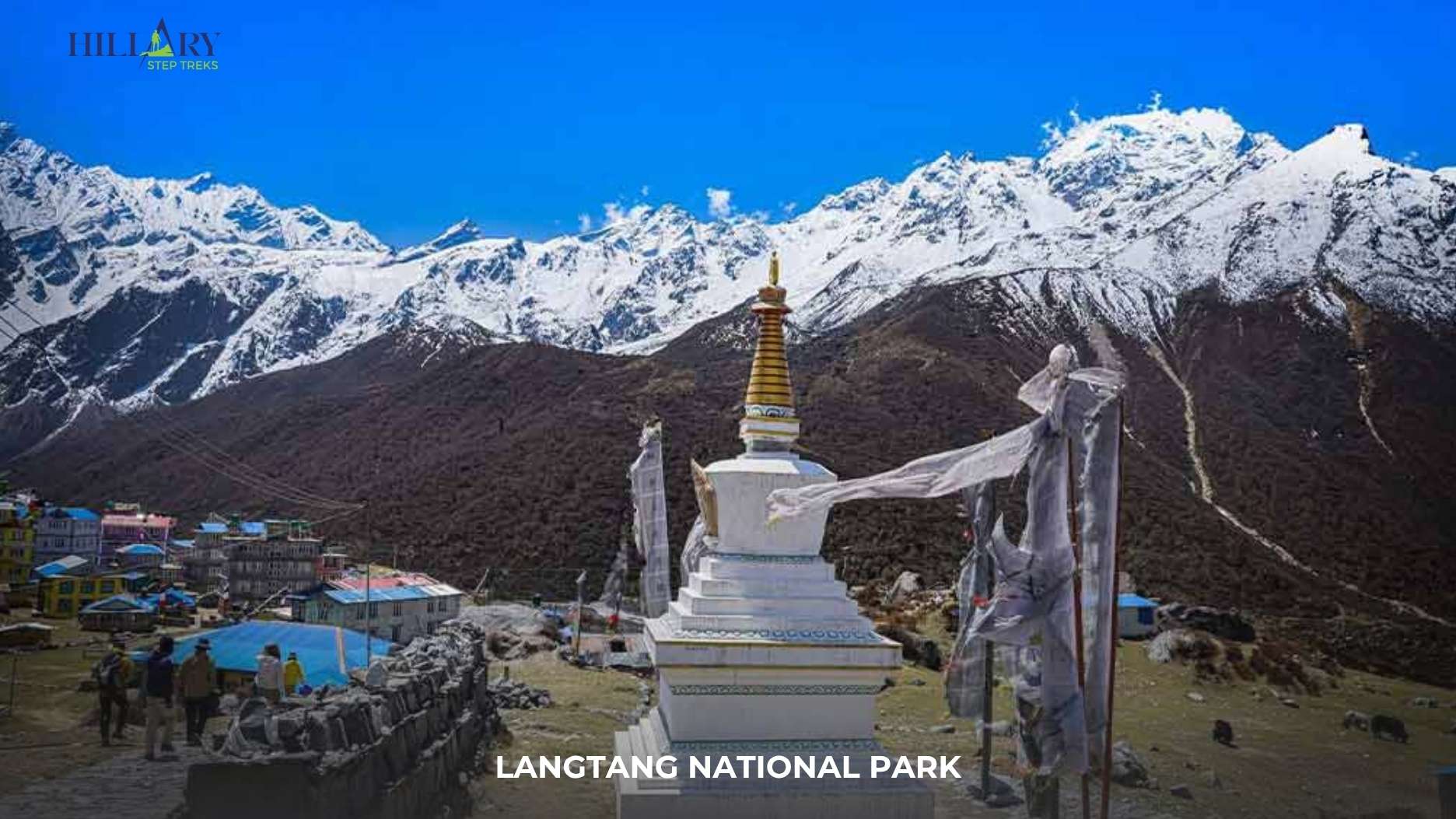

Known for its sacred alpine lakes and jaw-dropping views of Langtang’s snow-covered peaks, the Langtang Gosaikunda Trek is also infamous for its difficulty. Along the way, you climb up to the rugged, windswept Lauribina Pass at 4,610m and spend nights above 3,500m where the air is thin. On top of that, daily walks stretch 5-7 hours almost every day for nearly two weeks. Altogether, it’s the kind of trek that tests endurance, pacing, and how well your body adapts throughout the trek.
Here’s a complete guide to give you a clear picture of the Langtang Gosaikunda Trek Difficulty. We’ll explore how altitude, daily walking hours, and acclimatization combine with smart itinerary planning to shape the overall challenge, so you’re fully prepared for what lies ahead.
Langtang Gosaikunda Trek Difficulty Rating
- Difficulty: Moderate to Strenuous
- Trek duration: 12-14 days
- Total trail distance: ~82km
- Daily walking time: 5-7 hours
- Highest mandatory point: Lauribina Pass (4,610m)
- Highest optional point: Tserko Ri (5,033m)
- AMS risk: Moderate
- Technical gear required: No
- Best seasons: March-May and September-November
The Langtang Gosaikunda Trek difficulty is officially rated as Moderate to Strenuous. Meaning, it is a notch above typical forest treks but just below extreme high-altitude circuits like Everest or Manaslu. This rating is largely influenced by the trek’s high points, reaching 4,610m at the rugged Lauribina Pass and nearly 5,000m if you take on Tserko Ri.
Here, the “Strenuous” tag reflects the steady daily vertical gain, long hours on steep, uneven stone steps, and cumulative fatigue over 12-14 days. The thin air around Lauribina Pass, sudden weather changes like snow or freezing fog, and rocky terrain add to the challenges. Thus, it is a challenging but doable trek for trekkers with average fitness, especially if you stick to a proper acclimatization schedule to reduce the risk of Acute Mountain Sickness (AMS).
What Makes the Langtang Gosaikunda Trek Difficult?
The Langtang Gosaikunda trek throws several challenges at you, often at the same time. Here’s what actually makes this route hard, broken down factor by factor.
Continuous Elevation Gain from Syabrubesi to 4,600m
Unlike most treks, this one gives no real recovery days. Starting at Syabrubesi (1,550m), the trail climbs almost every day up until you reach Lauribina Pass at 4,610m, over 3,000m of net gain. On the hardest days, you climb 900-1,000m, and even shorter days still add 200-300m. Without proper rest, fatigue and altitude sickness build quietly, and by the time you reach Gosaikunda, your body is already more tired than it feels.
Varied Terrain and Trails
The elevation gain is one thing, but the ground you cover it on makes it harder. The lower sections follow well-marked. They are relatively smooth forested riverside trails. But from Langtang Village onward, the trail quickly gets rougher. Stone staircases stretch for long sections and turn slippery after rain. Then, once you arrive above Kyanjin Gompa, the path crosses loose glacial moraine with no clear edge.
Similarly, on the Gosaikunda side, the trail above Cholangpati is open, rocky, and fully exposed to wind. None of these sections is technically difficult, but switching between them over two weeks while carrying a loaded backpack and climbing in altitude seriously tires you.
Lauribina Pass
Lauribina Pass at 4,610m is the highest point of the trek and also the toughest part. You climb from Gosaikunda Lake, rising about 230m over steep, rocky terrain. At this altitude, every step feels much more laborious. Most trekkers need to stop every 10-15 steps just to catch their breath, which is normal at 4,600m. Then, the descent after the pass towards Ghopte is equally challenging. It drops 1,180m on loose gravel, testing your already tired knees. The pass is doable, but it takes all the energy you have left that day.
Long Trekking Days
The daily walking hours on this trek are long. You need to trek 5 to 7 hours almost every day for nearly two weeks. What makes it tougher is how it adds up. A 6-hour walk on Day 2 feels fine, but the same walk on Day 9 at 3,800m, with tired legs, feels much harder with altitude slowing your pace. What takes 4 hours, low sections can take 6 hours above 3,500m. If you don’t plan for this ahead, you’ll reach the teahouses later, leaving less time to eat and recover for the next day.
Remote Sections and Unpredictable Weather
Between Gosaikunda and Ghopte, you’re in a very remote area. There are no roads, shortcuts, or nearby towns. If something goes wrong, like altitude sickness, a fall, or a sudden storm, your only options are to wait for help or rely on a helicopter evacuation. Similarly, the weather conditions can change quickly above 4,000m. Even in October, snow is common at Lauribina Pass, and clouds can roll in within an hour. It’s not dangerous if you’re prepared, but there’s very little margin for mistakes in these high sections.
Langtang Gosaikunda Trek Day-by-Day Difficulty Breakdown
Each part of the trail has its own challenges, from forest climbs to high passes and rocky, exposed sections. Here’s a look at the Langtang Gosaikunda Trek in phases to see how distance, elevation, and terrain combine to shape the overall difficulty.
Day 1-3: Gradual ascent (easy to moderate)
After the 7-8 hour drive from Kathmandu to Syabrubesi (1,550m), the trek begins gently. On Day 2, you cover 11.3km to Lama Hotel (2,470m) with around 1,000 m of elevation gain over 6-7 hours, and then on Day 3, you climb 14.8km to Langtang Village with another 950m gain. By Day 4, a short 6.8km walk takes you to Kyanjin Gompa (3,870m). These opening days feel manageable, but don’t rush. Use this time to set your pace, drink plenty of water, and let your body start adjusting to the high altitude.
Day 4-6: Increasing altitude and effort
Once at Kyanjin Gompa, the trek shifts. Day 4 serves as an acclimatization day, with an optional hike to Tserko Ri (5,033m) following the “climb high, sleep low” principle to help your body adapt. Then, Days 5 and 6 bring a long 21.6km descent back to the Lama Hotel. This section is easier on your lungs but tough on your knees. Move steadily here, as your legs need to recover for the upcoming climbs.
Day 7-9: Mixed Terrain & Preparatory Climb
After leaving the Langtang Valley behind, the route turns toward Gosaikunda, and the terrain becomes more challenging. On Day 8, you climb from Thulo Syabru (2,260m) through Sing Gompa (3,330m), and by Day 9, reach Cholangpati (3,584m), an exposed ridgeline with open views of Langtang Lirung. With altitude staying above 3,500m from here, the forested valley fades behind you, and this signals the start of the trek’s second half.
Day 10-11: Peak Challenge
These are the toughest days. Day 10 climbs from Cholangpati to Gosaikunda Lake, passing Saraswati Kunda and Bhairav Kunda over 5-6 hours. Then, Day 11 crosses Lauribina Pass before descending 1,180m to Ghopte (3,430m). You need to use trekking poles on the loose-gravel descent for over 6-7 hours. These days, test your endurance more than any other section.
Day 12-13: Descent (easier but tiring)
Finally, the trek route eases into a downhill stretch from Ghopte through Kutumsang (2,470m) and Chisopani (2,140m) to Sundarijal (1,460m). Each day covers around 10 km. While your lungs get a break, tired knees and ankles still need careful attention. Take slow, deliberate steps to finish the Langtang Valley trek with Gosaikunda safely.
Tips to Make the Langtang Gosaikunda Trek Easier
Now that you know the trek difficulty and what to expect on the trail, it’s also important to understand proper preparation techniques and make smart decisions along the way. Here are some tips that focus on the real challenges, not generic advice, to help you complete the trek safely and comfortably.
Pace Yourself to Avoid Burnout Before Gosaikunda
The biggest mistake trekkers make is rushing through the first three days just because the trekking trail feels easy. By the time you reach a higher altitude, especially Lauribina Pass, you’ll really wish you had saved that energy. So, keep a pace where you can talk without getting out of breath. If you can’t, that is your sign to slow down.
Start Early Each Day
Start your day’s trek early, leaving the teahouse around 6:30-7:00 AM. Above 4,000m, the weather often worsens in the afternoon, so an early start keeps you ahead of it. It also gives you plenty of daylight to reach your stop, eat, warm up, and fully recover. Getting to the overnight stop before 2:00 PM leaves you much fresher the next morning than arriving at 5:00 PM.
Pack Smart and Light
Keep your daypack around 8-10 kg. Every extra kilo in your pack makes a big difference over 12-14 days of steep climbs. Too much weight will tire you out, while missing essentials can cause problems on the trail. If you can, hire a porter for items you don’t need constantly. Additionally, use trekking poles to ease knee strain on long descents and help on steep climbs like Lauribina Pass.
Choose the right itinerary with Proper Acclimatization
Plan for at least 12-14 days, with an acclimatization day at Kyanjin Gompa. It’s necessary because even the strongest trekkers can’t make up for a poorly planned schedule. A proper itinerary gives you a rest day at Kyanjin before heading to Gosaikunda and allows your body to adjust to the altitude before the pass. Any plan under 10 days skips important safety steps. The trek’s distance and difficulty need time, you shouldn’t rush it.
Avoid Common Mistakes That Others Make
Finally, here are some common mistakes to avoid on this trek. Never skip the acclimatization day at Kyanjin. You may feel fine at 3,870m, but that doesn’t mean you’ll be fine at 4,610m two days later. Likewise, avoid alcohol above 3,500m. It dehydrates you and hides early signs of altitude sickness. And always step to the uphill side of the trail when yak caravans pass for your safety.
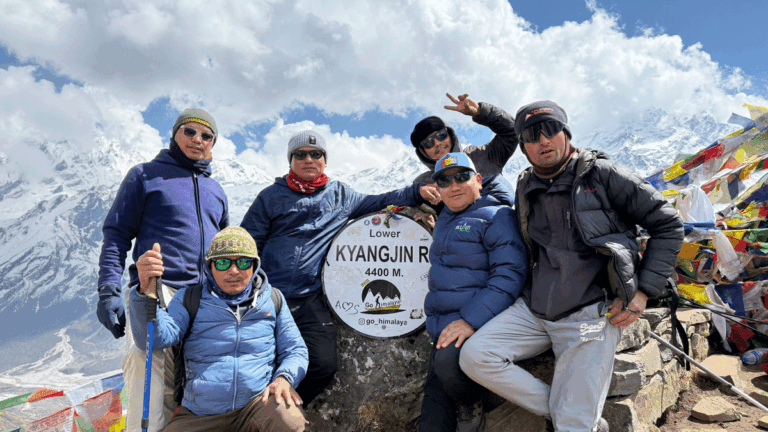
Who Should and Who Shouldn’t Do This Combined Trek to Langtang and Gosaikunda?
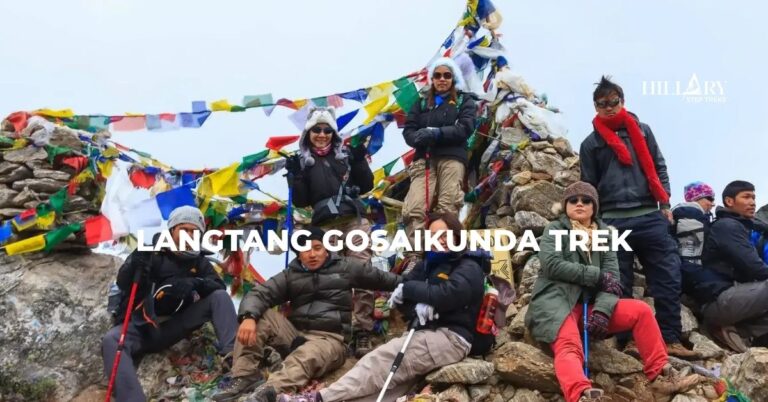
The difficulty rating gives you a general idea, but the real question is whether you’re the right fit for this trek. If you can walk 5-7 hours on hilly terrain for several days in a row, have experience hiking with a loaded backpack, have no serious heart or lung conditions, and can commit to 12-14 days without rushing, yes, you are suitable for the trek, and you should definitely go fr it.
However, if you’ve never hiked before, have low fitness, plan to finish in under 10 days, or have a history of severe altitude sickness, then it’s best if you avoid this trek for now. Similarly, if you are looking for a solo winter trek without experienced local guidance, you should not attempt the Langtang Gosaikunda circuit.
Don’t know if you’re fit enough? Do this simple fitness test. Try hiking uphill for 3 hours with a 7 kg pack without frequent stops. If you can do this, you have the basic fitness needed. If you’re a first-time trekker, you need to train first. Practice with a loaded backpack on steep ascents and descents before the trek.
Langtang Gosaikunda Trek Difficulty Comparison with Other Popular Treks
If you’re trying to place the Langtang Gosaikunda Trek on the Nepal trekking map, think of it as the next step up from beginner trails. It is challenging enough to test your stamina and altitude skills, without the extreme demands of Everest or Manaslu. It’s longer, more remote, and higher than Annapurna Base Camp, yet approachable for fit beginners and intermediate trekkers who want a true high-altitude adventure.
Here’s a quick look at how it compares to other popular treks:
| Feature | Langtang Gosaikunda | Everest Base Camp | Annapurna Base Camp | Ghorepani Poon Hill |
|---|---|---|---|---|
| Difficulty | Moderate-Strenuous | Strenuous | Moderate | Easy-Moderate |
| Max Elevation | 5,033m (Tserko Ri) | 5,364m | 4,130m | 3,210m |
| High Pass | Lauribina La (4,610m) | None | None | Poon Hill (3,210m) |
| Duration | 12-14 days | 14-16 days | 9-12 days | 4-5 days |
| AMS Risk | Moderate | High | Low-Moderate | Low |
| Crowds | Low-Moderate | Very High | High | Very High |
| Avg. Cost | USD 700-USD 1,000 | USD 1,200-USD 1,800 | USD 800-USD 1,200 | USD 400-USD 600 |
| Best For | Fit beginners and intermediates | Experienced trekkers | Beginners-Intermediate | First-timers |
Final Say
The Langtang Gosaikunda Trek difficulty is real, but it’s completely doable with proper preparation. Train for the daily walking hours, follow the acclimatization schedule, pack light, and start early each day. Do these consistently, and the trek rewards you with two stunning Himalayan valleys, a holy lake at 4,380m, a 4,610m pass, and far fewer crowds than most Nepalese treks in the Langtang region. It’s challenging, yes, but it is also absolutely worth it.
Not sure where to start with planning? Get in touch with us, we’ll walk you through the right itinerary, acclimatization schedule, and everything you need to know before the trek.