


If you are here, you are trying to decide between the two treks. Both of them take you deep into the Khumbu, past Sherpa villages, glaciers, and some of the highest peaks on Earth. Both deliver views of Everest that stay with you long after you return. But they are built around entirely different route logics, difficulty levels, and trail experiences.
So which one is the better choice for you? Here is a quick Everest Base Camp Trek vs Everest Three Passes Trek breakdown to help you decide.
Everest Base Camp and Everest Three Passes Quick Facts
Here is a quick look at both treks side by side before we get into the details.
| Feature | Everest Base Camp (EBC) | Everest Three Passes |
|---|---|---|
| Duration | 12-14 days | 18-20 days |
| Highest Points | Kala Patthar (5,644m) | Kala Patthar (5,644m) & Kongma La (5,535m) |
| Difficulty | moderate, suitable for average fitness | Strenuous, high endurance required. |
| Route Type | Linear: same trail up and down | Circuit: loop with no retracing |
| Crowds | Often overcrowded | Significantly fewer trekkers |
| Highlights | Close-up of Everest and Lhotse | Gokyo Lakes and four 8k peaks. |
| Terrain | Well-marked with established stone paths. | Rugged with glaciers and loose scree. |
| Best For | First-timers, bucket-list seekers | Experienced, solitude seekers |
Everest Base Camp Vs Everest Three Pass Itinerary and Route
Everest Base Camp Trek
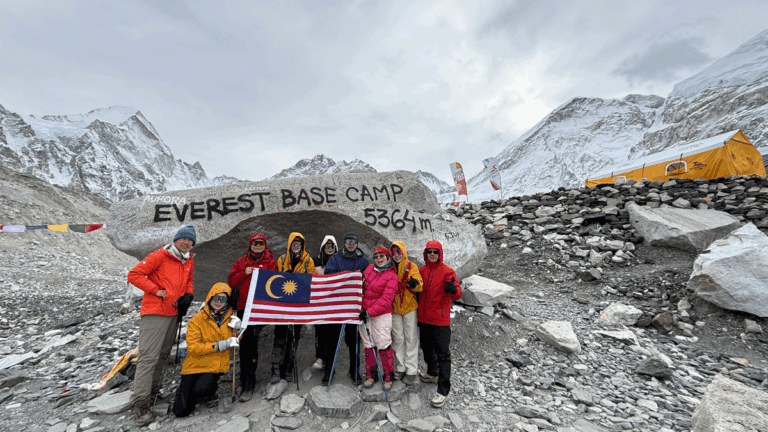
The Everest Base Camp, or simply known as the EBC Trek, follows a linear out-and-back route. You fly into Lukla at 2,845m,move up the Khumbu Valley through Phakding, Namche Bazaar, Tengboche, Dingboche, Lobuche, and Gorakshep. From there, you finally visit the iconic Everest Base Camp situated at 5,364m, climb Kala Patthar at 5,644m for the most direct view of Mount Everest summit pyramid, and then return down the exact same trail.
That return leg is what most comparison guides do not address honestly. By day eight or nine, you are walking back over ground you covered four days earlier. The same stone staircases, the same teahouse signs, the same river crossings. Most trekkers continue to enjoy the scenery on the return journey. The changing light, pace, and perspective keep the experience engaging and rewarding throughout. You’ll catch details you rushed past earlier and finally have the time to take photos at a relaxed, unhurried pace.
Our EBC trek itinerary lasts 14 days in total, with daily stages ranging from 4 to 8 hours of walking. It includes two built-in acclimatization days at Namche Bazaar (3,440m) and then at Dingboche (4,410m). You can adjust the pace if needed, but we recommend sticking to the planned itinerary to give your body the best chance to adapt safely and make the overall trek more comfortable.
Everest Three Passes Trek
The Everest Three Passes Trek is a true circuit loop through four major valleys in Khumbu. You enter the region through Lukla and move up the main Khumbu valley just as EBC trekkers do. Then, instead of reversing course, you turn east into the Imja Valley toward Chhukung and climb to Kongma La at 5,535m, the first and highest of the three passes. From the pass, you descend into the glacier terrain of central Khumbu Valley above Lobuche and Gorakshep, where you continue to Everest Base Camp and Kala Patthar just as on the standard EBC route.
From there, the circuit carries you west over Cho La at 5,420m, a pass known for its steep and often icy final section, and down into the Gokyo Valley. You spend a rest and acclimatization day at Gokyo village at 4,750m, where you can visit the Gokyo Ri at 5,357m for one of the broadest panoramas of the four 8,000-meter peaks in the region: Cho Oyu, Everest, Lhotse, and Makalu. Below you, six glacial lakes, collectively called the Gokyo Lakes, stretch along the valley floor in shades of green and turquoise.
The final pass, Renjo La at 5,360m, appears at the near end of the trek. Many trekkers consider it the most visually rewarding of the three. It descends through the remote Bhote Koshi Valley to Thame, a quieter and older Sherpa village rarely visited by trekkers. Then, you continue to Namche and Lukla.
Thus, you don’t have to walk a trail you have already seen at any point on the Three Passes Trek route. Every morning opens a new valley. Lasting 18 days, it also includes three built-in acclimatization days at Namche, Chhukung, and Gokyo village.
EBC Vs Everest Three Passes Trek Difficulty Comparison
Most trekkers judge difficulty by altitude alone, but that’s only part of the story. What really defines how tough a trek feels is the mix of altitude, terrain, daily walking hours, and how much room you have to adjust if things don’t go as planned.
Everest Base Camp
The EBC Trek is officially graded moderate to challenging. Its difficulty comes mainly from altitude. It doesn’t include a technical section. The trail stays well-maintained and clearly marked, with stone staircases, defined paths, and teahouses spaced at regular intervals. Because of this, the challenge builds from steady walking at high elevation rather than tricky footing or navigation.
Its itinerary manages altitude gain through planned acclimatization days. The hardest section is the climb to Kala Patthar. However, it comes on day 10 of the trek, after nearly two weeks of gradual ascent, so many trekkers with good basic fitness complete this route even without prior high-altitude experience. Similarly, the trail remains lively with trekkers from all over the world, so you’ll never feel alone. Plus, teahouses are always nearby for rest or support.
Everest Three Passes
The Three Passes Trek is graded Strenuous/Advanced. It is not only far more challenging than the EBC Trek but widely considered the most challenging teahouse trek in Nepal. It combines three types of difficulty simultaneously.
The first challenge is altitude. The trek crosses three high altitude passes above 5,300m, each requiring an early start and careful pacing to manage the strain on your body.
Second is the technical terrain. The formidable terrain at Cho La Pass is short but steep, with an icy descent on its western side. Here, microspikes or trekking poles are a basic piece of safety gear. Similarly, Kongma La involves a long, rocky ascent over loose scree, while Renjo La is the most straightforward of the three but still a serious high-altitude crossing.
Third is remoteness. The trail between the passes moves through narrow, quiet valleys with few trekkers and limited helicopter options. Teahouses in these sections are very basic, with simple rooms, short menus, and minimal facilities. There aren’t proper health clinics up there. At best, you’ll find only small health posts that can handle minor scratches or basic first aid, and serious medical help is far away if something major happens.
Thus, prior high-altitude experience helps make the trek safer and more enjoyable. Trekkers who have been above 4,000m and understand how their bodies react to altitude can navigate this route more confidently and comfortably.
Among Everest Base Camp and Three Passes, Which Trek Offers Better Views?
Both treks offer incredible Himalayan scenery, but it’s impossible to say which is better. Some people love the towering, up-close peaks, while others prefer wide, sweeping panoramas. In the end, beauty really is in the eye of the beholder.
Everest Base Camp
The EBC Trek is all about proximity. As you move up the Khumbu Valley, the mountains grow larger until they completely fill your field of vision. The primary highlight is the view of the Nuptse-Lhotse wall and the Khumbu Icefall up close, a jagged frozen river of ice that only EBC trekkers see from this distance. Likewise, the highest point of the trek, Kala Patthar, gives you the most direct and unobstructed face-on view of Everest’s summit available without a climbing permit. So, if your goal is to feel the full scale of the world’s highest peak from its base, the standard EBC trek delivers exactly that.
Everest Three Passes
The Three Passes Trek, on the other hand, offers a broader perspective. Instead of looking up at the mountains from the valley floor, you are standing on high passes above the valleys, looking across the entire Himalayan chain. From Renjo La and Gokyo Ri, Everest, Lhotse, Makalu, and Cho Oyu, all four eight-thousanders, sit in one unbroken frame. That view alone is something the standard EBC route cannot offer.
On top of that, the trek passes the world’s highest freshwater lake system, the Gokyo Lakes. These six glacial lakes, sitting between 4,700m and 5,000m, add vibrant colors and variety that the rocky Khumbu glacier terrain of the EBC trek doesn’t offer.
Cost Comparison Between EBC and Everest Three Pass Trek
The Three Passes Trek costs more mainly because it’s longer, more remote, and requires extra gear and insurance. Permits for both routes are the same: Sagarmatha National Park and Khumbu Pasang Lhamu Rural Municipality, so the price difference comes mostly from the extra days on the trail and the higher costs in remote areas.
| Cost Factor | EBC Trek | Three Passes Trek |
|---|---|---|
| Package Cost | USD 1,550 | USD 1,920 |
| Group Rate (4-6 people) | USD 1,270 | USD 1,515 |
| Daily Expenses (teahouse + food) | USD 25-60 | USD 18-50 |
| Permits | ~USD 35 | ~USD 35 |
| Specialized Gear | Usually none | Microspikes/crampons: USD 30-50 |
| Travel Insurance | USD 80-150 | USD 100-300 |
| Estimated Total (budget) | USD 1,500-2,000 | USD 2,000-2,600 |
| Estimated Total (comfort) | USD 2,000-2,800 | USD 2,600-3,500 |
Worth noting: Teahouses in the more remote sections of the Three Passes route, like those near Kongma La or Thame, sometimes charge more because supplies have to be carried in, and there is no competition nearby. Similarly, food options narrow above certain elevations.
Pro Tip: There are no ATMs beyond Namche Bazaar on either route. Carry enough cash for the full duration before you leave Namche.
Rescue Accessibility of Everest Base Camp Vs Everest Three Passes Trek
When it comes to safety, the EBC trek functions like a high-altitude highway with a robust safety net. The route passes through major villages equipped with helicopter landing pads, and during peak season, air traffic is frequent, so rescue helicopters are often nearby. Furthermore, the Himalayan Rescue Association (HRA) clinic in Pheriche provides specialized high-altitude medical support, allowing patients to be stabilized quickly before evacuation.
In contrast, the Three Passes Trek is far more remote, with steep passes and lateral valleys that make helicopter landings difficult. In emergencies, patients often need to be carried down to safer terrain before a helicopter can safely operate. Similarly, mobile signals are inconsistent, and satellite phones are sometimes the only reliable way to call for help. At such high elevations, helicopters can usually evacuate only the patient, leaving the rest of the group to continue on foot.
Everest Base Camp Trek Vs Everest Three Passes Trek Comparison Table
| Feature | EBC Trek | Everest Three Passes Trek |
| Duration | 14 days | 18 days |
| Distance | 130-150km | 160-180km |
| Maximum Altitude | 5,644m (Kala Patthar) | 5,644m (Kala Patthar) |
| Passes Crossed | None, Kala Patthar is a viewpoint | Kongma La, Cho La, Renjo La |
| Route Type | Linear, out-and-back | Full circuit |
| Difficulty | Moderate to challenging | Strenuous, advanced |
| Prior Experience | Not required | Strongly recommended |
| Technical Terrain | Minimal | Yes, Cho La icy section |
| Crowds | High, especially Oct-Nov | Moderate to low |
| Key Highlights | EBC, Kala Patthar, Ama Dablam | 3 passes, Gokyo Lakes, Gokyo Ri, |
| Views | Iconic, concentrated | Panoramic, continuously varied |
| Teahouse Quality | Good to excellent | Basic to good |
| Rescue Access | Straightforward | Limited to pass sections |
| Daily Trek Hours | 4-8 hours | 5-10 hours |
| Estimated Cost (solo) | USD 1,500 – 2,800 | USD 2,000 – 3,500 |
| Best Season | Mar-May, Sep-Nov | Mar-May, Sep-Nov |
| Cultural Highlights | Namche Bazaar, Tengboche | Namche, Tengboche, Thame |
| Includes EBC? | Yes | Yes, within the circuit |
Which Trek is Best for You?
Choose Everest Base Camp If:
- You are doing your first high-altitude trek and want a well-supported, manageable route
- You have 14 days and need to work within a fixed timeline
- You want the iconic experience of standing at Everest Base Camp and climbing Kala Patthar
- You prefer reliable teahouse infrastructure and a consistent trekker company on the trail
- You have moderate base fitness but no prior experience above 4,000 M
- You are more budget-conscious and prefer shorter trips
- You want a powerful, focused Everest experience rather than variety across multiple valleys
Choose Everest Three Passes If:
- You have previous high-altitude trekking experience and strong fitness
- You want a complete Khumbu circuit that covers multiple valleys without repeating terrain
- You can commit 18 days and handle longer, physically harder trekking days
- You value a broader range of views over a single concentrated destination
- You are comfortable with simpler teahouses, remote sections, and limited services
- You want fewer crowds and a more independent mountain experience
- You are prepared for mild technical terrain at Cho La and serious altitude at all three passes
- You want to include Everest Base Camp and Kala Patthar as part of a larger circuit, not as the endpoint
Conclusion
Both treks explore the Everest region and deliver what it’s famous for: massive peaks, high altitude, Sherpa culture, and views that are hard to match anywhere else on Earth.
The difference lies in the experience each route offers. The EBC trail is a focused journey to a single iconic destination, with a well-supported, linear trail, manageable difficulty, and a clear high point at Kala Patthar. The Three Passes Trek is a full circuit of the Khumbu, crossing three high passes, descending into valleys EBC never reaches, and returning through entirely new terrain.
If you’re a first-time high-altitude trekker, then the classic EBC trek is the right choice. And if you’ve already been in the mountains and want a broader, more complete Everest region experience, the Three Passes Trek is the ultimate challenge that awaits.


