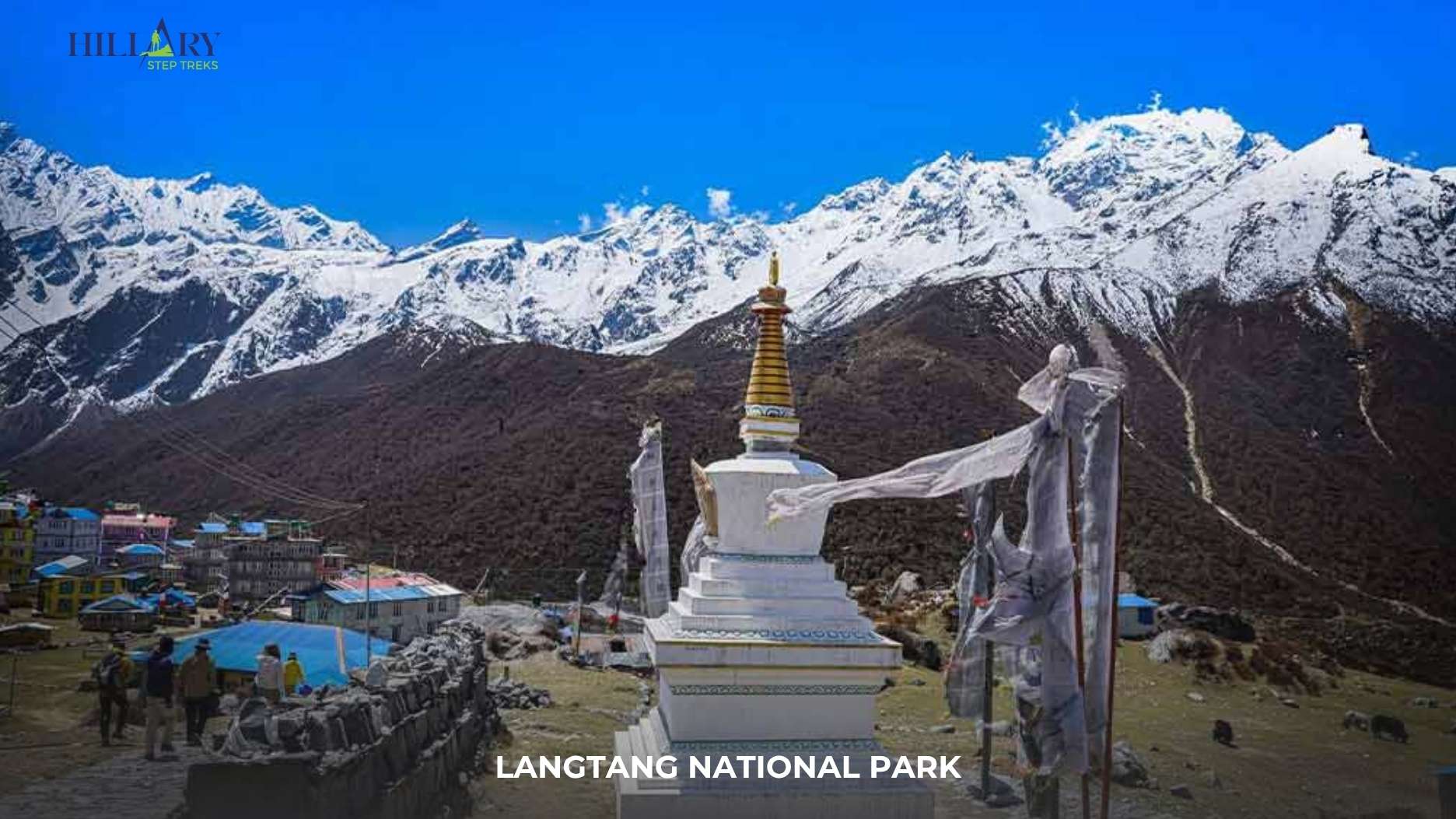

Deep in the heart of Langtang National Park, surrounded by the tall pines and the sound of rushing water, lies Lama Hotel. Travelers often confuse it with a single hotel due to its name, but it is rather a small cluster of family-run teahouses nestled in the forest at 2,470m. It roughly sits at the midpoint between Syabrubesi and Langtang Village. Thus, it is an essential rest and ideal stop for acclimatization on the Langtang Valley Trek.
Trekkers pause here not just to rest their legs, but to soak in the quiet rhythm of the forest and nearby Langtang River. Mornings here bring soft mists, and you can hear the chirps of birds. Meanwhile, teahouse dining rooms glow with firelight as travelers and guides share stories in the evenings. On clear days, you might catch a glimpse of Langtang Lirung and Dorje Lakpa (6,966m) peeking above the tree line. This distant scenery gently reminds trekkers continuing toward Gosaikunda on the Langtang Gosaikunda Trek that the high Himalayas are only a day’s walk away.
Thus, Lama Hotel is more than a resting spot for trekkers. It embodies the soul of the Langtang trek, which is simple, serene, and deeply connected to nature. Everything you need to know about Lama Hotel is explained below:
Finding Lama Hotel: The Forest Trail to Serenity
After getting the necessary trekking permits (Langtang National Park Entry Permit and the TIMS Card), your journey begins in Syabrubesi (1,500m). This riverside town is the starting point of the Langtang Valley Trek and will be your first overnight stay. So, you need to drive from Kathmandu to Syabrubesi through green hills and Tamang villages.
From this point, there are no roads. You follow the trek route to Langtang Valley. It starts with a footpath that climbs gently along the Langtang Khola (River) while it rushes through a deep gorge. You cross multiple wooden suspension bridges decorated with flags. Then you’ll pass through tiny settlements like Bamboo (1,970m) and Rimche (2,400m). The forest thickens as you ascend. The oak and pine trees give way to rhododendron that filter sunlight into soft green light once you reach 2,470m.
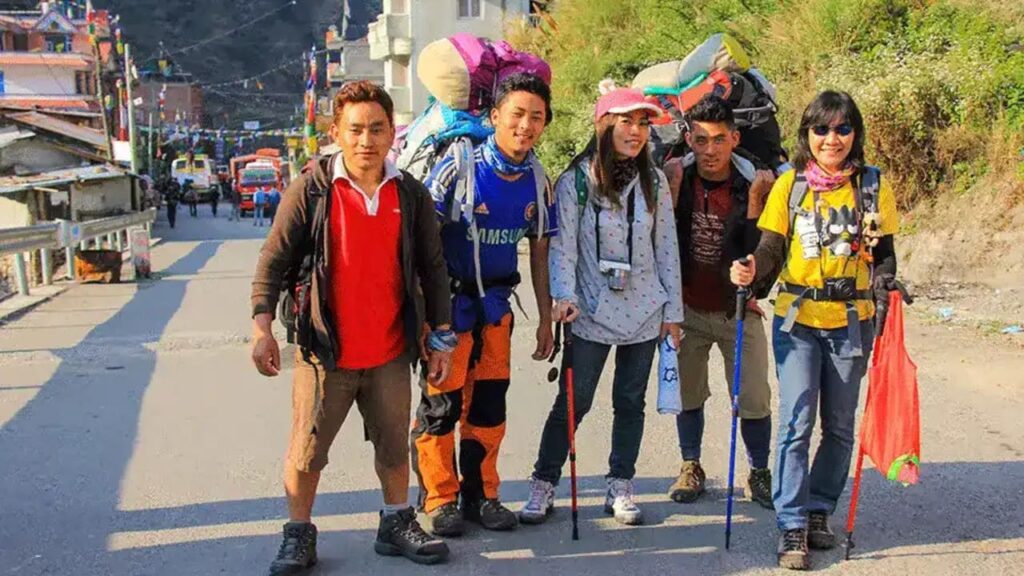
Along this trek route to Lama Hotel, you’ll only hear the murmur of the river, the rustle of trees, and the distant call of langurs in the canopy. After about 6-7 hours and a walk of 15km, you finally spot the first rooftops of Lama Hotel through the trees. Soon after, you’ll see a handful of teahouses tucked beside the riverbank.The moment you step into the settlement, you are greeted by the warmth of local hosts and the crackle of wood fires, and so you forget about the tough journey to reach here.
To walk here is to rediscover simplicity. The forest narrows the world to its essentials: your pack, your pace, your breath, and the promise of a hot meal waiting in a hidden valley.
Quick Insight: You can obtain permits from the Nepal Tourism Board office in Kathmandu, a registered trekking agency, or at the National Park entry checkpoints in Dhunche or Syabrubesi.
What Makes Lama Hotel Village Special
Every trek has a moment where the noise of the world fades, and on the trek to Langtang Region, that moment is often found other than at Lama Hotel. Its peaceful location offers a rustic charm and sense of stillness. It’s where the steady climb from Syabrubesi ends, and you finally get time to breathe, listen, and simply exist.
During the day, the sound of the Langtang Khola fills the valley. Its constant rhythm soothes your body, mind, and soul. The air here might feel humid with the scent of pine, damp moss, and the earthy aroma rising from the forest floor. More importantly, you might just catch a glimpse of Langtang Lirung (7,227m) through the shifting branches far above the green canopy. You can also explore the surrounding forest to witness langurs, Himalayan monals, and even the elusive red panda, although the latter is a rare sight.
Similarly, the evenings at Lama Hotel are slow and communal. The teahouses start preparing meals and light up wood stoves. You will see trekkers and their team members sitting together with cups of butter tea. They take turns to share stories, maps, and laughs with people who quickly start to feel like old friends. There’s no Wi-Fi or noise of generators, only firelight and the warm companionship. It can get chilly outside as the mist gathers over the river. However, you can step out for a while to see the stars flicker faintly through the trees.
Beyond its calm, Lama Hotel is also a perfect stop to boost acclimatization. Sitting halfway between Syabrubesi and Langtang Village, it helps your body adjust naturally before climbing higher. For many trekkers, Lama Hotel becomes a peaceful resting stop where fatigue turns into peace, where the mountains first feel close, and where the Langtang trail begins to feel like home.
Simple Comfort in Life and Lodging at Lama Hotel
There are around six to eight family-run tea houses in Lama Hotel. All of them are made up of stone and wood with tin or corrugated iron roofs. Inside, rooms have twin beds and thick blankets to warm you up during the chilly night. Bathrooms are usually shared. Most of them have squat toilets, but newer teahouses may have western-style toilets too. Cold showers are free, but they can be extremely cold. So, it’s better to request a hot bucket shower (NPR 200-300). Similarly, charging your phone or camera may cost extra because teahouses often rely on solar panels and small local hydroelectric systems, which can run out quickly.
Although the facilities are limited, these tea houses have a special kind of magic, the kind that comes from simplicity. Reaching Lama Hotel after a long day’s climb through forest and river valleys, you can’t help but feel happy. The warmth of a teahouse fire and the smell of dal bhat, Nepal’s beloved lentil-and-rice meal, promise all the comfort you need. You can also get other simple meals such as noodles, momos, and Tibetan bread with honey. During your stay here, you must try local delicacies like yak cheese, sea buckthorn juice, or a cup of butter tea, a salty, rich staple of Himalayan cuisine.
There’s no Wi-Fi here or a reliable mobile signal, so it’s a natural place for a digital detox. After having dinner, you can gather around the stove for warmth. In the process, you can swap stories or play cards with other trekkers, or just simply watch, listen, and enjoy the moment. Thus, simple comforts in the lodges in Lama Hotel offer you enough warmth, connection, and the feeling of belonging in the middle of nowhere.
Trek with Us!
We Offer
Nature’s Pause: Things to See and Do Around Lama Hotel
Even in its quiet simplicity, Lama Hotel offers more than a place to rest. It invites trekkers to slow down, notice the forest, and connect with the rhythm of the mountains.
Morning Walks along the Langtang River
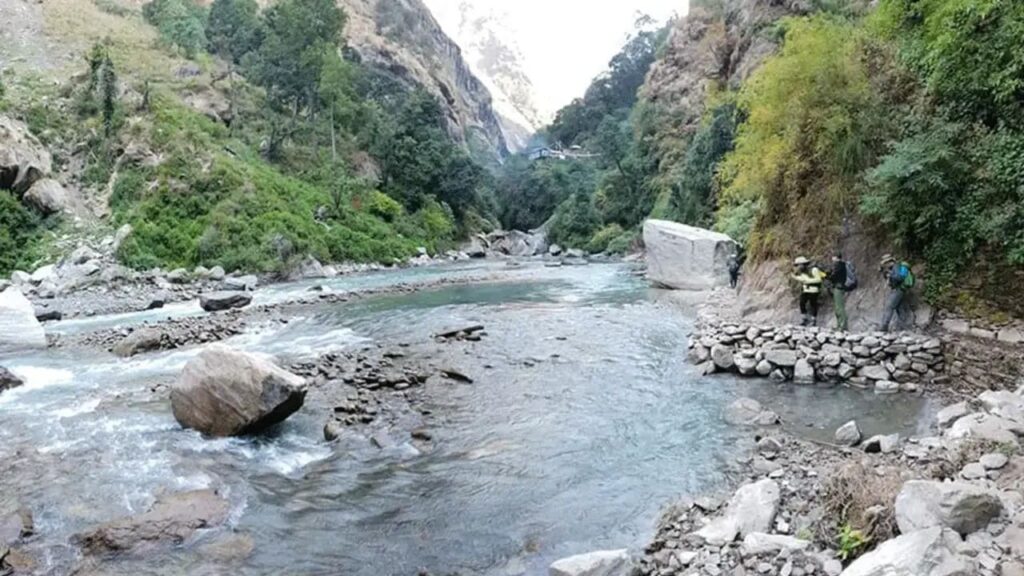
Here, early mornings are calm and cool. That, added with the sound of the Langtang Khola, is a perfect opportunity for a gentle nature walk. You will see small wooden bridges, waterfalls, and bird calls through the mist. As the sun rises, the light filters through pine and rhododendron trees, turning this path into a living painting. Thus, morning walk here is a peaceful way to start the day before the trail climbs higher toward Langtang Village.
Short Hikes and Photography Spots
Those staying an extra night at Lama Hotel can explore nearby viewpoints like Bamboo and Rimche. The way to the Bamboo village (1,970m) is a short descent. As you walk down, the river appears wider and you enter into a lush green backdrop. If you want a longer and scenic hike, you can briefly climb to Rimche (2,400m) to get distant views of the Langtang Lirung breaking above the tree line. Both hiking routes are rewarding and offer many moments for photography or gentle afternoon outings.
These short hikes along the Langtang Valley help you to adjust to the higher altitude that will come next and reduce the risk of altitude sickness (AMS). However, some travelers may start experiencing mild symptoms such as a mild headache, fatigue, or difficulty sleeping, even at the Lama Hotel. So, take it easy and pay attention to your body’s calling.
Observe Buddhist Architecture and Spirituality
As you walk through the village, you will notice mani walls (mani pa) carved with sacred mantras beside traditional wooden and stone houses. You’ll see locals always pass them clockwise. It’s believed to keep blessings flowing into the village. Similarly, you’ll see white-washed small stupas. They are called chortens, and they rise at the corners for good fortune. They are decorated with colorful prayer flags (lungta). Its color symbolizes an element and carries prayers with the wind. These sacred symbols reflect the deep Tibetan Buddhist spirit that defines the region.
Explore Wildlife and Forest Life
Because Lama Hotel is set within Langtang National Park, it is one of the richest ecological zones. Nearby, you can spot gray langur monkeys, Himalayan tahr, and various birds, especially the Himalayan monal pheasant. Mornings and evenings are the best times to spot wildlife. However, you should stay on marked trails. It’s best if you go with a local guide, as this is a genuine wilderness area with large, active wildlife.
Slow Moments and Simple Joys
For many trekkers, Lama Hotel becomes a pause in both pace and mind. It’s the ideal place to stretch, journal, or simply sit by the banks of the Langtang River and listen to the water run beneath the forest canopy. As evening arrives, the lodges glow softly with the light and warmth of woodfire. The forest quiets, and the simplicity of the moment feels enough to create a lasting trek experience.
Experiencing Lama Hotel Through the Seasons
At this altitude, the atmosphere and weather in Lama Hotel are generally cool. However, each season brings different experiences for trekkers. In spring (March-May), the forest bursts to life. You walk along the rhododendrons that bloom in pink and crimson, and the air feels soft and the days tend to be bright. Thus, spring days are comfortably warm for walking. Furthermore, the blue river sparkles, the sound of birds, and the scent of pine make this one of the most rewarding times to trek.
Then comes summer (June-August) with monsoon rains. The rains sweep through the valley, turning the hills a deep, lush green. Waterfalls pour down every slope, and the forest is filled with the sounds of rain and wind. Though the paths can be muddy and visibility is uncertain, Lama Hotel feels even more secluded, wrapped in mist and peace. So, for travelers who enjoy solitude, the monsoon brings its own calm natural beauty. However, wear long trousers tucked into your socks, use gaiters, and apply insect repellent to your shoes and clothes to avoid leeches and mosquito bites.
After that, Autumn (September-November) transforms the valley again. The skies become clearer and the air feels fresher, crisp, and golden. You can wake to sharp views of the snow-capped Langtang Lirung glowing above the forest. It is also a festive time, so the villages along the trail come alive with the celebrations like Dashain and Tihar. It’s the best time to visit Langtang for good reason: cool days, clear trails, and perfect visibility.
Lastly, Lama Hotel becomes a place of stillness during the winter months (December-February). The forest becomes silent, and the nights turn super cold. The river also moves slowly under thin veils of frost. It might even snow lightly, gathering on rooftops. With few to no trekkers, the lively teahouse is mostly empty. The dining hall, once filled with the chatter and laughter of trekkers, feels lonely. Thus, winter trekking is only for those who enjoy solitude, those who love the feeling of being alone with the mountains.
Seasonal Temperature Overview
| Season | Average High (°C) | Average Low (°C) |
|---|---|---|
| Spring (Mar-May) | 18-22 | 8-12 |
| Monsoon (Jun-Aug) | 20-25 | 14-18 |
| Autumn (Sep-Nov) | 15-20 | 6-10 |
| Winter (Dec-Feb) | 10-15 | 2-5 |
Now, if you’re ready for the Langtang adventure, let Lama Hotel be your first encounter with the valley’s calm heart. Contact us if you have any inquiries!