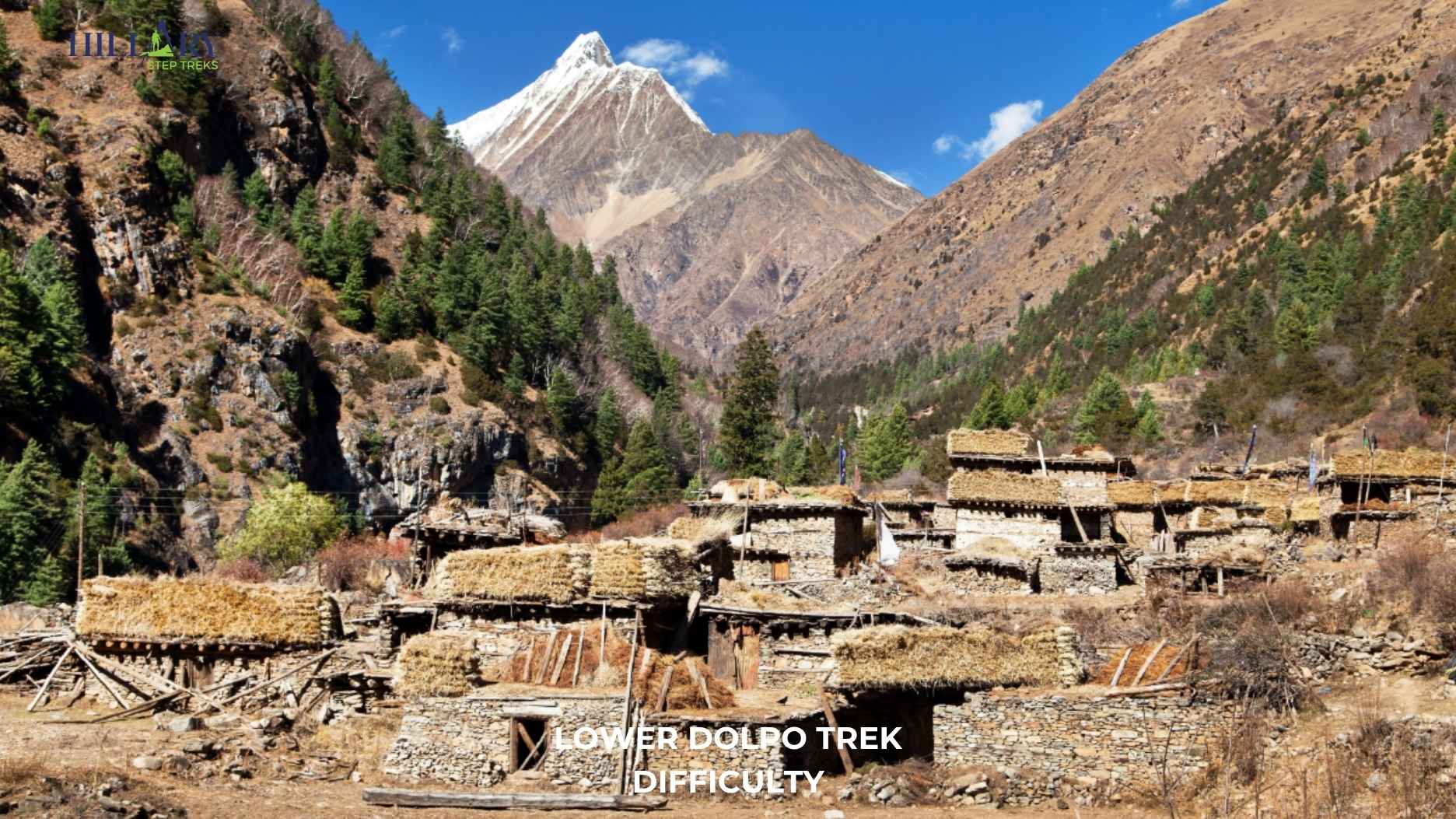
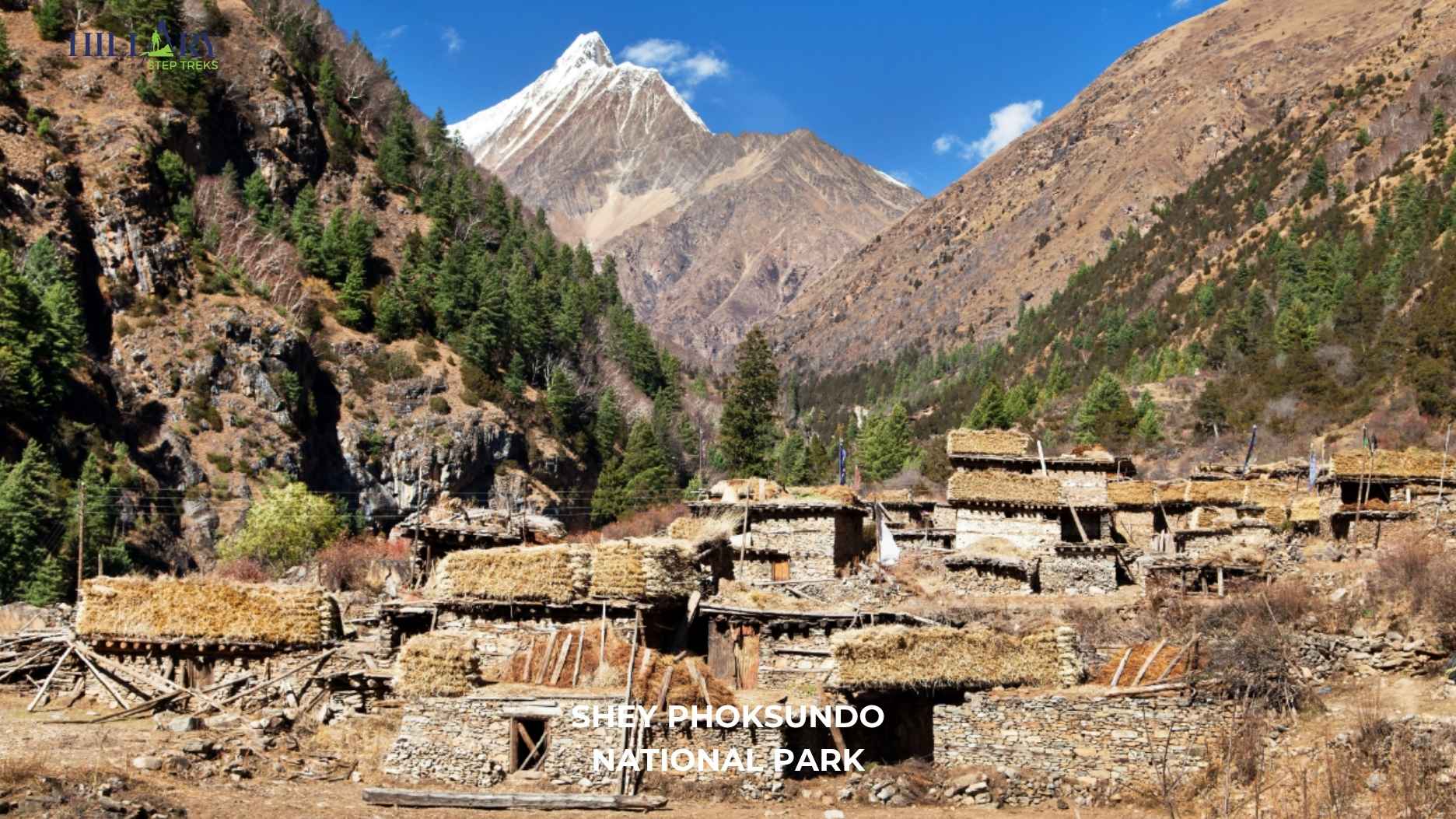
Shey Phoksundo National Park is Nepal’s largest national park and only trans-Himalayan protected area. Made famous by the Oscar-nominated film Himalaya (1999), it spans 3,555 km² across the remote western districts of Dolpa and Mugu, and houses a deep, turquoise lake at its center so vivid it seems unreal. The park also showcases landscapes and a sense of remoteness found nowhere else in Nepal. Fewer than 2,000 trekkers visit the park each year, a fraction of the crowds on the developed trails of Everest and Annapurna.
For those who do, the journey takes you across high-altitude desert plateaus, along cliffs above glacial rivers, and through Tibetan-influenced Bon villages where centuries-old traditions still shape daily life. Trekking through the park, you begin to understand what life is like in truly remote places, where blue sheep outnumber the trekkers sharing the trail. Every step combines physical challenge with immersion in a unique culture and environment.
Key Attractions within Shey Phoksundo National Park
Shey Phoksundo National Park rivals the Annapurna Conservation Area and Sagarmatha National Park in natural beauty and cultural richness, yet it remains far more remote and untouched. Here, the trails reveal turquoise lakes, towering cliffs, waterfalls, and alpine forests, ancient monasteries, mani walls, and sacred trails that reflect centuries of local spiritual traditions. Remote villages and diverse wildlife add to the park’s unique charm. The sections below highlight its main attractions and show what makes this region truly special.
Shey Phoksundo Lake
Shey Phoksundo Lake sits at around 3,611m in the heart of the park. It appears as a distinctive Y-shaped basin created by an ancient landslide dam below Ringmo village. A scientific survey conducted in 2004 by Nepal’s Department of Hydrology and Meteorology recorded a maximum depth of about 145m, making it one of Nepal’s deepest lakes. This depth, combined with mineral-rich glacial inflows, gives the water its striking turquoise color, which shifts subtly with changing light and weather.
Here, sheer cliffs rise several hundred meters almost straight up from the shoreline. They surround the lake like a natural amphitheater where even small sounds echo across the water. In 2007, authorities recognized the area as a Ramsar site for its ecological and hydrological importance. Phoksundo later drew international attention when filmmakers used it as a location for the Oscar-nominated 1999 film Himalaya (Caravan), which portrayed traditional Dolpo life in nearby villages. Today, most trekking itineraries include an acclimatization day here, allowing visitors to walk along the lakeshore, climb nearby viewpoints, and experience the landscape at a slow, unhurried pace.
Ringmo Village and Life around the Lake
Ringmo village sits on a 30,000-40,000-year-old landslide dam at the southern edge of Phoksundo Lake, at around 3,650-3,660m. About 200 people live here, making the village both a lakeside settlement and a cultural entry point to Lower Dolpo. They follow Bon and Tibetan Buddhist traditions, which shape daily life and appear in flat-roofed stone houses, prayer flags, mani walls, and seasonal festivals like Lhosar (Tibetan New Year), Yartung Festival, Shey Festival, Buddha Jayanti, Chaite, and Keja.
Each day moves at a slow rhythm. Villagers spend their day tending fields and livestock, while trekkers walk along the lakeshore or hike to nearby viewpoints. As evening settles in, people gather inside simple lodges warmed by wood or dung stoves. With no light pollution, clear nights reveal the Milky Way stretching above the dark cliffs. Small teahouses and homestay lodges serve basic meals and accommodation, allowing visitors to observe village life up close.
Monasteries and Sacred Sites
Shey Phoksundo National Park contains approximately 24 monasteries that serve as vital spiritual centers for both the Tibetan Buddhist and Bon-po faiths. The first major monastery is Tshowa (Thasung Tsholing) Bon Gompa, located just above Ringmo village on the northern shore of Phoksundo Lake. It is believed that a lama from the Pungmo Valley founded this monastery more than 800 years ago. It continues to function as an important center of Bon practice in Dolpo. Locals and monks protect the gompa and the surrounding landscape, which directly preserves local forests and wildlife.
The second is Shey Gompa, also known as Crystal Monastery, because of its location farther north, near Crystal Mountain, in Upper Dolpo. You reach it after a long and demanding trek to Kang La pass. Upon reaching here, you can sense why many consider it the spiritual heart of the region. In addition to these monasteries, there are chortens, mani walls, and sacred trails throughout the park. They are especially seen around Phoksundo Lake, where local beliefs discourage entering the water.
Phoksundo Waterfall and Viewpoints
Phoksundo Waterfall emerges from the southern outlet of Phoksundo Lake. It was created when the lake’s striking turquoise water outflowed through a massive, ancient landslide dam, forcing the overflow to cascade down jagged limestone cliffs. The waterfall plunges roughly 167m into the Suligad Khola gorge, forming one of the park’s most breathtaking natural spectacles.
To witness it, you can take a half-day hike from Ringmo to a nearby high ridge viewpoint to see the water dropping into a deep canyon shaped over centuries. The hike trail includes narrow and exposed sections, so caution is needed, especially during rain or icy conditions. For the best experience and photography, visiting in the late morning is ideal, as sunlight illuminates both the mist and the surrounding rock walls.
High-Altitude Wildlife and Biodiversity
Despite its cold and rugged environment, Shey Phoksundo National Park is home to high-altitude wildlife like snow leopards, Himalayan wolves, and Himalayan black bears. These animals are rarely seen in person, though you might notice their tracks or catch them on camera traps. More commonly, you’ll spot blue sheep (bharal) grazing on steep slopes, along with Himalayan tahr, musk deer in forested areas, and smaller animals such as red foxes and yellow-throated martens.
Similarly, birdlife also thrives across different elevations. You regularly see Himalayan griffon vultures, golden eagles, Tibetan snowcocks, and several pheasant species. Along the Suligad-Ringmo trail, forests gradually give way to alpine terrain, allowing visitors to notice clear changes in vegetation and wildlife within a short distance. These transitions show how closely plants and animals adapt to altitude and climate.
Climate, Seasons, and the Best Time to Visit
Dolpo’s climate is shaped by its location in the Himalayan rain shadow, making Shey Phoksundo drier than regions like Annapurna or Everest. Nights above 3,000-3,500m remain cold year-round, and weather windows are important for safety and comfort. Summers are short and cool, winters are long and harsh, and overall precipitation is lower than in southern Nepal.
That said, Spring (Mar-May) and autumn (Sept-Nov) are the best times to visit. In spring, trails clear of winter snow, valleys turn green, and daytime temperatures reach the low to mid-teens Celsius, though nights stay near or below freezing. Occasional showers or afternoon clouds may occur. Autumn brings clear skies, excellent visibility, comfortable daytime temperatures, and open lodges, making it the most predictable season for trekking. Spring offers quieter paths, while autumn provides the best mix of weather and logistics.
 USD 300 OFF
On the other hand, Monsoon (Jun-Aug) and winter (Dec-Feb) are less favorable. During the monsoon, trails can be muddy, forested areas may have leeches, and flights to Nepalgunj or Juphal are more prone to delays. Similarly, in winter, it often snows heavily above 2,500-3,000m, extreme cold, and limited lodge availability, making trekking suitable only for well-equipped, experienced teams.
Typical Temperatures by Season
As you can see, the most practical periods for planning a Shey Phoksundo or Lower Dolpo trek are late March to May and mid‑September to November, when temperatures are favorable, visibility is clear, lodges are open, and flights are reliable along the Kathmandu-Nepalgunj-Juphal route.
How to Reach Shey Phoksundo National Park
The most practical way to reach Shey Phoksundo is to combine domestic flights with a multi-day trek. However, overland routes by bus or jeep are also possible for those seeking a cheaper, slower, and more adventurous journey.
Standard Access Route (Recommended)
- Step 1: Kathmandu → Nepalgunj
Fly from Kathmandu to Nepalgunj (about 1 hour), the main air gateway to Dolpo. - Step 2: Nepalgunj → Juphal
Take a short mountain flight from Nepalgunj to Juphal, Dolpo’s airstrip. Flights are usually early in the morning and highly weather-dependent. - Step 3: Juphal → Dunai → Phoksundo
From Juphal, walk a few hours to Dunai, the district headquarters. Then follow the Suligad Valley upstream, passing villages such as Tarakot, Laini/Laina Odar, Nawarpani, and Chhepka, before climbing toward Ringmo village and Shey Phoksundo Lake. From this main trail, longer Lower Dolpo itineraries can branch off toward Dho Tarap, Numa La, and Baga La passes.
Overland and Budget Options
You travel by bus or jeep from Kathmandu to Nepalgunj, then onward via Jajarkot and Tallu Bagar toward Dolpo roadheads. This option is cheaper than flying, but the journey can take more than 20 hours on rough, dusty roads with basic facilities. Travel is also more exposed to weather disruptions or road closures, so it requires flexibility and patience.
Therefore, the flight-based route via Nepalgunj and Juphal remains the most time-efficient and reliable way to begin a Shey Phoksundo or Lower Dolpo trek.
Permits, Entrance Fees, and Regulations in Shey Phoksundo National Park
To trek to Shey Phoksundo and Lower Dolpo, you need to obtain three permits: a Lower Dolpo Restricted Area Permit, a Shey Phoksundo National Park entry permit, and a TIMS (Trekkers’ Information Management System) card.
| Permit / Fee Type | Approximate Cost & Validity |
|---|---|
| Lower Dolpo Restricted Area Permit | USD 20 per person per week USD 5 per extra day from Day 8 onward |
| Shey Phoksundo National Park Entry Permit | NPR 3,000 (~USD 24) per person |
| TIMS Card | USD 20-40 depending on category and issuing point |
Key Regulations
- The Lower Dolpo Restricted Area Permit (RAP) is issued only in Kathmandu via the Department of Immigration. It must be applied for through an authorized trekking agency and cannot be obtained in Juphal, Dunai, Ringmo, or elsewhere in Dolpo.
- A licensed trekking guide is compulsory in Dolpo’s restricted areas. Independent, unguided trekking is not permitted under current regulations.
- You should submit the trek route and trekking dates with the RAP application. You are expected to follow this itinerary, and any major changes should be coordinated through your agency to keep permits valid.
- In addition to the RAP, you must hold a valid Shey Phoksundo National Park entry permit and a TIMS card. These are checked at park entry points and at some trail checkpoints.
Conservation, Culture, and Responsible Trekking
Shey Phoksundo National Park follows a careful management strategy that balances the protection of its fragile high-altitude ecosystem with the economic needs of local communities. There are policies governing trekking, including restricted-area permits and mandatory local guides. Similarly, you ought to follow responsible trekking practices to minimize your footprint:
- Waste management: Carry out all non-biodegradable trash. The high-altitude environment decomposes waste extremely slowly, so always follow the rule: pack it in, pack it out.
- Water conservation: Avoid single-use plastic bottles. Use water purification tablets or filters to treat local stream water, reducing plastic waste in pristine gorges.
- Respect sacred sites: Walk clockwise around chortens, mani walls, and monasteries, following Bon and Buddhist traditions. Do not touch or remove religious artifacts.
- Support the local economy: Stay at community-run tea houses and hire local guides or porters. This ensures the financial benefits of trekking go directly to the families who maintain and protect the park.
- Cultural sensitivity: Always ask permission before photographing residents or monastery interiors. Dress modestly to respect the conservative local culture.
Ready to Trek to Shey Phoksundo?
Shey Phoksundo National Park is a high-altitude destination, where you can experience nature and culture in perfect harmony. You’ll see turquoise lakes shimmering beneath cliffs that rise hundreds of meters, hear waterfalls plunging into deep gorges, and spot rare wildlife in forests and alpine meadows. In villages like Ringmo, you can witness daily life shaped by Bon-po and Tibetan Buddhist traditions, while ancient gompas and sacred trails invite you to step into centuries of spiritual heritage. Every step you take, along lakeshores, forested valleys, or high mountain passes, pulls you into a world that feels both wild and profoundly sacred, offering one of Nepal’s most unforgettable trekking experiences.
Ready for an off-beaten journey? Let us guide you through Shey Phoksundo’s cliffs, monasteries, and remote villages.