The troubles are over, and the country is safe again. Look at this video to see how kindly tourist buses were treated even during the protest.

Plan Your Trip

Annapurna Sanctuary

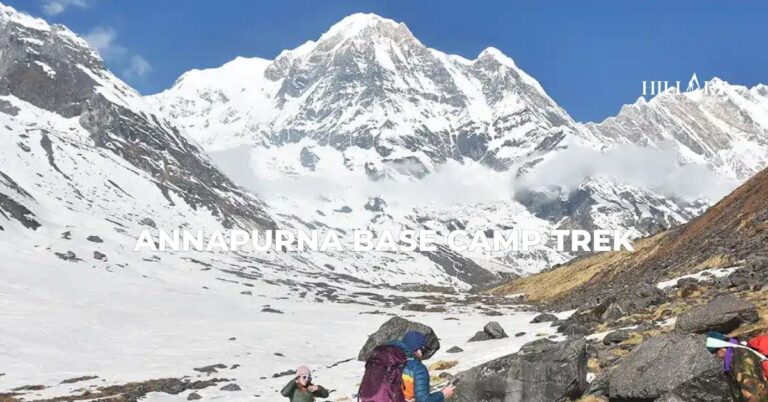
As you climb through the narrow Modi Khola valley, you finally arrive at the vast, oval-shaped glacial basin called the Annapurna Sanctuary. One by one, familiar Himalayan giants like Annapurna I (8,091m)Machhapuchhre (6,993m), and Hiunchuli (6,441m) rise into view. Together, they form a wide mountain bowl that feels calm, powerful, and deeply special. This hidden world, encircled by sheer walls of ice and rock, stands out as one of Nepal’s most extraordinary trekking destinations.

Want to experience trekking in the Annapurna Sanctuary in 2026? You’re in the right place. This guide will walk you through everything you need to know: the best time to go, trail difficulty, altitude-related concerns, and permits to reach Annapurna Base Camp (ABC).

Where Is the Annapurna Sanctuary?

The high-altitude glacial basin known as the Annapurna Sanctuary is in the Kaski District of north-central Nepal. It is located about 40km north of Pokhara, right in the heart of the Annapurna massif. This sacred, oval-shaped bowl is surrounded by some of the world’s tallest peaks, including entire Annapurna I, Annapurna South, Machhapuchhre, and Hiunchuli. Located north of Pokhara, the Sanctuary is both a geographical marvel and a spiritual place for the local Gurung communities.

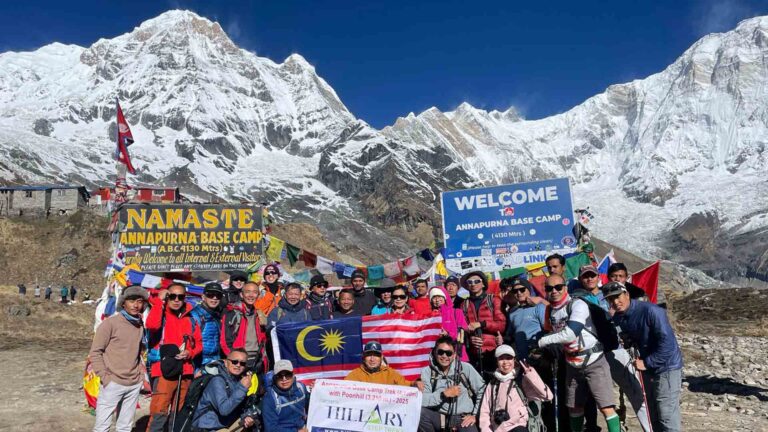
The basin has two main camps: Machhapuchhre Base Camp (MBC) at 3,700m and Annapurna Base Camp (ABC) at 4,130m. When trekkers talk about reaching the Sanctuary, they usually mean standing at ABC, fully enclosed by towering ridges and glaciated peaks. The feeling of being inside a natural mountain cathedral is what makes this trek truly unforgettable.

Annapurna Sanctuary or Annapurna Base Camp? What’s the Difference?

Many trekkers confuse the Annapurna Sanctuary with Annapurna Base Camp, but the Sanctuary actually begins long before the final camp. It begins at the narrow Modi Khola gorge between the walls of Hiunchuli and Machhapuchhre. This dramatic natural gateway, just above the settlement of Deurali, opens into the massive, oval-shaped glacial basin. The local Gurung people consider it a sacred, hidden world where deities reside. Trekkers and visitors are expected to respect certain cultural taboos here.

Meanwhile, Annapurna Base Camp (ABC) is the final destination at the very end of the basin. There is a cluster of lodges to let you spend a night at the heart of the Annapurna massif. In short, the Sanctuary describes the full 40km protected amphitheater that begins near Machhapuchhre Base Camp. Whereas ABC is the milestone, where you can view the complete 360-degree panorama of over ten towering peaks.

Annapurna Sanctuary Trek Snapshot

CategoryDetails
Trek Duration10 days
Total DistanceApproximately 96km (Round trip)
Highest Point4,130m (13,550ft)
DifficultyModerate
Terrain ChallengesSustained stone steps, big elevation gain, no technical climbing
Trek StyleLodge/tea house trekking
Daily Walking5-7 hours on average (up to 8 hours on challenging days)
Best Time to TrekSpring (Mar-May) & Autumn (Sept-Nov)
Permits RequiredAnnapurna Conservation Area Permit (ACAP) & TIMS Card
2026 Guide RuleMandatory (Must hire a licensed trekking guide)

Peaks That Ring The Annapurna Sanctuary

The Sanctuary’s beauty comes from the peaks that surround it. Here, the 10th-highest mountain in the world, Annapurna I, rising to 8,091m, dominates the southern skyline. To the north, you can witness the sacred pyramid of Machhapuchhre (6,993m), with its “Fish Tail” peak rising in perfect symmetry.

Around them, you’ll also see dozens of other peaks in the Annapurna range. This includes Annapurna South (7,219m), Hiunchuli (6,441m), and Gangapurna (7,455m), which form the amphitheater walls. In the morning, golden light first shines on the eastern faces, slowly painting each snowy ridge in shades of orange and pink. By evening, the effect reverses, with the high peaks glowing fiery red against a deepening blue sky.

This breathtaking light show is why photographers willingly wake at 4:30 AM at Annapurna Base Camp, frozen fingers and all, knowing the panoramic views are going be worth it.

Gurung Villages And Sanctuary Spirituality

During the trek to Annapurna Sanctuary, you pass through many iconic Gurung villages like Dhampus, Landruk, Chhomrong, and Ghandruk. These villages consist of traditional stone-and-slate houses that cling to the ridgelines. Each house has a flat, stone-paved courtyard used for drying grain, meeting neighbors, or basking in the sun. They often grow fresh vegetables for daily meals, below or beside their courtyard. The mountainsides are reserved for large, stepped terraces to grow millet, barley, and maize. Many families operate teahouses and treat guests like royalty.

That said, the Gurung (Tamu) community considers the basin a Beyul, a sacred “hidden valley” where the physical and spiritual worlds meet. They worship the mountains as sacred protectors and the literal homes of the gods. As a result, the government restricted access to the summit of Machhapuchhre, which they primarily revere as the home of Lord Shiva. However, you can sense the sacredness everywhere.

In the village, the scent of purifying juniper incense drifts through the air. Along the way, you encounter stone chortens and mani walls carved with sacred mantras. Prayer flags flutter in the wind, carrying blessings to all visitors and locals. Hence, walking clockwise around stone chortens and respecting the quiet of the high basin, you quickly realize you’re traveling through more than just a landscape. This is a naturally formed temple, where the towering peaks of the Annapurna Massif rise as cathedral walls and the vast Himalayan sky stretches overhead as its roof.

Interesting Fact: In the past, strict food taboos even forbade bringing meat or eggs past the gateway to avoid polluting the home of the deities.

Is This Trek Right For You?

The Annapurna Sanctuary trek is considered moderate. However, don’t be fooled, it still demands utmost respect. You won’t need ropes or crampons, but strong cardiovascular fitness and mental stamina are essential. The main challenge comes from steady elevation gain and the fact that you actually trek over nearly 30,000 hand-carved stone steps round-trip. 

The most notorious section is the final push from the Himalaya to ABC. You climb past Deurali (3,230m) and MBC (3,700m). Here, the oxygen-rich forests are replaced by thin alpine air as you make your way towards the main destination. Another challenge is the 2,500-step descent to the Chhomrong River, only to immediately face an equally steep, relentless ascent to Sinuwa.

Hence, this trek is best for fit trekkers with prior multi-day trekking experience. You should be comfortable walking 6-7 hours per day for a week, handle altitudes up to 4,130m, and adapt to simple meals and cold nights. The trek is not ideal for people with severe knee problems, very young children (especially under the age of 7), or anyone in a rush without time to acclimatize. Here, endurance matters more than anything. Not a technical skill nor brute strength.

Annapurna Sanctuary Altitude, Acclimatization, And Health

This 10-day journey begins in Kathmandu and steadily rises from lowland trails into the heart of the Himalayas at 4,130m. Day 1 takes you to Pokhara by road in 6-7 hours or by flight in 25 minutes. From there, you switch to a taxi/jeep to get to Dhampus (1,650m). From here, the actual sanctuary trek begins on Day 2. The trail dips gently to Landruk (1,565m), easing your legs into the rhythm of walking. However, Day 3 climbs sharply to Chhomrong (2,170m). This day is the first real test of endurance and the point at which you start to feel the effects of altitude.

Then, on Day 4, the route again descends into the Modi Khola gorge. Right after crossing the river, you climb to the Himalaya village (2,920m) through bamboo and rhododendron forest. From here, you’re now above 3,000m. Thus, you can feel your breath getting heavy and slow here as you climb uphill on the stairs. However, compared to Day 5, that is nothing. You gain a total of roughly 1,210m in this single day, climbing past Deurali (3,230m) and MBC (3,700m) to reach ABC at 4,130.

Once you reach ABC, you stand among 7,000-and 8,000-meter peaks at an altitude where oxygen drops to about 60% of sea level. You really need to pay attention to your body here. Drink plenty of water. If you experience headaches, nausea, dizziness, and loss of appetite, rest and inform the guides as soon as possible. If the conditions worsen to confusion, trouble walking, or shortness of breath even at rest, it’s time to descend immediately.

The return route begins on Day 6 with a long drop to Bamboo (2,310m), where you can quickly recover and enjoy the thicker air. Soon after, Day 7 returns you to Chhomrong, from where you cross high ridges to the Gurung village of Ghandruk (1,940m) on Day 8. From there, you trek to Syauli Bazar on Day 9 and take the drive back to Pokhara. Day 10 brings you back to Kathmandu.

All in all, this itinerary skips Jhinu Danda and doesn’t include a dedicated acclimatization day. You naturally acclimatize through gradual elevation gain and a steady trekking pace.

Reading The Annapurna Sanctuary Map And Trail Sections

Our Annapurna Sanctuary map helps you see elevation gain and villages along the route, so you can judge how tough each day will feel. The route falls into four clear sections. First, from the trailhead to Chhomrong. Second, Chhomrong to Deurali. Third, from Deurali to Machhapuchhre Base Camp and onward to ABC, the high-altitude push into the Sanctuary. Fourth, the descent via Bamboo, back through Chhomrong, and out through Ghandruk.

When you look at the map, check the altitude and spacing between each village. It shows where the trekking day gets longer and steeper. You can also notice villages like Dhampus, Landruk, and Chhomrong cluster in the lower sections. That pattern shifts above Bamboo, signaling that you’re moving deeper into the high alpine zone where settlements are less common. Reading the map this way helps you judge daily distance versus elevation gain and understand what each day of trekking will demand.

Tea House Life Inside The Annapurna Sanctuary

The Annapurna Sanctuary is a popular destination, so teahouses are well-established along the trail. Lower down at villages like Jhinu Danda and Chhomrong, you’ll find twin beds with thin mattresses and shared bathrooms (squat and western-style). Hot showers are available for NPR 200-400, and it has reliable micro-hydropower electricity. Meals are surprisingly varied. You’ll find dal bhat set (rice, lentils, vegetables), noodle soups, fried rice, Tibetan bread, pancakes, fresh vegetables, meat options, and endless cups of tea. Additionally, you can find free Wi-Fi in these villages.

Further up, at villages such as Sinuwa, Deurali, and Annapurna Base Camp, facilities are simpler. Bathrooms are shared, often squat. More importantly, showers aren’t available, and rooms have no heating. Therefore, you need to bring a sleeping bag rated at least -10 °C for ABC, because here, the temperatures drop below freezing even in peak season. As for meals, they become more limited, with fewer non-vegetarian options. Charging devices and Wi-Fi cost extra. However, you can rely on these services because the electricity is generated using solar panels.

Important note: The Annapurna Conservation Area does not allow single-use plastic water bottles. Bring purification tablets or a water filter, and refill your bottles from lodge taps or safe streams along the trail.

Permits And Regulations For Annapurna Sanctuary, Nepal

You need two permits to access the Annapurna Sanctuary trek route: the Annapurna Conservation Area Permit (ACAP) and the Trekkers’ Information Management System (TIMS) Card. For 2026, solo trekking is no longer allowed. You must hire a licensed guide for all Annapurna region treks. Our Annapurna Sanctuary trek package includes both permit and guide compliance, so you can start the trek without any worries.

PermitCost for ForeignersNotes
Annapurna Conservation Area Permit (ACAP)NPR 3,000Required for entry into the conservation area

Important Note: All guides must be government-registered. This rule improves safety and supports local employment. Children under 10 years are generally exempt from the ACAP fee, but are registered in the TIMS system.

Safety, Trail Conditions, And Responsible Trekking In The Sanctuary

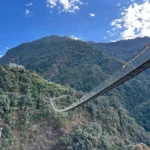
The trail takes you over hand-carved stone steps, dirt paths, and suspension bridges crossing the Modi Khola. Watch out for wet stones, especially when going downhill. They get slippery and tricky. Use trekking poles here to maintain stability and protect your knees. Landslides can happen during heavy rain in the monsoon, and you might see snow or ice at high altitudes near Deurali, MBC, and ABC in late autumn, winter, and early spring.

Along the way, try to move gently. Carry out your trash, use lodge toilets, and walk clockwise around stupas and mani walls to respect the sacred spots. Leave plants and wildlife, like Himalayan langurs, undisturbed so that this high-altitude paradise stays beautiful for future trekkers. Our guide will help you follow these practices and make sure you leave the Sanctuary just as magical as you found it.

Annapurna Sanctuary vs Other Annapurna Region Treks

While there are several treks that share the views of the same Annapurna range, they differ significantly in duration, difficulty, and scenery. Among them, the 7-day Annapurna Base Camp Trek actually follows the same route as the Annapurna Sanctuary. You just stay in different villages you pass on the Annapurna Sanctuary trek.

Similarly, the Annapurna Circuit Trek is another popular trek in the region. It takes 14 days, crosses the 5,416-meter Thorong La Pass, and offers more varied landscapes, including the arid Mustang plateau. Thus, it’s longer, higher, and more strenuous than the Sanctuary trek, perfect for seasoned trekkers.​

If you’re new to trekking or want a budget-friendly escape, then there’s the Poon Hill Trek too. It is a short trek that can be completed in just 7 days and reaches only 3,210m at Poon Hill. That makes it perfect for beginners or those with limited time. It offers sunrise views but lacks the immersive high-altitude experience of ABC.

Beginners can also opt for the Mardi Himal Trek. It is rather a newer route that takes you to 4,500m at Mardi Himal Base Camp in 5 days. It’s less crowded than the Sanctuary but equally beautiful. Passing by remote areas, you can enjoy ridge walking and get close-up views of Machhapuchhre.

Compared to other options, the Sanctuary trek offers the best balance. You trek to the iconic Annapurna Sanctuary, MBC, and ABC over 10 days. Reaching maximum elevation at 4,130m, altitude sickness is less common on the trek. That added to cultural immersion in popular Gurung villages like Ghandruk and Dhampus makes it very fulfilling.

Helicopter Exit, Extra Nights, & Side Trips to Add‑On

Did you know you can customize your Annapurna Sanctuary trek with us at Hillary Step Treks? Whether you want a quick mountain getaway or a slower, culture-focused journey, you can reshape the trek based on your trekking pace, time, and comfort level.

If you’re short on time or want to skip the toughest descents, we can provide a helicopter return from Annapurna Base Camp to Pokhara. It saves 2-3 demanding days on stone steps and costs around USD 500-800 per person on shared flights. It’s a great option for photographers, tight schedules, or anyone who wants a once-in-a-lifetime aerial view of the Annapurna massif.

And if you have a more flexible schedule, you can slow things down and add comfort. Extra nights in Chhomrong or Deurali help with acclimatization, while a stop at Jhinu Danda’s hot springs is perfect for easing tired legs. You can also extend your stay in Ghandruk to visit the Gurung Museum or wrap up your trek in Pokhara with paragliding or a calm boat ride on Phewa Lake. With these additions, your trek can stretch from 10 to 14 days, turning it into a more relaxed and immersive Himalayan experience.

Booking Your Annapurna Sanctuary Package With Us

The Annapurna Sanctuary trek blends a true high-altitude adventure with wide Himalayan views, deep Gurung culture, and dependable teahouse support. Reaching 4,130m and standing face-to-face with 8,000-meter peaks is an unforgettable memory to experience. The beauty of the Annapurna is made even richer by glowing sunrises, warm local hospitality, and the quiet satisfaction of earning every step through Nepal’s sacred mountain heart.

Explore our 10-day Annapurna Sanctuary Trek detailed itinerary and see if you’re ready for the trek in Nepal in 2026.

Hari Bahadur Gurung

Hari Bahadur Gurung

CEO & Founder

Hari is one of the most experienced and skilled trek guides and team leaders. He has 15 years of experience in the travel industry. He was born and brought up in the beautiful Ruby Valley, Dhading. He is very much familiar with the region and has commenced his journey as a porter for two years. Hari has participated in many pieces of training related to trekking and specializes in many trekking regions of Nepal. He is very fluent in English. His porter experience of two years has helped him to get acquainted with the needs and demands of the trekkers. His experience as a porter has benefited him in sharpening his leading and guiding skill. Hari is very jovial, energetic, kind-hearted, and caring. He is very passionate about his work and always motivates and leads the trek in a positive way. He feels happy in sharing his learnings and knowledge and passing it to the trekkers. He simply follows the company’s goal i.e. To Create Happiness and dedicates himself to doing so wholeheartedly.

Read Previous

Lower Dolpo Trek Difficulty

Prev Link
trekking inquire
Planning Your Journey to Nepal?

Discover the essential travel requirements for Nepal, including visa procedures, current travel restrictions, and health and safety guidelines. Our travel expert will guide you through the latest entry requirements based on your departure country and passport, ensuring you’re prepared for your Himalayan adventure.

Book a free Consultation Call