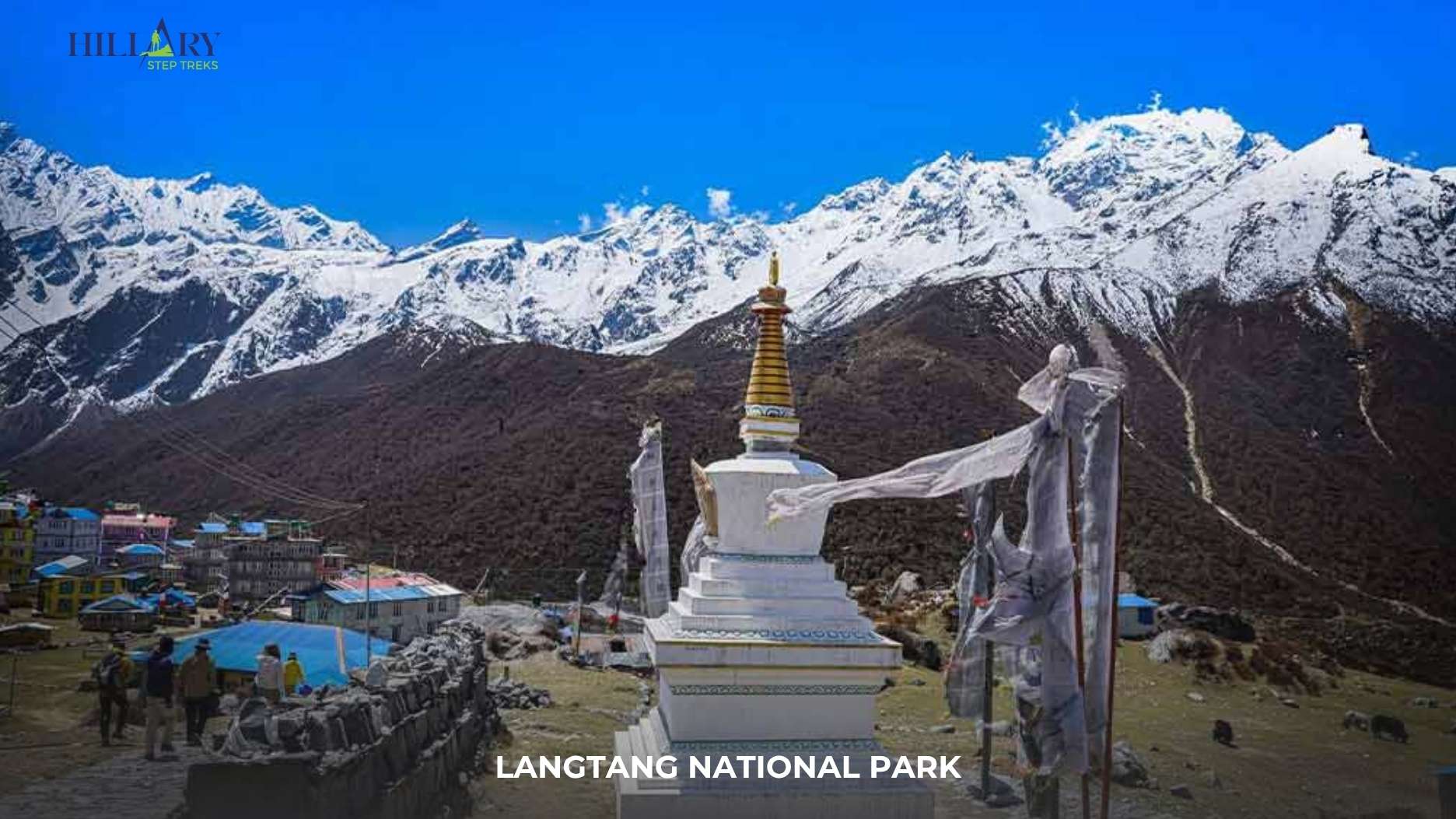
Langtang National Park is the kind of place where the Himalayas feel close, but the trek itself stays simple and approachable. Located just north of Kathmandu, it offers snow‑covered peaks, glacier‑carved valleys, green forests, and traditional Tamang villages.
This was Nepal’s first Himalayan national park, established in 1976, and its landscape climbs from warm river gorges to over 7,000m on mountains like Langtang Lirung. That sharp rise in height is what gives Langtang its mix of wildlife, monasteries, red‑panda habitat, and big viewpoints, all within a short journey from the capital.
In the sections that follow, we will discuss where Langtang National Park lies, the wildlife, flora, and fauna inside the park, permit details, trek trail options, and the best season to plan your trek in 2026. So, let’s get started.
Quick Facts About Langtang National Park
| Category | Details |
|---|---|
| Location | North of Kathmandu, Nepal-Tibet border |
| Province | Bagmati |
| Districts | Rasuwa, Nuwakot, Sindhupalchowk |
| National Park Since | 1976 |
| Buffer Zone Since | 1998 |
| Core Area | 1,710 sq. km |
| Buffer Zone Area | 420 sq. km |
| Elevation Range | ~1,000m to above 7,200m |
| Main Ecosystems | Subtropical, temperate, subalpine, alpine, nival |
| Entry Points | Syabrubesi, Dhunche |
| Required Permits | Langtang National Park Entry, TIMS card |
| Accommodation Type | Teahouses, mountain lodges |
| Best Seasons | Spring (Mar-May), Autumn (Sep-Nov) |
| Plant Species | 1,000+ |
| Mammal Species | 46 |
| Bird Species | ~380 |
| Key Wildlife | Red panda, Himalayan tahr, musk deer, monal, rhesus monkey, Himalayan black bear, ghoral |
| Key Flora | Sal, oak, maple, magnolia, rhododendron, larch |
| Main Communities | Tamang, some Sherpa, and Hyolmo |
| Major Religion | Tibetan‑influenced Buddhism |
| Major Peaks | Langtang Lirung, Ganchenpo, Yala Peak, Dorje Lhapka |
| Main Rivers | Langtang Khola, Trishuli, Bhote Koshi |
| Important Lakes | Gosaikunda, Panch Pokhari |
| Notable Glaciers | Langtang, Lirung, Yala, Langshisha |
| Core Treks | Langtang Valley Trek, Gosaikunda Trek, Tamang Heritage Trek |
| Other Treks | Panch Pokhari Trek, Helambu Trek |
Where is Langtang National Park Located?
Langtang National Park is located north of Kathmandu Valley in central Nepal, inside Bagmati Province in the Langtang region. It is only about 50-60km from the capital in a straight line, but the road has to follow the Trishuli and Bhote Koshi river corridors, so the drive usually takes a full day (around 8 hours). The park covers three districts: Rasuwa, Nuwakot, and Sindhupalchowk.
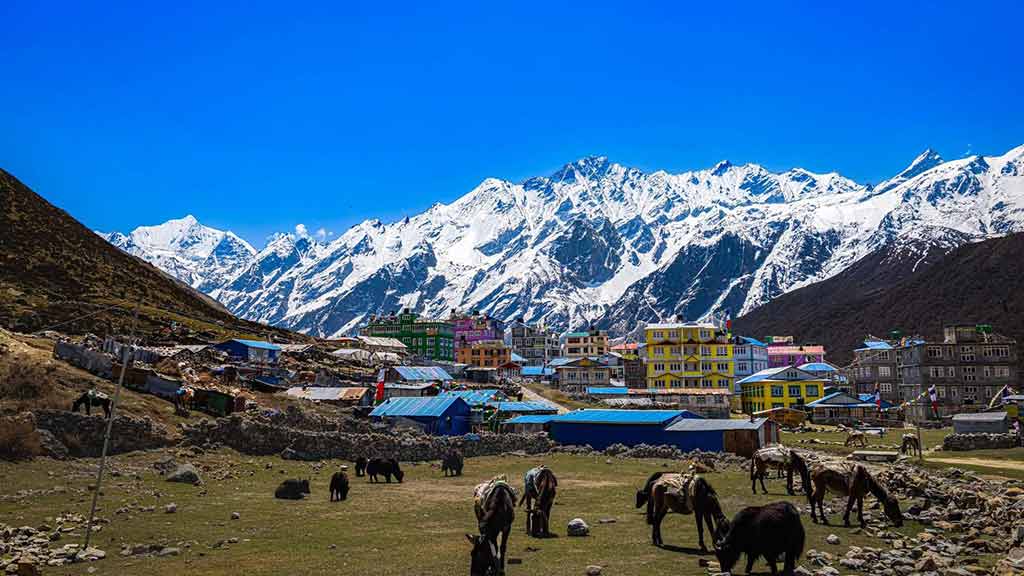
To the north and east, Langtang shares a border with the Qomolangma National Nature Preserve in Tibet, forming a larger cross‑border high‑mountain conservation area. To the west, the Bhote Koshi and Trishuli river valleys roughly mark the edge of the park. To the south, the boundary runs just above the rim of Kathmandu Valley and links into the headwaters of the Sun Koshi basin.
History of Langtang National Park
Langtang National Park was established in 1976 as Nepal’s first Himalayan national park and the country’s fourth protected area. Later in 1998, a buffer zone was added so local communities could take part in conservation work and receive a share of park income for village projects.
Then, in 2015, the earthquake hit Langtang Valley very hard, and the original Langtang village was almost completely destroyed. Over the last decade, trails, lodges, and settlements have been rebuilt, and today the trekking routes are fully open, and it is safe to visit Langtang National Park.
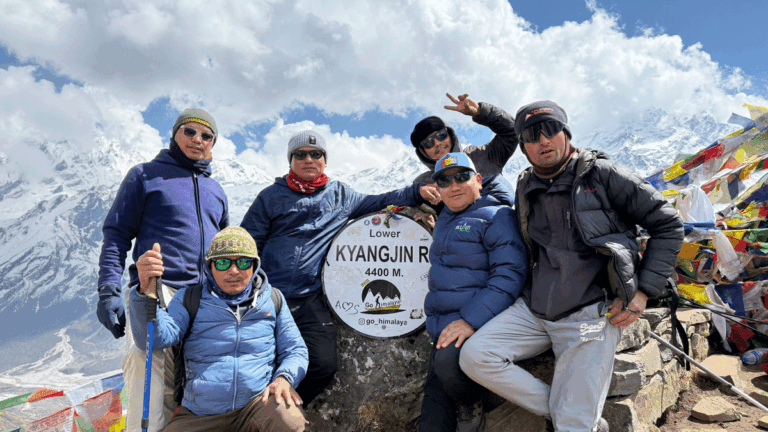
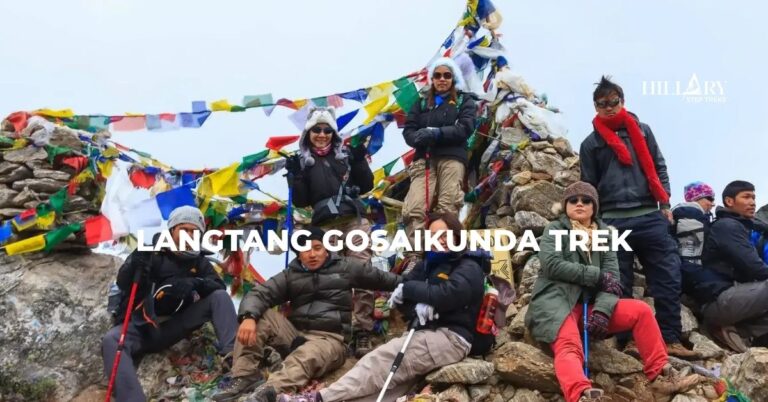
How to Reach Langtang National Park?
You reach Langtang National Park from Kathmandu by road. The drive takes you up to Dhunche and Syabrubesi, which are the usual trailheads for Langtang Valley and Gosaikunda. The drive follows the Trishuli and Bhote Koshi river valleys. One thing to note for the drive journey is that road conditions change with the season. During the monsoon, landslides and washouts on the Trishuli Highway are common, and delays are the norm. In autumn and spring, the road is more stable, and travel times are more predictable.
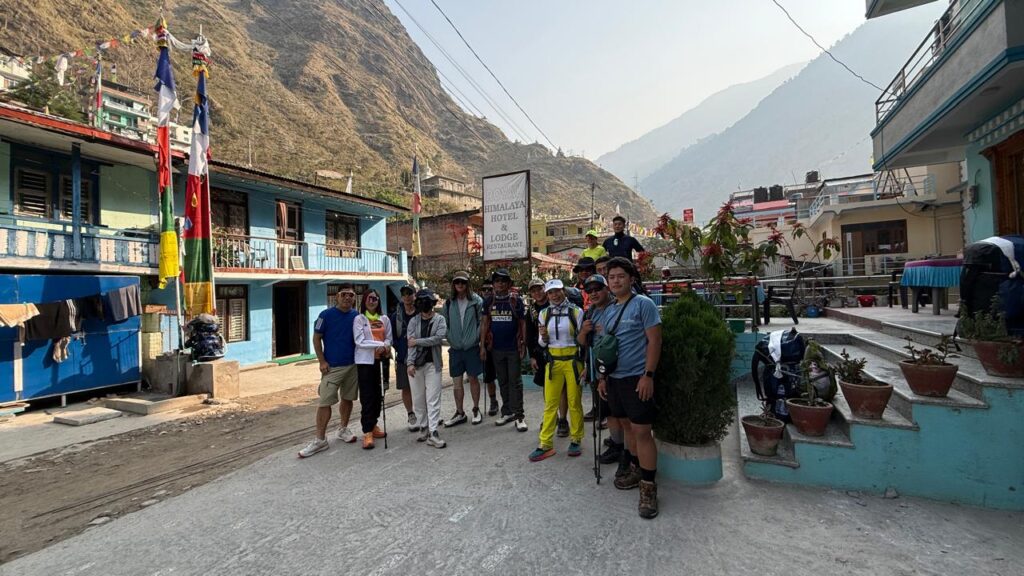
Similarly, you can also reach the National Park on foot via Shivapuri National Park. For this, you need to first drive from Kathmandu to Sundarijal (about 1 hour), then trek through Helambu towards Gosaikunda and into the Langtang side. This is a longer, multi‑day approach.
Transport options and routes:
| Transportation | Route | Starting Point | Travel Time | Suitable For |
|---|---|---|---|---|
| Local bus | Kathmandu – Trishuli – Dhunche – Syabrubesi | Gongabu / Machhapokhari bus park | 7-8 hours | Budget trekkers, backpackers |
| Tourist bus/jeep | Kathmandu – Trishuli – Dhunche – Syabrubesi | Thamel / hotel pickup | 6-8 hours | Mid‑range trekkers, small groups |
| Private jeep | Kathmandu – Trishuli – Dhunche – Syabrubesi (or custom via Nuwakot) | Hotel/airport | 6-7 hours | Families, luxury, time‑sensitive |
| Jeep to Dhunche | Kathmandu – Trishuli – Dhunche | Hotel / Thamel | 5-7 hours | Gosaikunda and Lauribina trekkers |
| Sundarijal approach | Kathmandu – Sundarijal (drive), then trek via Shivapuri / Helambu | Kathmandu → Sundarijal (1 hour drive) + multi‑day trek | Long Helambu–Gosaikunda–Langtang circuits |
Why Langtang National Park is One of Nepal’s Most Unique Protected Areas
Langtang National Park is one of Nepal’s most unique protected areas because:
- It is the nearest Himalayan national park to Kathmandu, so you can get into real mountain countryside by road, without needing a flight.
- The park climbs from about 1,000m to over 7,000m, so on one trek you pass warm river valleys, thick forests, open yak pastures, and big snowy peaks.
- Langtang is often called a valley of glaciers, with well‑known ice fields like Langtang, Lirung, Yala, and Langshisha feeding the main rivers.
- It is very rich in life, with over 1,000 plant species, 46 types of mammals, and around 380 bird species recorded in the park.
- Trekkers walk through the natural home of red pandas, snow leopards, Himalayan tahr, musk deer, and bright high‑altitude birds like the Himalayan monal.
- Villages such as Gatlang, Briddim, Langtang, Kyanjin Gompa, and Helambu still follow Tamang and Hyolmo Buddhist traditions, with monasteries, prayer flags, and family‑run homestays.
- Langtang is part of the Sacred Himalayan Landscape, so it plays an important role in protecting mid‑Himalayan forests, wildlife, and cross‑border mountain habitats shared with Tibet.
What Animals Can You See in Langtang National Park?
At Langtang National Park, you walk through the habitat of many wild animals, from common species to rare and endangered ones. However, the chances of seeing them on every bend of the trail are rare, as many stay hidden in thick forest or high, rocky slopes. Still, knowing that they live here and you might get to see at least one of them adds a lot to the whole Langtang experience.
The table below shows key wildlife and where you’re most likely to see them:
| Animal | Conservation Status | Best Habitat | Chance of Seeing |
|---|---|---|---|
| Red panda | Endangered / Vulnerable | Cool, temperate bamboo forest (about 2,400 to 4,000m) between Syabrubesi, Bamboo, Lama Hotel, and Ghoda Tabela | Low but possible with patience and a local guide |
| Snow leopard | Vulnerable | Rocky alpine slopes and high ridges above roughly 4,000m | Extremely low. Mostly seen on camera traps |
| Himalayan tahr | Near threatened | Steep alpine slopes just above the tree line, around Kyanjin and Langshisha Kharka | Moderate. Often spotted on distant ridges |
| Musk deer | Vulnerable | Dense subalpine forest and shrub (3,000 to 4,000m), near Langtang village and Lauribina/Gosaikunda area | Low-moderate, usually at dawn or dusk |
| Himalayan black bear | Vulnerable | Upper forest and forest–alpine edge zones across mid–high altitudes | Low |
| Langur & macaque | Least concern | Lower and mid‑hill forests around Bamboo, Ghoda Tabela, and the Trishuli valley | High. Commonly seen near forest trails |
| Himalayan monal (danphe) | Least concern, locally sensitive | Temperate and subalpine forest, grassy clearings around 3,000 to 4,000m | Moderate in spring if you watch quietly |
| Large raptors (griffon, lammergeier, golden eagle) | Mixed statuses | High ridges and valley walls. Viewpoints like Kyanjin Ri and Tserko Ri | High. Often seen circling overhead |
Extra: Alongside these headline species, the park also shelters goral, serow, blue sheep, wild dog, clouded leopard, many smaller mammals, and more than 380 bird species, depending on the survey.
Can You See Red Pandas in Langtang National Park?
Yes, red pandas do live in Langtang National Park, and it’s one of the best places in Nepal to look for them. But actual sightings are rare and need both luck and patience. Red pandas live in cool forests with thick bamboo between about 2,400m and 4,000m, mainly in areas like Syabrubesi, Bamboo, Lama Hotel, Ghoda Tabela, and around Thulo Syabru and Langtang village.
The best seasons for red panda activity and visibility are spring (March to May) and autumn (September to November). Also, Red pandas are most active in the early morning and late afternoon. For serious red panda spotting or photography, we recommend planning a slower itinerary and hiring a local guide who knows specific bamboo patches and viewing spots.
Landscapes You’ll Experience Inside Langtang National Park
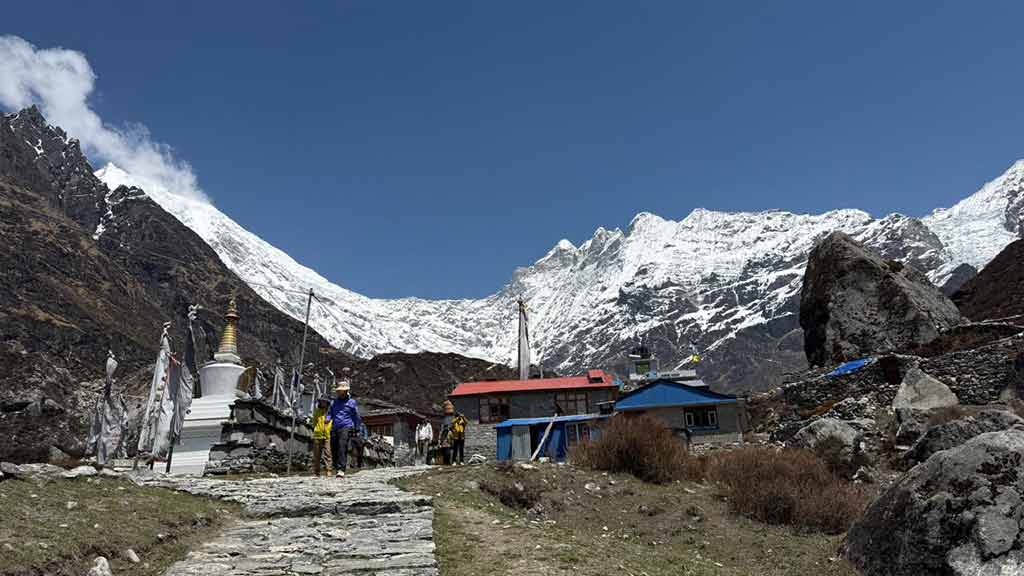
As you trek through the area within Langtang National Park, you move step by step through different altitude zones. Each zone looks and feels distinct.
- Subtropical river valleys (around 1,000 to 2,000m): Lower parts of the park are warm and green, with sal and other broadleaf trees, terraced fields, and small riverside villages.
- Temperate forests (2,000 to 3,000m): Higher up, the trail enters mixed forest with oak, maple, magnolia, rhododendrons, and thick bamboo. This belt is one of the best areas for Langtang’s flora and fauna.
- Subalpine zone (3,000 to 4,000m): The forest thins and changes to fir, hemlock, juniper, Langtang larch, and low rhododendron shrubs. Views open out, and you start to see yak pastures and wider mountain panoramas, including Langtang Lirung.
- Alpine meadows (4,000 to 5,000m): Trees disappear, and you walk through open grassland and hardy shrubs. This zone is known for medicinal plants such as spikenard and chirayita, as well as for its big glaciers and peak views.
- Nival zone (above 5,000m): At the very top, there is almost no vegetation, just glacier (Langtang glacier), permanent snow, and rock. Trekkers usually reach this zone on side trips to high viewpoints or during climbing itineraries, rather than on the standard valley trail.
Things to Do in Langtang National Park Beyond Trekking
Beyond trekking, you can take part in several activities in Langtang National Park. These include wildlife and birdwatching, visiting monasteries, experiencing Tamang culture, and tasting local yak cheese.
- Wildlife and birdwatching: In the forests between Syabrubesi and Ghoda Tabela, you may spot Himalayan birds, monkeys, red pandas (rare), and other native wildlife.
- Photography: You can capture beautiful landscapes, glaciers, mountain peaks, monasteries, and star-filled night skies around Kyanjin Gompa, Gosaikunda, and the Tamang villages.
- Visit monasteries: Visit monasteries such as Kyanjin Gompa, Shin Gompa (Chandanbari), Gatlang Monastery, and Briddim Monastery.
- Experience Tamang culture: Stay in traditional homestays in villages like Gatlang and Briddim, where you can enjoy local food, learn about daily life, and experience Tamang hospitality and culture.
- Taste local yak cheese: Visit the famous yak cheese factory in Kyanjin Gompa or try locally produced cheese in Chandanbari.
- Take short nature walks: If you don’t want to do a long trek, you can do short walks through forests, farmland, and nearby viewpoints in villages like Syabrubesi, Gatlang, and Thulo Syabru. It’s suitable for families and older travelers.
Best Trekking Routes Inside Langtang National Park
Trekking is the main reason most people visit Langtang National Park. The Langtang National Park offers routes for all experience levels, from short cultural hikes to longer Himalayan adventures. The main and popular trek routes in the Langtang region include Langtang Valley Trek, Gosaikunda Trek, Tamanag Heritage Trek, and Helambu Trek.
Langtang Valley Trek
The Langtang Valley Trek is the most popular route in Langtang National Park and one of the best moderate treks in Nepal. The trek offers spectacular mountain scenery, Tamang culture, and comfortable tea house accommodation. The route is ideal for both first-time and experienced trekkers.
The trek starts from Syabrubesi and goes through forests, rivers, yak pastures, and small villages. The trek concludes at the Kyanjin Gompa (3,870m), and then the return journey begins. When at Kyanjin Gompa, trekkers go on a side hike to Kyanjin Ri or Tserko Ri for panoramic views of Langtang Lirung, glaciers, and the surrounding Himalayan peaks.
- Duration: 7 to 10 days
- Difficulty: Moderate
- Best for: First-time trekkers, nature lovers, photographers, and cultural travelers
Highlights of Langtang Valley Trek:
- Kyanjin Gompa and its famous yak cheese factory.
- Panoramic views from Kyanjin Ri or Tserko Ri.
- Traditional Tamang villages and local culture.
- Forests, rivers, glaciers, and alpine landscapes.
👉 For a complete guide on Langtang Valley Trek, check our recent post here: Complete Langtang Valley Trek Guide.
Gosaikunda Lake Trek
The Gosaikunda Lake Trek takes you to one of Nepal’s most sacred alpine lakes, located at about 4,380m. The lakes are important pilgrimage sites for both Hindus and Buddhists. You can see huge crowds there, especially during the Janai Purnima festival.
Besides its religious significance, the trek offers beautiful mountain scenery, peaceful alpine landscapes, and excellent viewpoints overlooking the Langtang, Ganesh, and Jugal Himalayan ranges.
- Duration: 5-8 days
- Difficulty: Moderate
- Best for: Pilgrims, photographers, and nature lovers
Highlights of the Gosaikunda Lake trek:
- Sacred Gosaikunda Lake.
- Ramsar-listed alpine lakes.
- Stunning mountain panoramas.
- Peaceful high-altitude landscapes.
👉 Check our Gosaikunda Trek Map before you start this trek for prior planning: Do you know where Gosaikunda Lies?
Tamang Heritage Trail
The Tamang Heritage Trail focuses on culture rather than high mountains. It passes through traditional Tamang villages where you can experience local hospitality, stay in homestays, visit monasteries, and learn about daily mountain life. The route includes villages such as Gatlang, Tatopani, Thuman, Briddim, and Nagthali, which offer beautiful scenery at relatively lower elevations.
- Duration: 7-10 days
- Difficulty: Easy to Moderate
- Best for: Families, cultural travelers, and those looking for a less demanding trek
Highlights of the Tamang Heritage trail:
- Traditional Tamang villages.
- Local homestays and cultural experiences.
- Natural hot springs at Tatopani.
- Monasteries and scenic viewpoints.
Helambu Trek
The Helambu Trek is one of the easiest treks near Kathmandu and is perfect for travelers with limited time. It is also one of the best side trips around Langtang Valley that you can combine with the Langtang Valley Trek. The route passes through forests, monasteries, and Hyolmo villages while offering pleasant mountain scenery without reaching very high altitudes.
- Duration: 5-7 days
- Difficulty: Easy to Moderate
- Best for: Beginners, families, and short holiday trekkers
Highlights of Helambu Trek:
- Hyolmo culture and monasteries.
- Peaceful forests and villages.
- Lower altitude with comfortable walking.
- Easy access from Kathmandu.
Which Langtang Trek is Best for You?
| Traveler Type | Recommended Trek | Reason |
|---|---|---|
| First-time trekkers | Langtang Valley Trek | Moderate difficulty, comfortable tea houses, and excellent mountain scenery |
| Families & cultural travelers | Tamang Heritage Trail or Helambu Trek | Lower altitude, shorter walking days, and a strong local culture |
| Pilgrims & spiritual travelers | Gosaikunda Lake Trek | Sacred lakes and peaceful Himalayan landscapes |
| Nature & wildlife enthusiasts | Langtang Valley and Tamang Heritage Trail | Forests, wildlife, traditional villages, and diverse scenery |
| Experienced trekkers | Langtang Gosaikunda Helambu Trek | Longer route with mountain passes, varied landscapes, and cultural diversity |
What is the Best Time to Trek in Langtang National Park?
The best time to visit Langtang National Park of Nepal is spring (March to May) and autumn (September to November). These seasons give you the most reliable weather, clear mountain views, and safer trail conditions compared to the rest of the year.
Spring (March to May):
- Weather: Warm days, cool nights, fresh air after winter.
- Visibility: Good mountain views, though some clouds can build up in the afternoon.
- Trail feel: Rhododendrons in bloom, forests are lively, walking temperatures are comfortable.
- Best for: Anyone who loves flowers, green hills, and gentle walking conditions.
Summer/Monsoon (June to August):
- Weather: Warm and humid, with heavy rain.
- Visibility: Views come and go. You may get short, dramatic openings between clouds.
- Trail feel: Slippery paths, leeches in lower forests, risk of landslides on the road in and out.
- Best for: Experienced trekkers who are flexible with plans and okay with rain and rough conditions.
Autumn (September to November):
- Weather: Mostly dry and stable, cool nights.
- Visibility: Excellent, with clear, sharp mountain views and bright blue skies.
- Trail feel: The best overall trail conditions, full lodge services, and more people on the route.
- Best for: First‑time trekkers, photographers, and anyone who wants the best weather and views experience.
Winter (December to February):
- Weather: Clear days but very cold nights. Snow is common above Langtang village.
- Visibility: Often very clear when the weather is stable.
- Trail feel: Quiet paths, some lodges closed, snow and ice above Langtang village.
- Best for: Experienced trekkers who are well‑equipped for cold and are happy with simple services and winter conditions.
How Difficult Is Trekking in Langtang?
The Langtang trek is a classic teahouse trek on established trails, with regular places to eat and sleep along the way. Trekkers need to walk at a relaxed pace, drink plenty of water, and listen to their bodies as they gain height to trek comfortably.
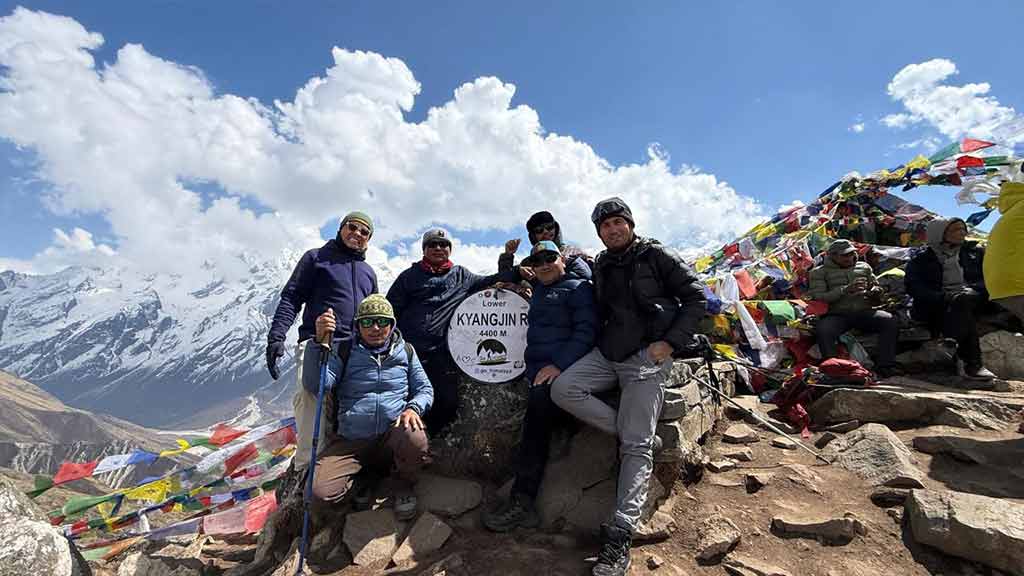
That said, the Langtang Valley Trek is a moderate trek. You walk about 5 to 7 hours a day on mountain trails, and the main overnight high point is Kyanjin Gompa at 3,870m. For fit beginners, Langtang is very manageable as long as you take one acclimatization day at Kyanjin Gompa and don’t rush the itinerary. The trail is mostly a steady, gradual climb through forest and village paths rather than extreme, exposed terrain. The challenge is mainly about altitude and long days on your feet rather than from any technical sections, so basic fitness and the ability to walk several hours a day are enough.
Furthermore, families or those who want something gentler can take the Tamang Heritage or Helambu routes, which stay lower, have shorter walking days, and avoid the highest viewpoints. These make good options for people trekking with children or older family members.
What Permits do I need for Langtang National Park?
For Langtang National Park, you need two main permits: the Langtang National Park entry permit and the Trekkers Information Management System (TIMS) Card. A Langtang National Park entry permit is mandatory, and a TIMS card is treated as required in practice for safety and registration, but is not mandatory to obtain.
| Permit | Required For | Cost for Foreigners | Cost for SAARC Travelers | Where to Obtain |
|---|---|---|---|---|
| Langtang National Park entry permit | Langtang National Park entry permit | NPR 3,000 | NPR 1,500 | Nepal Tourism Board (Kathmandu) or Dhunche/park entry checkpoint |
| TIMS card (e‑TIMS) | Foreign trekkers on the Langtang trekking routes | NPR 2,000 | NPR 1,000 | Issued through government‑registered trekking agencies only |
Responsible Travel Tips for Protecting Langtang National Park
Here are some responsible travel tips for protecting Langtang National Park:
- Stay on marked trails: Avoid shortcuts and off‑trail walking, especially in steep or soft areas, to prevent erosion and damage to fragile alpine meadows and forest habitat.
- Cut down single‑use plastic: Carry a reusable water bottle and a simple purification method (filters, tablets, or UV). Refill with boiled or treated water at lodges, and pack out any plastic or non‑biodegradable waste you bring in.
- Respect wildlife distance: Watch animals quietly from the trail. Do not feed them, chase them, or try to get very close for photos. Use binoculars or a zoom lens for species like red panda, Himalayan tahr, and, in higher rocky zones, snow leopard.
- Support local people: Hire local guides and porters, stay in community lodges or homestays, and buy local products when you can. In Langtang, part of the buffer‑zone tourism revenue goes back into conservation work and village projects, so your spending directly supports both nature and community resilience.
Why Langtang National Park is Worth Visiting?
Langtang National Park is worth visiting because it feels real and immersive, is close to Kathmandu, and doesn’t require extreme altitude or a very long holiday. The trailhead is only a day’s drive from the city, yet once you pass Syabrubesi and enter the park, the valley quickly feels wild and remote.
You get strong cultural depth, mainly Tamang and Hyolmo heritage. There are monasteries, gompas, and long lines of mani walls along the trails. This makes the trek as much about people and living Buddhist culture as it is about mountains and glaciers.
The park itself is a wildlife hotspot. The park is home to red panda and Himalayan tahr, with opportunities to see musk deer, langur monkeys, and many bird species in a protected Himalayan corridor. Finally, Langtang is a region that has been rebuilt after the 2015 earthquake. Choosing to trek there now is part of that ongoing story of resilience, as your visit supports families, lodges, and local conservation in a valley that chose to recover and welcome trekkers back.
Langtang National Park vs Other National Parks
| Feature | Langtang National Park | Sagarmatha National Park | Chitwan National Park | Makalu Barun National Park |
|---|---|---|---|---|
| Location | North of Kathmandu, Bagmati Province | Solukhumbu District, eastern Himalayas | Lowland Terai, south‑central Nepal | Eastern Himalayas (Sankhuwasabha & Solukhumbu districts) |
| Established | 1976 (buffer zone added 1998) | 1976 | 1973 (Nepal’s first national park) | 1992 |
| Area | 1,710 sq km (+ ~420 sq km buffer) | 1,148 sq km | 952.63 sq km | 1,500 sq km |
| Elevation Range | ~1,000 to 7,200+m (Langtang Lirung massif) | ~2,845 to 8,848m (includes Mt Everest) | ~150 to 815m (Terai plains and low hills) | ~435 to 8,000+m (Arun Valley to Mt Makalu) |
| Main Attraction | Langtang Valley, Gosaikunda, Tamang heritage villages | Everest Base Camp, high Khumbu peaks, Sherpa culture | Jungle safaris, rivers, grasslands, Tharu culture | Remote Makalu & Barun valleys |
| Best For | Moderate Himalayan trekking with culture + wildlife | High‑altitude trekking and iconic peak views | Wildlife safaris and short nature trips | Wild, less‑touristed Himalayan trekking and biodiversity |
| Popular Trek/Activity | Langtang Valley Trek, Gosaikunda, Tamang Heritage Trail | Everest Base Camp, Gokyo, Three Passes | Jeep and boat safaris, walking safaris | Makalu Base Camp Trek, Arun Valley trekking |
| Wildlife | Red panda, snow leopard, Himalayan tahr | Snow leopard, musk deer, Himalayan tahr | One‑horned rhino, Bengal tiger, gharial, Asian elephant | Clouded leopard, red panda, diverse Himalayan birdlife |
| Difficulty Level | Moderate (standard routes below ~5,000m) | Moderate to strenuous (regular 5,000+m passes and camps) | Easy (no trekking required; vehicle‑based safaris) | Strenuous (remote, long, high‑altitude wilderness trekking) |
| Accessibility | Road from Kathmandu (no flight needed) | Flight to Lukla from Kathmandu, then trekking | Road or short flight from Kathmandu to Bharatpur | Longer logistics: flight/road to Tumlingtar, then jeep/trek |
| Peak Tourist Season | Spring & autumn | Spring & autumn | Winter & spring (dry, cooler safari conditions) | Spring & autumn (best weather for remote trekking) |
| UNESCO World Heritage Status | Not yet | Yes – Sagarmatha National Park | Yes – Chitwan National Park | Not yet |
| Crowd Level | Lower than Everest/Annapurna | High, especially in October and April | Moderate – high in peak safari season | Very low; one of Nepal’s least‑visited major parks |
| Ideal Trip Duration | 7 to 14 days for classic Langtang/Gosaikunda routes | 12 to 16 days for standard Everest Base Camp itineraries | 2 to 4 days for most safari packages | 14 to 20 days for Makalu Base Camp and wilderness treks |
Conclusion
Langtang National Park gives you an enjoyable and very hard-to-forget trekking experience. It’s one of the nearest real high‑mountain areas to Kathmandu, but after just a day of walking, it feels like you’re in a completely different world of forests, stone houses, and big snow peaks.
If you give yourself enough days, go with a local guide and porter, and plan your budget and permits properly, Langtang will stay in your mind long after you’ve gone back home. Langtang is still one of the best choices if you want to avoid the heavy crowds of Everest and Annapurna.
FAQs for Langtang National Park
Expand AllIs the Langtang Valley trek worth it?
How many days do you need for the Langtang trek?
How much does the Langtang Valley trek cost?
Do you need a guide for the Langtang trek?
Langtang vs Everest Base Camp vs Annapurna: which trek should I choose?
Is Langtang safe to trek in 2026?
How high is the altitude on the Langtang trek, and is altitude sickness a risk?
How do I get to Langtang National Park from Kathmandu?
What animals can you see in Langtang National Park?
What is the TIMS card, and do I need it for Langtang?