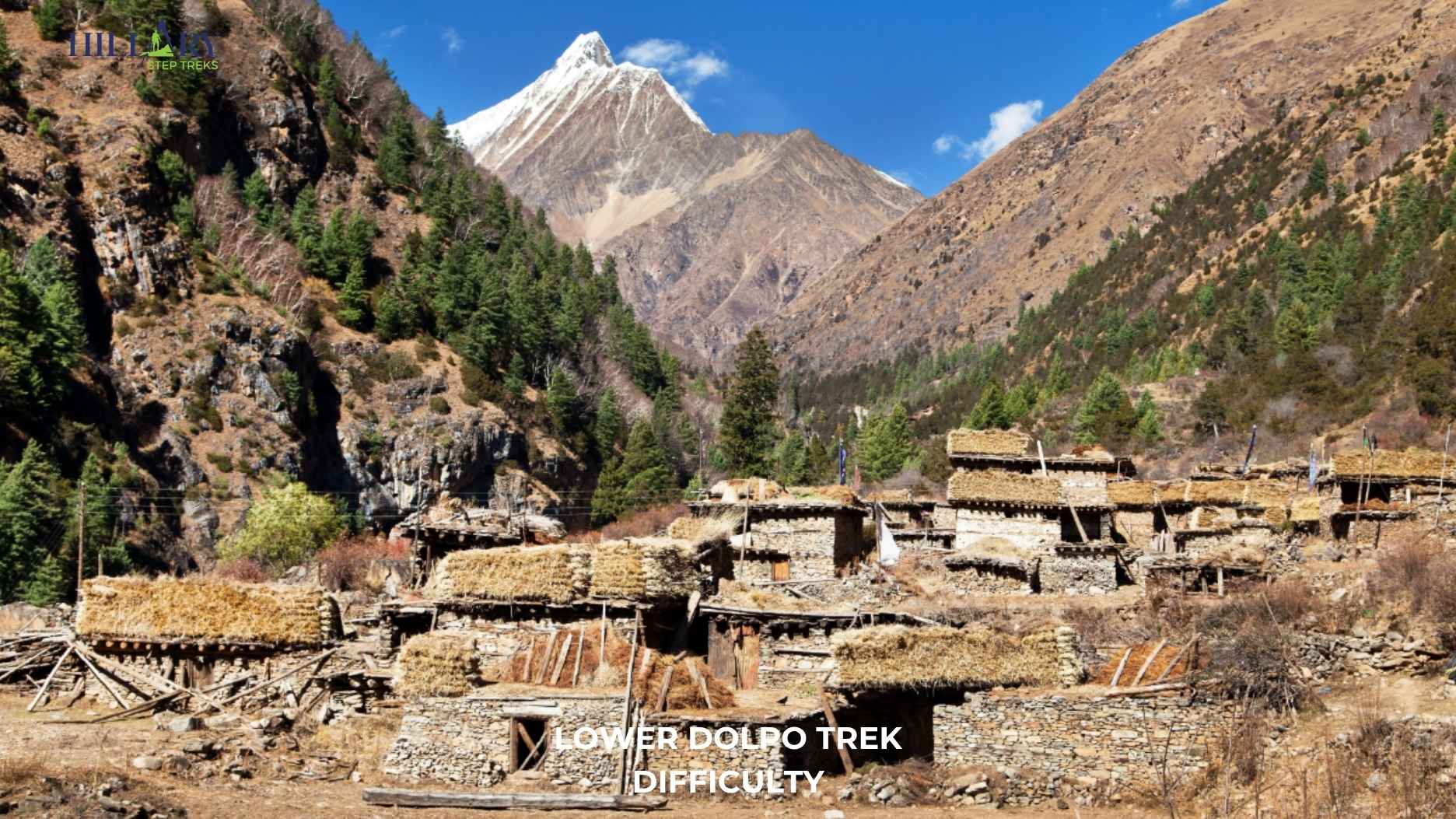

Rising as one of the key challenges of the Lower Dolpo Trek, the trek from Dho Tarap to Danigar via Numa La Pass (5,309m) blends history, altitude, and raw wilderness. This ancient salt trade route moves from the stark Tibetan plateau into sweeping, almost otherworldly alpine meadows. You ascend over loose scree and exposed ridges to reach the summit and enjoy stunning views of snow-capped mountains, Dhaulagiri, and the Kanjirowa range. With no lodges, no marked trails, and zero mobile coverage, every step tests planning, endurance, and high-altitude adaptation, offering a rare sense of true isolation in the Himalayas.
The Experience of Trekking from Tarap to Danigar
The trek from Dho Tarap to Danigar spans roughly 18-20 km across two challenging days on the Lower Dolpo Trek itinerary. The first day covers 8-9 km of steady ascent to Numa La Base Camp (4,440m), taking 4-6 hours. From there, you continue to Danigar via the pass the next day. This day pushes 10-11 km over loose scree to the 5,309m summit before descending into Danigar, usually 7-9 hours. Although it may seem short in distance, these kilometers are some of the most demanding on the circuit due to altitude and unstable terrain.
Dho Tarap to Tokyu Village
From the cultural heartbeat of the region, Dho Tarap (3,944 m), the trail follows the Tarap Chu River, as it carves through dramatic, deep-cut gorges. It rises steadily, allowing you to acclimate to the thinning air. About 45 minutes out, you pass the Crystal Mountain School, an eco-friendly learning institution for children. Soon after, you reach Tokyu, the uppermost village of the Tarap Valley. The village hosts Shering Gompa, a monastery, where a blessing from a local monk offers one last connection to civilization.
Approach to Numa La Base Camp
Beyond Tokyu, the human footprint fades. You don’t see irrigated fields anymore, replaced by expansive alpine pastures where blue sheep graze, and nomadic yak herders appear occasionally. The trail becomes a test of self-reliance and focus, with isolation, high-altitude conditions, and raw wilderness shaping every step toward Numa La and the meadows of Danigar. After trekking 5-6km, you reach a basic high-altitude campsite. Here, the air grows colder, the silence feels heavier, and the wild, empty Dolpo landscape fully takes over, preparing you for the dawn crossing ahead.
Numa La Summit Push
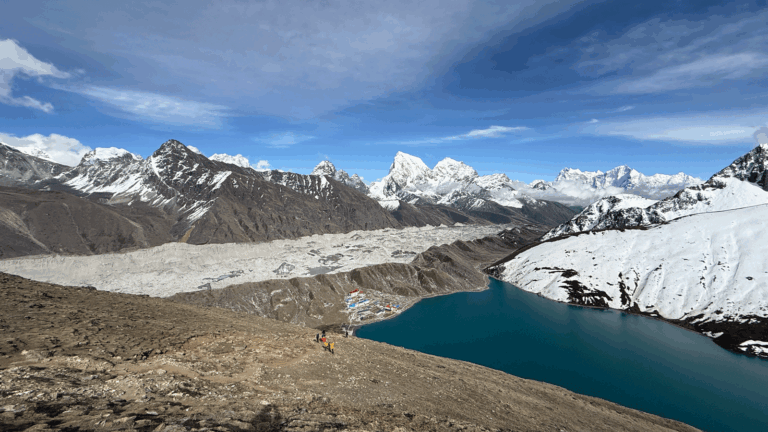
After a restful night at the Numa La Base Camp, the summit day starts in the frozen dark, usually between 4:00 AM and 5:00 AM to avoid the fierce afternoon pass winds. It is a relentless climb filled with switchbacks over shifting shale and frozen screes. After a 3-5‑hour push, you finally reach the real summit just in time for sunrise. As dawn lights the ridges, you witness a 360-degree panorama: Mt. Dhaulagiri’s ice wall to the south and the empty, rolling hills of the Tibetan Plateau to the north. Hence, many trekkers say the high pass feels like a bridge between the world of humans and the world of silence.
 USD 300 OFF
Descent to Danigar
The descent drops 800m and challenges you more than the climb. The trail forces you to move carefully down the western side. Loose gravel covers the path and slides under your boots, making every step tricky. Here, having trekking poles helps protect your knees and ankles. After 2-3 hours, the trail brings you into the Gyambo Khola valley and eventually to Danigar (4,512m), a cold alpine meadow used by seasonal yak caravans, commonly called Yak Kharka.
Upon arrival, you can witness towering peaks such as Norbu Khang (6,005m),Kanjirowa North (6,883m), and the Numa La pass wall that you just crossed. This campsite offers a well-earned rest before the next day at Baga La Pass, the final gateway before the landscape transforms from high-altitude desert into the dense cedar and pine forests of the Shey Phoksundo National Park.
Why is Numa La known as the Biggest Pass of Dolpa?
Numa La (5,310 m) earns the title of the biggest pass of Dolpa not for its height, but for the full challenge it presents to anyone crossing it. Unlike the higher but remote passes of Upper Dolpa, such as Ngada La (5,700m) and Kang La (5,360m), Numa La lies along the primary trekking and historic trade route, making it both a physical and psychological test. Its long, steep ascent through thin, oxygen-poor air demands stamina and careful pacing. Additionally, it towers over its neighbor, Baga La pass (5,170m), adding to its reputation as the ultimate hurdle between the high Dho Tarap Valley and the turquoise Shey Phoksundo Lake.
The pass also carries immense cultural and visual weight. For centuries, it served as a lifeline for salt-trading caravans, shaping the livelihoods of the local Bhotia communities and embedding itself in regional history. From the summit, you can witness a breathtaking 360-degree panorama of the snow-dusted Dhaulagiri massif and the rugged Kanjirowa range, giving a sense of scale that few other Himalayan passes can match. Its combination of historic significance, relentless climbing, and sweeping alpine views makes Numa La the most iconic and defining crossing of Lower Dolpa.
Acclimatization Strategy Few Trekkers Know
Most trekkers think the challenge starts on the climb, but we know it begins the night before. While others rest, we guide you through an oxygen efficiency routine that prepares your body for peak performance before you even hit the Numa La switchbacks.
- Active Acclimatization (Climb High, Sleep Low): Many hikers make the mistake of sleeping immediately upon reaching Numa La Base Camp. We lead a mandatory 150-meter hike in the afternoon above the campsite. Hiking for about an hour to a higher elevation and then returning to sleep triggers your body to produce extra red blood cells, pre-loading your system for the summit push the next morning.
- The Himalayan Rest-Step: We teach the Rest-Step, a rhythmic technique used by elite mountaineers. You pause briefly and lock your uphill leg on each stride to shift weight from tired muscles to your bones. This keeps your heart rate stable and prevents exhaustion on steep switchbacks.
- Hydration and blood flow: At high altitude, blood thickens naturally. This makes it harder for your heart to deliver oxygen to your brain. So, we monitor that you drink 4-5 liters daily to thin your blood, helping it flow smoothly and preventing common altitude headaches that stop many trekkers.
- The Aerobic “Talk Test”: It is simply a steady pace test. If you can’t hold a full conversation with our guides while climbing, you’re moving too fast. This helps you set a pace just below the point of heavy gasping so that you reach the prayer flags with energy left for the descent.
Common Mistakes Trekkers Make on Dho Tarap to Danigar Journey
Crossing Numa La tests both body and mind, and even experienced hikers can fall into mistakes that turn a hard day into a dangerous one. Here are some of the mistakes trekkers make:
- Rushing the Dho Tarap rest day: Many trekkers feel strong at 3,944m and skip the acclimatization day to save time. This is risky. Dho Tarap is your last chance to let your body adjust and build red blood cells before oxygen levels drop on the climb to Danigar. Skipping it increases the risk of altitude sickness.
- The “Summit Fever” Sprint: The first climb from Base Camp looks easy, but starting too fast in the cold morning air quickly spikes your heart rate. This leaves you exhausted well before the summit. Moving at a slow, steady tractor pace preserves energy and keeps your body working efficiently.
- Misjudging the wind tunnel effect: Waiting for sunlight can backfire. As the sun warms the valleys, strong, icy winds rush through the Numa La gap. You need to start around 4:00 AM to ensure you cross before these gusts turn the trail dangerous.
- Underestimating water needs: There are almost no reliable water sources above Base Camp. Trekkers who carry only a liter can quickly become dehydrated, which thickens the blood and worsens the effects of altitude. Carry at least 3 liters and drink frequently to stay alert and energized.
- Energy drain on moraines: The descent to Danigar is more challenging than the summit push. Here, loose rocks and glacial moraines demand focus and extra caution. However, many hikers exhaust themselves at the summit and struggle to navigate this tricky terrain safely.
- Missing subtle trail markers: Snow or loose scree can hide the trail. Ignoring small cairns or faded prayer flags can lead to dangerous off-path slopes. Always watch for markers to stay on safe ground.
Hidden Risks on Numa La Pass
The trail from Dho Tarap to Danigar is stunning, but it’s in a remote, high-altitude lower Dolpo region that demands caution. Beyond the steep climb, you also have to face hidden challenges that can catch even seasoned trekkers off guard. Paying attention to these subtle risks keeps the journey safe. Some of these hidden risks are:
Invisible thin snow bridges over creeks
During the approach and descent of Numa La, the trail weaves across small glacial streams and seasonal drainage channels. After a fresh snowfall, these channels can form invisible bridges that appear solid but are actually hollow and fragile. These aren’t marked on any trekking map, so a single misstep can plunge a trekker into freezing water, causing hypothermia or leg injuries. Our local guides probe the path in these areas to make sure you don’t end up with wet boots or a twisted ankle in the middle of a high-altitude crossing.
Loose scree and rockfall sections
Most guidebooks describe Numa La as a simple path of loose rock (scree), but they often fail to mention the specific “chutes” where rocks can tumble down from above. These sections aren’t flagged with warning signs, and they become most active as the sun warms the slopes and melts the ice holding the rocks in place. For that, you have to time your crossing to move through these areas while the ground is still frozen and stable, keeping you out of the path of falling debris.
Sudden altitude sickness
One of the strangest risks on this route is how you can get altitude sickness after the long, flat walk through the Tarap Valley. Because the previous days feel physically easy, many trekkers don’t realize their bodies are already tired at 4,000m. When you suddenly hit the steep, 5,309m push of Numa La, the lack of oxygen can hit you all at once. Thus, you need to monitor your silent acclimatization and your overall physical condition before the climb begins to prevent a sudden wall.
Isolated sections
After leaving Dho Tarap, the trail leads into a remote dead zone with no mobile signal for several kilometers. In this isolated stretch, help is far away, and the deep valleys make calls impossible. While solitude is nice, even minor problems can quickly escalate. Our team carries satellite communication equipment to stay connected to emergency support, even in these silent, cut-off areas.
Ready to escape the Annapurna crowds and tackle the raw isolation of Numa La? Join our expert-led trek to the Dolpo District and stand on the “Bridge of Silence,” backed by expert guidance and a safe acclimatization plan.