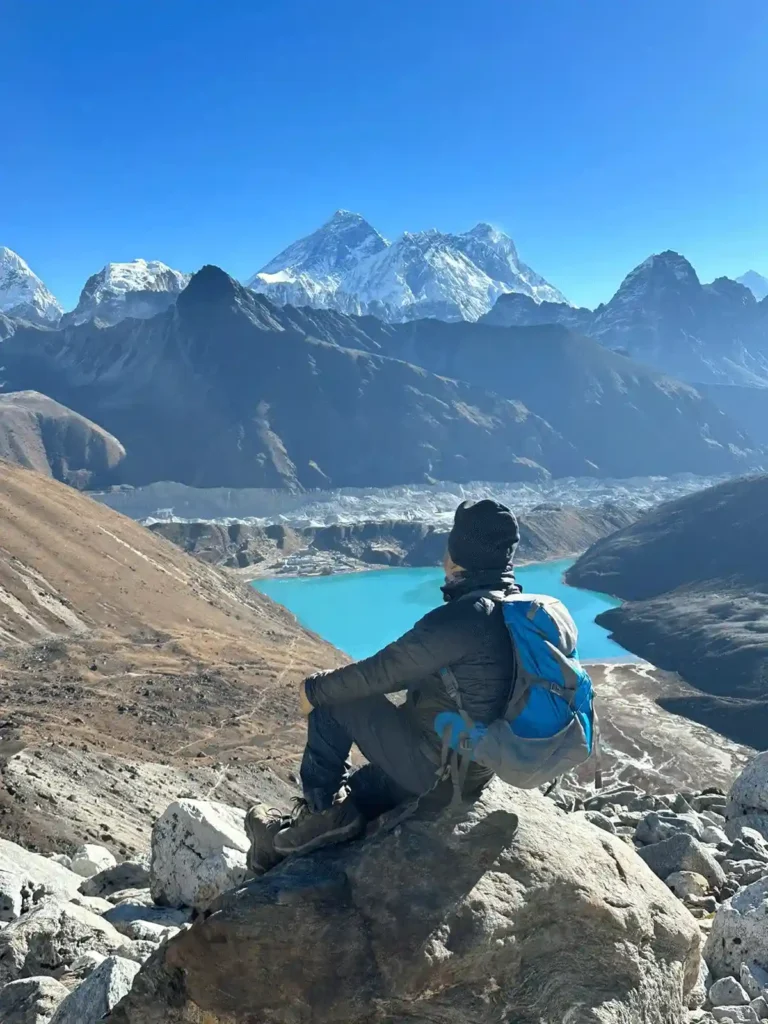
Gokyo Lakes is a cluster of high-altitude glacial lakes that glitter beneath white world-class peaks in the Gokyo Valley. The air up here feels thin, crisp, almost holy. The valley itself pulls you in quietly, no noise, no rush, just glacier wind, prayer flags, and the slow heartbeat of the Himalayas. It’s one of those places that doesn’t just look surreal, but it feels surreal.
These turquoise lakes in Nepal’s Everest region are also one of the highest freshwater lake systems in the world. They sit deep in the Khumbu Himal and give birth to a trekking route that combines alpine drama, Sherpa culture, and classic Everest views, except for the chaos of the main EBC trail.
If you’re fit, curious, and craving mountain magic without diving into hardcore mountaineering, Gokyo is your sweet spot.
Where Are Gokyo Lakes?
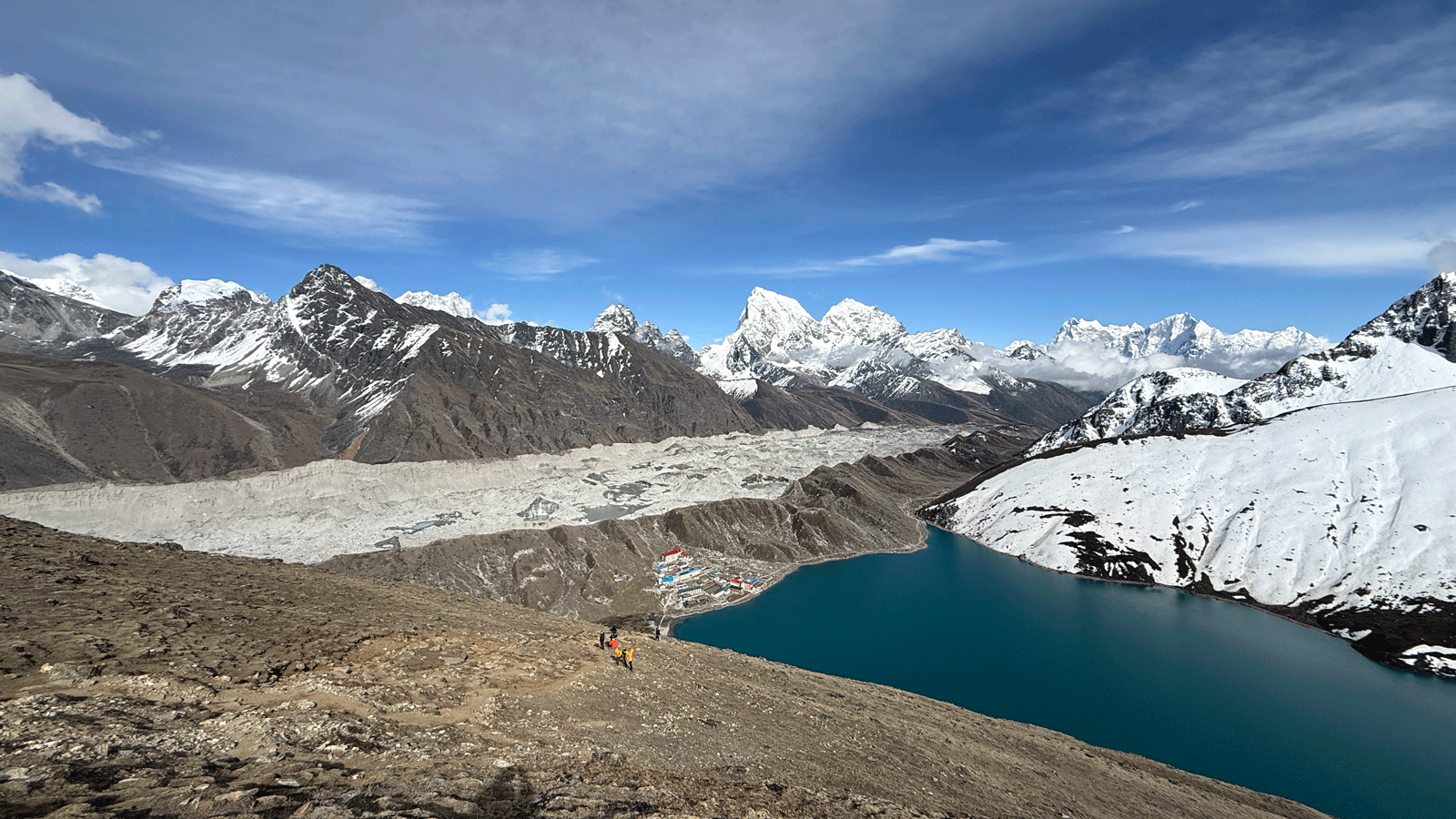
They lie in eastern Nepal, in the Khumbu region, within Sagarmatha National Park, a protected UNESCO World Heritage Site famous for its dramatic high-mountain landscapes and biodiversity. They sit at around 4,700-5,000m in the upper Gokyo Valley and are fed by meltwater from the vast Ngozumpa Glacier. This meltwater forms part of the wider Dudh Koshi river system that drains much of the Everest region.
You can reach Gokyo via Namche Bazaar. It lies on a quieter branch of the Everest trekking network, away from the main Everest Base Camp trail, so the atmosphere here is more peaceful. This makes it appealing to trekkers seeking solitude without sacrificing scenery. The route passes through traditional villages such as Dole and Machhermo to reach Gokyo, with the iconic viewpoint of Gokyo Ri rising above the lakes.
Wildlife And Environment Around Gokyo
Lying between 4,750 and 4,790m, the environment around Gokyo is tough and dramatic with thin, high-altitude air. You can see rocky slopes, sprawling glaciers, and lakes so clear they almost look carved from ice. The region experiences long, cold months, and the short growing season shapes a rugged mountain ecosystem. Even in these extremes, you might spot Himalayan tahr, musk deer, pika, and village yaks, along with birds like the vibrant Himalayan monal, snow pigeons, and mountain crows and choughs.
Similarly, vegetation shifts fast with altitude. Lower down, you can witness rhododendron and pine forests color the trail. As you climb toward Gokyo, the landscape becomes scrub, hardy grasses, and tiny alpine plants adapted to survive brutal cold. Thus, the ecosystem is fragile and increasingly stressed by climate change, shrinking glaciers, and waste. You should stay on marked trails, reduce plastic use, and trek responsibly to help protect this rare high-mountain environment.
Cultural Importance
The Gokyo Lakes hold deep spiritual weight for Sherpa and Tibetan Buddhist communities. The water and the surrounding peaks are treated with genuine reverence. They are believed to carry purity and powerful blessings. Their local traditions speak of living in harmony with the mountains, and this respect shapes how the area is used, cared for, and protected. To the people who call this region home, Gokyo isn’t just a beautiful place. It’s a sacred one.
Pilgrims still travel to the lakes during specific festivals and seasons like Janai Purnima. They take ritual baths, offer prayers, and seek renewal in this high, quiet valley. The electric-blue lakes, sheer peaks, and massive glaciers only deepen this sense of spiritual presence. They reinforce a long-held belief that Gokyo is a landscape touched by something greater than human hands.


Why Choose the Gokyo Lakes Trek
The Gokyo Lakes trek is one of the most beautiful high altitude trekking routes in Nepal, alongside the Everest Base Camp trek. Those turquoise lakes, the endless glacier walk, and the long, quiet stretches of trail give you space to breathe and actuallyfeel the mountains. It’s the kind of journey where nothing rushes you. You fall into the rhythm of the valley, walking at the pace of wind and stone rather than chasing checkpoints.
The highlight of the trek is Gokyo Ri, from which you witness the world open into an ethereal panorama. You can see four towering 8,000-meter peaks: Mount Everest, Lhotse, Makalu, and Cho Oyu, standing like a guard over the lakes and the sprawling Ngozumpa Glacier. Sunrise and sunset up here hit different. Watching the mountains turn golden as the lakes reflect on them is a moment you can never forget for a lifetime. Most trekkers call it one of the top viewpoints in all of Nepal, and honestly, they’re not exaggerating.
Along the way, the cultural thread also runs strong. Villages like Namche, Dole, Machhermo, and Gokyo offer a look into Sherpa life. You can find ancient traditional-style stone homes, prayer walls, spinning mani wheels, and the everyday warmth of lodge owners, who make the trek even better. They serve simple, freshly cooked meals and share stories by the stove. Without the EBC crowds pushing through, the whole experience feels calmer, more grounded, more personal.
And if you trek the Gokyo Renjo La Pass Trek, you can even experience crossing a high-altitude pass. The Renjo La at 5,360mis challenging. It does not require a glacier crossing but includes steep, zigzagging ascents and can be very icy or snow-covered in winter or early spring. Thus, it is perfect for trekkers who want a bit of extra challenge without going overboard.
Best Time To Visit Gokyo Lakes
Spring and autumn are the best seasons for the Gokyo Lakes trek. They provide the most dependable weather and the clearest mountain views. Spring (March-May) brings steady conditions, bright mornings, and gradually warmer days. Lower elevations burst with colorful rhododendrons and alpine flowers, especially on the way toward Namche, adding a bit of color to the climb.
Similarly, Autumn (September-November) is equally loved. It offers crisp air, dry trails, and sharp visibility that stretches across the entire Everest region. All the teahouses open after the monsoon cleanup. According to photographers, this season is the most ideal for the cleanest views. Additionally, you can enjoy the festive atmosphere along the trail during the weeks of Dashain and Tihar. If you’re a first-time trekker, autumn is often the safest bet for the Gokyo Ri trek in Nepal.
Off-seasons raise the difficulty. Winter (December-February) hits hard with deep cold, snow, and icy sections. The snow makes the trail manageable only for experienced trekkers with proper gear. Likewise, Monsoon (June-September) brings rain, clouds, leeches in the lower forests, and a high chance of flight delays in and out of Lukla. Your timing affects everything, flights, packing, and whether high routes like Renjo La are even doable that year. Thus, trek either in spring or autumn for the best views of Everest and enjoy the trail journey.
Trek Routes And Experiences
We, at Hillary Step Treks, have two Gokyo Ri trek packages that you can choose from. One is a classic out-and-back journey to Gokyo Ri, and the other is a more adventurous loop that crosses a high Himalayan pass. These both routes take you to the turquoise Gokyo lakes. The only difference lies in the levels of challenge and ambition required.
Classic Gokyo Ri Trek Itinerary
The classic 10-day Gokyo Ri Trek begins and ends in Kathmandu, with a short, scenic mountain flight that drops you straight into Lukla. The early section follows the traditional Everest trail through Phakding to Namche Bazaar. Here, you cross the roaring Dudh Koshi River, cross over iconic suspension bridges like the Hillary Bridge, and catch your first Everest sightings on clear mornings.

After Namche, the trail splits from the crowded Everest Base Camp path and drifts into the hushed beauty of the Gokyo Valley. It climbs steadily through Dole and Machhermo, still following the Dudh Koshi River. The Gokyo valley widens, and the landscape shifts into raw alpine terrain. Once you reach Gokyo village, the turquoise lakes and the massive Ngozumpa Glacier steal the show.
The trek’s main highlight is the ascent of Gokyo Ri (5,357m). Whether you go for sunrise or sunset, the panorama delivers the best experience. You get to view the Everest, Lhotse, Makalu, Cho Oyu, and the entire lake basin spread out like a living map. The return follows the same trail back to Lukla, with a buffer day built in for potential flight delays.
Gokyo Renjo La Loop Option
If you want the classic Gokyo experience plus a dash of adventure, the 13 Day Gokyo-Renjo La Loop is a suitable option. Instead of heading back the same way from Gokyo, this route crosses Renjo La (5,360m) and links the Gokyo Valley with the serene Thame-Lungde region.
The pass day starts early with a long, steady climb. At the top of the Renjo La, you get one of the best views in the entire Everest region, with Everest, the Gokyo lakes, and a sweep of high Himalayan giants all in one frame. The descent leads to Lungde and then onward to Thame, one of the oldest Sherpa settlements, before looping back into Namche.
This version is still considered moderate, but it’s tougher than the standard Gokyo Ri trek due to the high pass, steeper sections, and longer days. It’s a great choice for trekkers with solid fitness who want a wilder, more varied experience without stepping into extreme-expedition territory.

Difficulty, Altitude, and Preparation
The Gokyo Lakes trek is widely considered a moderate adventure, with altitude being the biggest hurdle rather than the trail itself. The paths are well marked, steady, but never technical. You don’t need climbing skills to do the trek, just solid fitness and a bit of prior high altitude trekking experience.
The elevation will test you. You’ll sleep at around 4,800m in Gokyo village and reach high points of roughly 5,360m on Gokyo Ri or Renjo La. Because of this, the itinerary includes built-in acclimatization days in Namche Bazaar and Gokyo, where you can take short side hikes that follow the classic “climb high, sleep low” routine to help your body adapt to the high altitude.
Keep in mind that altitude sickness can hit anyone regardless of age, fitness, or experience. Headaches, nausea, fatigue, and trouble sleeping are the usual warning signs. The best defense is to walk slowly, stay hydrated, eat enough, and actually listen to your guide. Do that, and the trek becomes a challenging but deeply rewarding experience.
Permits, Fees, and Logistics
Before starting the Gokyo Lakes trek, trekkers must obtain the two permits required to enter the Everest region: Sagarmatha National Park Entry Permit and Khumbu Pasang Lhamu Rural Municipality Fee. These permits help fund conservation efforts, trail maintenance, and local development, and are reviewed at several points along the route. We can arrange them in advance before you land in Nepal, so that you can fully focus on the experience.
Permit Costs and Collection Points
| Permit | Approximate Cost | Where to Obtain |
|---|---|---|
| Sagarmatha National Park Entry Permit | NPR 3,000 per person | Kathmandu or at the Monjo checkpoint |
| Khumbu Pasang Lhamu Rural Municipality Fee | NPR 2,000 per person | Lukla or Monjo |
Guides, Porters, and Costs
The classic Gokyo Ri Trek starts at USD 1,375 and includes all the essentials for a safe and comfortable journey. This includes hotel accommodation in Kathmandu before and after the trek, domestic flights and transfers to and from Lukla, and all required permits and local fees. You receive a full-board teahouse trekking experience, with meals and lodging along the trail, so you can focus on the mountains without worrying about logistics.
The package also includes guide and porter services. We provide a licensed, English-speaking guide to accompany you, handle navigation, monitor acclimatization, and health. They adjust the itinerary based on weather or trail conditions, and make critical safety decisions, while sharing insights into local culture and traditions. Similarly, our porters carry your main luggage, leaving you free to hike with a light daypack. By hiring a guide and porter, you also support local employment.
Note: Tips for guides and porters are not included in the trek cost. We recommend tipping at the end of the trek as a simple way to show appreciation for their hard work and support throughout your journey.
Accommodation And Local Lifestyle
Expect simple accommodation on the Gokyo Valley trek. You’ll stay in traditional teahouse lodges along the trail. Rooms are usually twin-sharing, with shared bathrooms becoming more common above Namche Bazaar. It can be squat or Western-style toilets, often located down the hall or in a separate building.
All in all, teahouses provide everything you need after a long day of trekking: basic beds with blankets, warm dining rooms, and freshly cooked meals. Depending on the lodge and altitude, you may also find paid hot showers, charging facilities, and occasionally Wi-Fi, often via prepaid Everest Link cards or the lodge’s network. Meals are hearty and designed to keep energy levels up. Typical options include dal bhat, soups, noodles, fried rice, momos, omelettes, and a few simple Western dishes. Prices rise slightly with altitude due to the effort required to bring supplies into remote villages.

Life in Gokyo village moves at a calm, steady pace. Here, lodge owners balance cooking for guests with caring for yak herds. Guides and porters rest and prepare for the next stage, while you focus on acclimatizing and enjoy the lakes and mountain views. Evenings are usually quiet, with people gathering around the dining room stove to warm up and share stories. Thus, you should always be respectful while trekking here. Just a simple hello or namaste can lighten up the mood and help sustain the local community and make your trek more meaningful.
Responsible Trekking and Local Culture
- Follow Leave No Trace principles and always carry your rubbish out with you.
- Use refillable water bottles and purify water instead of buying single-use plastic ones.
- Stick to marked trails to protect fragile alpine terrain.
- Dress modestly in villages and near monasteries.
- Remove your shoes when asked, especially in homes and religious spaces.
- Speak politely and always ask before photographing people.
- Stay in family-run teahouses and choose local food when you can.
- Tip guides and porters fairly as a sign of respect and appreciation.
Travel Tips For Gokyo Lakes
- Build your cardio with regular walking or hiking, and make sure your trekking boots are fully broken in.
- Pack in layers so you can handle cold mornings, warm daytime climbs, and chilly nights.
- Walk slowly and steadily, especially higher up. Avoid skipping acclimatization days.
- Stay hydrated, eat well, and descend immediately if altitude symptoms worsen.
- Carry some cash for higher villages where card payments and ATMs aren’t available.
- Keep essentials like a down jacket, snacks, water, and a headlamp in your daypack.
- Protect electronics and important documents from moisture and cold.
- Start your trekking days early to beat afternoon clouds and wind.
- Use sunscreen, sunglasses, and a hat to guard against the strong high-altitude sun.
- Keep a small personal first-aid kit with basic medications and blister care supplies.
Ready To Trek To Gokyo Lakes?
The Gokyo Lakes trek stands out as a rewarding alternative to the classic Everest Base Camp route. It’s off the beaten path, offers serene turquoise lakes, quiet high-altitude trails, and exceptional Himalayan views from Gokyo Ri and Renjo La. Combined with the hospitality in Sherpa villages and a balanced level of challenge, it is an excellent option for trekkers seeking impressive scenery and meaningful cultural encounters without the intensity of busier routes.
If you’re ready to start planning, feel free to send an enquiry, ask for a custom Gokyo trek itinerary, or get help choosing the best season and route for your trek.