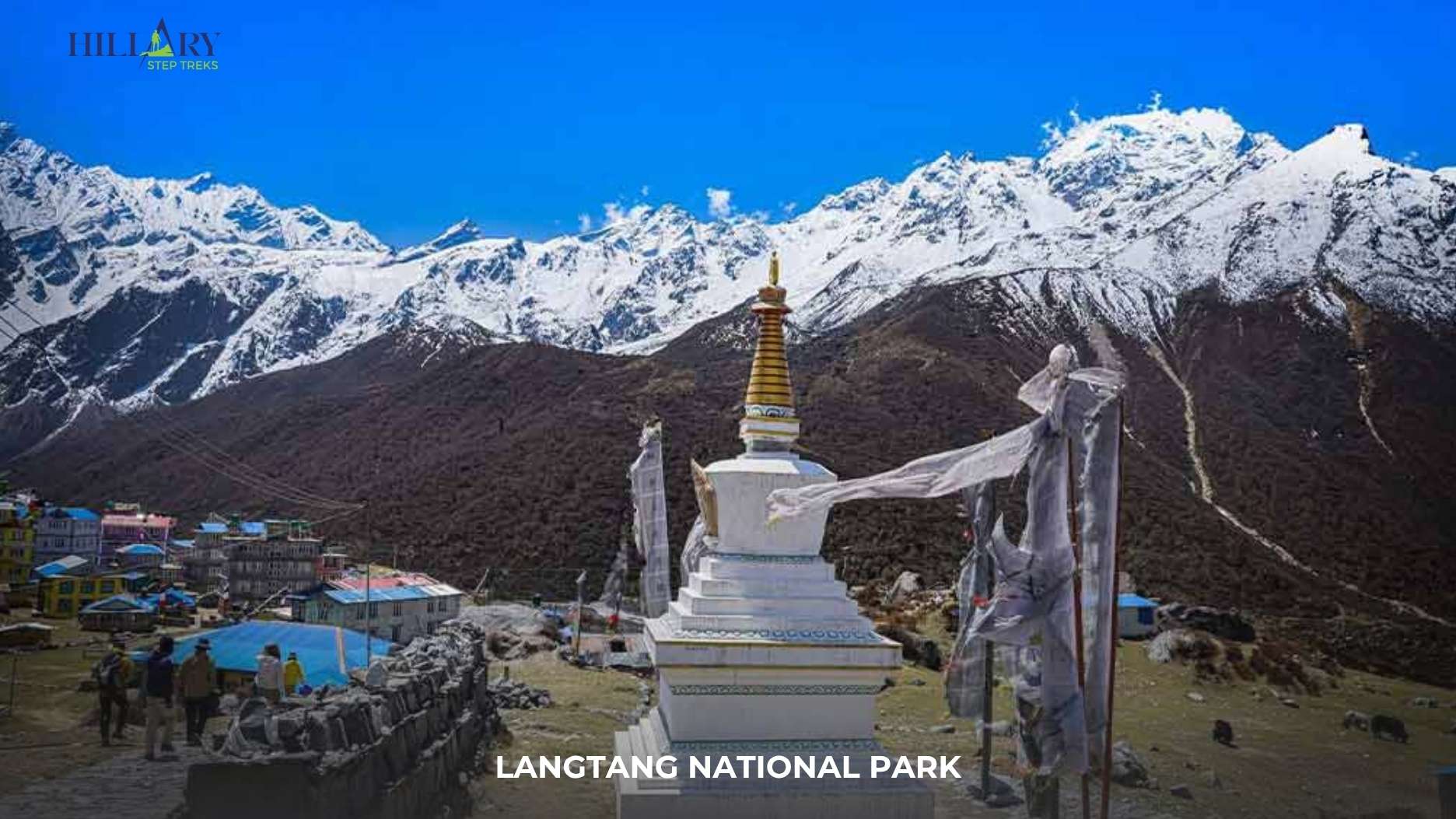
The Gokyo Ri Trek Map provides trekkers with a clear and easy-to-follow overview of one of the most beautiful and visually appealing treks in the entire Everest region. It shows how the Gokyo Ri trek follows the same classic EBC trail up to Namche Bazaar, then splits off to Dole to take you to Gokyo Ri. This summit lets you see four mountains above 8,000: Mount Everest, Lhotse, Makalu, and Cho Oyu. With the help of a legend at the top left corner, you can easily navigate your way and understand what to expect during your trek. It also marks the other EBC trekking routes, high passes, viewpoints, lakes, glaciers, suspension bridges, teahouse villages, and cultural landmarks near the Gokyo Valley.
Also, the map of the Gokyo Ri trek helps you understand how much altitude you’ll gain each day, how long you’ll have to walk, and where you can rest. Knowing this helps you prepare for both the acclimatization and terrain challenges. Looking at the map, you know that it’s possible to extend 10 Days Gokyo Ri Trek by connecting with the challenging Cho La Pass, if you want to go to the iconic Everest Base Camp and Kala Patthar.
Gokyo Ri Trek Map Summary
Like most of the Everest region treks, the Gokyo Ri Trek also begins with an exciting mountain flight from Kathmandu or Manthali to Lukla (2,860m). From Lukla, the gateway to the Khumbu region, the trekking starts as you move towards Phakding (2,610m). You will spend the 1st night in the valley of the Dudh Koshi River.
On the 2nd day, the trek continues northward through pine forests and across suspension bridges to reach Namche Bazaar (3,440m), which is almost like the Sherpa capital. It is not just a trading town but also a cultural highlight, with gompas, bakeries, and panoramic views of nearby mountains like Thamserku and Kongde. You’ll spend the 3rd day again in Namche for a rest and acclimatization. It’s also a chance to do side hikes or explore the village.
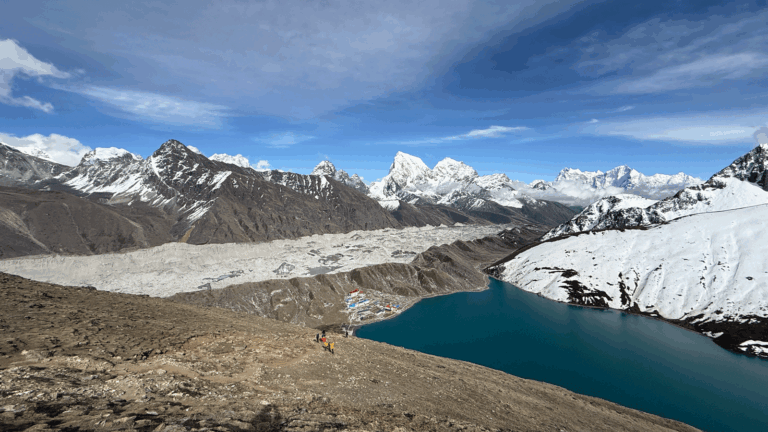
From Namche, you follow a trail that diverges from the classic Everest Base Camp Trek route. It climbs gradually through alpine vegetation and rocky terrain to reach Dole (4,110m) on the 4th day. You continue up the valley to Machhermo (4,470m), a small settlement with excellent close-up views of Cho Oyu, the next day. Then, continuing the Gokyo Ri trek, the 6th day leads into the wide glacial valley of the Ngozumpa Glacier. On the way, you’ll see the first and second Gokyo lakes: Longponga Tsho and Taujung Tsho, respectively. After a while, you arrive at Gokyo (4,750m), nestled beside the third lake, Gokyo Tsho or the Dudh Pokhari.
The 7th day is the whole highlight of the trek. It starts with an early morning climb to Gokyo Ri (5,357m) for one of the best viewpoints in the Himalayas. After the hike, you retrace your steps back to Machhermo or Dole the same day. Then the descent continues through familiar villages, first back to Namche Bazaar on the 8th day, and Lukla on the 9th. On the final day, a scenic morning flight takes you back to Kathmandu or Manthali, marking the end of the Gokyo Ri trek.
How is the Acclimatization and Altitude Adjustment on the Gokyo Ri Trek?
The Gokyo Ri Trek has a gradual acclimatization profile designed to help trekkers safely adjust to high altitude. It has a combination of gradual ascent, built-in rest days, and careful pacing that ensures a well-balanced high-altitude adventure in the Everest region.
After the short flight to Lukla, the trail does not immediately push higher but instead allows for a slow climb through Phakding. The 2nd day path to Namche Bazaar is steep and challenging, but you spend an extra day here for complete rest and acclimatization. It is a crucial part of every Everest trek. You can do optional hikes to 3,800m–3,900m viewpoints like the Everest View Hotel, Syangboche, and the nearby traditional villages of Khumjung and Khunde. After enjoying and exploring, you return to sleep at a lower altitude to help your body adjust to the altitude and climate.
From Namche onward, the altitude rises steadily but carefully from Dole to Gokyo. The altitude gain in this section ranges from +250 m to +350 m, so you’re within safe acclimatization guidelines. Additionally, you can walk up to a ridge hike above Machhermo with views of Kyajo Ri on the way to Machhermo. The trek to Gokyo Ri is a non-technical climb, done as a day hike. So, even if you reach 5,000m+ at Gokyo Ri, the risk of altitude sickness is minimal. You can also take side trails for acclimatization walks to the nearby fourth and fifth Gokyo Lakes: Thonak Tsho and Ngozumpa Tsho. These all follow the golden rule of “climb high, sleep low,” which helps your body adapt better. Finally, the descent retraces back down the valley quickly, dropping over -1,500m within two days back to Namche. This rapid reduction in altitude provides natural relief from altitude stress, making the latter part of the Gokyo Ri trek physically easier. If you stick to the standard itinerary, hydrate well, and remain mindful of symptoms of Acute Mountain Sickness (AMS), you can complete the trek successfully even as a beginner.

 Moderate