
If you plan it right, the Short Annapurna Circuit Trek usually costs between 600 and 1,000 USD for 7-10 days with a local guide, permits, transport, food, and teahouse stays.
And if you trek independently, use local buses or shared jeeps, and keep extra spending low, the cost can drop to around 450 to 700 USD. But going cheaper usually means less comfort, more planning stress, and less support if something goes wrong during the trek.
On a daily basis, most trekkers spend around 35 to 60 USD, depending on whether they hire a guide or porter, transport choices (bus, jeep, or flight, food and drink habits, and extras like hot showers, charging, Wi-Fi, and snacks.
While we are talking about these costs, I know you must be confused seeing those figures. A lot of people see the total price and wonder where the money actually goes. So, now, let’s see how these costs bundle up and what factors are behind the total costs of the Short Annapurna Circuit Trek.
Trekking Permit Costs
Before starting the Short Annapurna Circuit Trek, every trekker needs official permits to enter the Annapurna region. These permits are required for all foreign visitors as per the Nepal Tourism Board. The funds collected from permits go toward trail maintenance, conservation work, and local tourism development in the Annapurna area. For the Annapurna Circuit Short trek, you need one main permit and sometimes a second, depending on current rules.

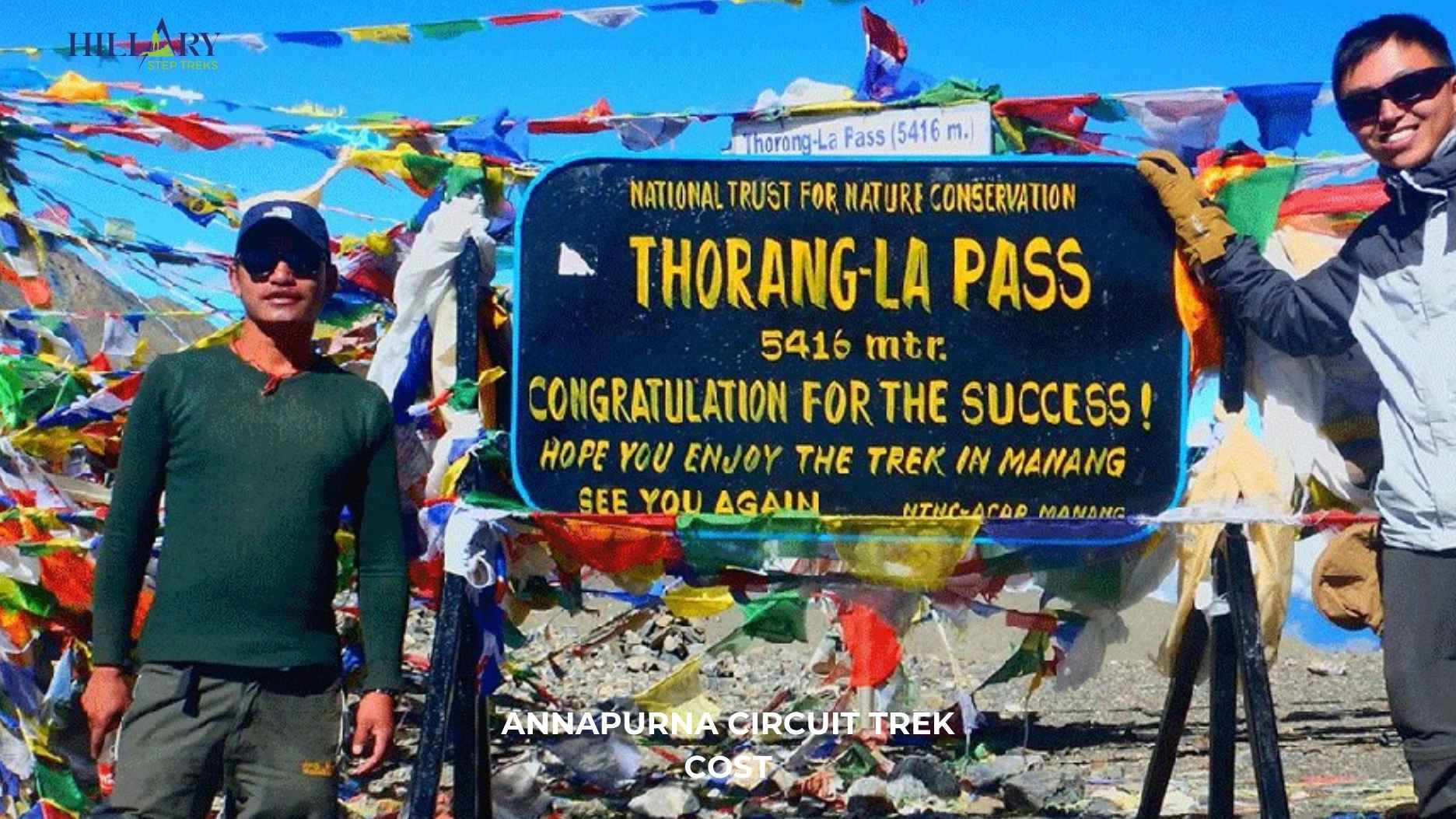
The main permit for the Annapurna trek is the Annapurna Conservation Area Permit (ACAP), which costs about 30 USD per person. This is mandatory for entering and trekking inside the Annapurna Conservation Area. You may also need a TIMS Card (Trekkers’ Information Management System). The requirement for a TIMS card has changed over time and is not always enforced the same way in every region, but it’s still safest to budget around 20 USD in case it is required during your trek.
In total, most trekkers spend around 30 – 50 USD on permits. If you book a guided trek, the trekking agency usually handles all permits and paperwork for you. If you are trekking independently, you will need to arrange them yourself via offices in Kathmandu or Pokhara before starting the route.
Guide and Porter Costs
A guide is not legally mandatory on the Annapurna Circuit. That means you can do the Annapurna Circuit short trek solo without a guide. But for most people, hiring an experienced guide is still a smart investment, especially on a short itinerary where losing a day to bad pacing or poor decisions can disrupt the whole trek. A good local guide handles logistics, keeps the pace sensible before and after Manang, and steps in quickly if you show early signs of altitude problems. Likewise, a porter helps carry your heavy backpack.
Typical daily guide and porter rates you should plan for:
- Licensed guide: Around 25-35 USD per day, depending on experience and season.
- Porter: Around 20-25 USD per day for a 15-25 kg load.
On a 7-10 day short circuit, that comes to roughly:
- Guide only: About 175-350 USD total.
- Guide + porter: About 350-600 USD total.
At the end of the trek, tipping is common if you are happy with the service. Many trekkers tip somewhere around 10-15% of the total guide or porter wages as a thank you for their support during the trek.
Accommodation (Teahouses and Lodges)
Accommodation on the Short Annapurna Circuit is mostly in teahouses, which are simple mountain lodges run by local families. The services you get include a small twin room, wooden beds with foam mattresses, pillows and blankets, and shared bathrooms. The higher you go, the more basic and slightly more expensive things become, because everything has to be carried up by porters and mules.
Here’s the rough price range for a room per night (usually for 1-2 people):
| Area | Typical Price (USD) per night | What to Expect |
|---|---|---|
| Besisahar / lower road areas | 8-15 USD | More comfortable guesthouses and hotels |
| Dharapani – Chame | 6-10 USD | Simple but decent teahouses |
| Pisang – Manang | 5-8 USD | Good lodge options and competitive pricing |
| Yak Kharka – Ledar | 5-7 USD | Smaller and more basic lodges |
| Thorong Phedi / High Camp | 6-10 USD | More expensive due to the remote location |
| Muktinath – Jomsom | 8-15 USD | Better facilities and hotel-style rooms in some areas |
Most independent trekkers spend around 5-10 USD per night on accommodation overall during the Annapurna Circuit Short Trek. But one thing many first-time trekkers don’t realize is that room prices are often tied to food. If you eat both dinner and breakfast at the same lodge, owners may reduce the room cost heavily or even offer it almost free because they make more money from meals than from the room itself.
Meanwhile, if you trek with an agency, accommodation costs are already included in the package price, so you may not see these expenses separately.
Food and Drinks on the Trail
Food is something that most trekkers spend the biggest part of their daily budget on in the Short Annapurna Circuit. For most trekkers, a realistic food budget costs around USD 20 to 30 per day for three proper meals. Food quality on the Annapurna Circuit is usually better than many people expect. Even in higher villages, teahouses commonly serve dal bhat, fried rice, noodle soups, momos, bread, pancakes, pasta, and tea and coffee.
Dal bhat is the best value for money and is budget-friendly too. It is filling, warm, and usually comes with unlimited refills in many teahouses while giving you the carbs and salt you need. Western meals like pizza, burgers, pasta with cheese, and bakery items are also available in many villages, but they cost more and are often in smaller portions. Having them occasionally is fine, but eating them at every meal can increase your budget quickly.
Some food and drink prices look like this:
| Item | Lower region | Higher region |
|---|---|---|
| Dal bhat | 4-6 USD | 8-12 USD |
| Fried rice | 4-5 USD | 7-10 USD |
| Noodle soup | 3-5 USD | 6-9 USD |
| Pancakes | 3-4 USD | 5-8 USD |
| Tea/coffee | 1-2 USD | 3-5 USD |
| Bottled water | 1 USD | 3-5 USD |
Transportation Costs

Transportation is another factor that changes the overall cost of the Annapurna Circuit Short Trek in Nepal. Your route stays mostly the same, but the way you travel, by bus, jeep, private vehicles, or flight, can change both your budget and comfort level. Some trekkers keep costs low using local buses and shared jeeps, others spend more to save time and avoid long road journeys, and some may use a combination of buses and shared jeeps.
One important thing to understand is that on the short Annapurna Circuit, roads mainly save time, not huge amounts of money.
Here’s the typical transportation cost breakdown during the trek to Annapurna Circuit:
| Route | Type of Transport | Average cost |
|---|---|---|
| Kathmandu to Besisahar | Bus | 10-15 USD |
| Besisahar to Chame | Shared jeep | 20-35 USD |
| Jomsom to Pokhara | Shared jeep | 25-40 USD |
| Jomsom to Pokhara | Flight | 120-160 USD |
| Pokhara to Kathmandu | Tourist bus | 10-15 USD |
| Pokhara to Kathmandu | Flight | 90-130 USD |
Gear and Equipment Costs
Gear costs for the Annapurna Circuit Short Trek depend a lot on what you already own before arriving in Nepal. If you already have trekking basics like boots, layers, and a backpack, your extra costs can stay very low. But if you need to arrange most of your gear, you should expect to spend more before the trek starts.
Kathmandu’s Thamel area is still the main place where trekkers rent or buy trekking equipment at relatively affordable prices. You can easily rent down jackets, sleeping bags, trekking poles, duffel bags, microspikes, and waterproof layers. The one item most trekkers strongly recommend bringing yourself is trekking boots because poorly fitted boots can quickly ruin the experience through blisters, foot pain, or knee strain.
Here are the rental and purchase prices of trekking gear:
| Gear Item | Rental Cost Per Day | Purchase Cost |
|---|---|---|
| Down jacket | 1-3 USD | 40-100 USD |
| Sleeping bag | 1-3 USD | 50-120 USD |
| Trekking pole | 1 USD | 10-30 USD |
| Duffel bag | 1-2 USD | 15-40 USD |
| Microspikes | 1-2 USD | 20-45 USD |
Most budget trekkers spend less than 50 USD renting gear for the entire Short Annapurna Circuit trekking. If you need to buy almost everything from scratch, gear expenses can reach around 150-250 USD or more, depending on quality and brand choices.
Miscellaneous and Hidden Costs
The miscellaneous and hidden costs during trekking include WiFi, charging devices, hot showers, snacks, and travel insurance. One of the most important costs is travel insurance. For high-altitude trekking in Nepal, insurance that includes emergency helicopter evacuation is essential. Without it, a medical evacuation can become extremely expensive.
Here are the most common extra expenses:
| Expense | Average Cost |
|---|---|
| Hot shower | 2-5 USD |
| Device charging | 1-4 USD |
| WiFi access | 2-5 USD |
| Snacks & Chocolate | 2-6 USD |
| Power bank purchase | 20-40 USD |
| Travel Insurance | 80-200 USD |
In total, most trekkers should budget around 80-150 USD for these miscellaneous expenses over a 7-10 day trek.
Standard vs Short Version
The Short Annapurna Circuit Trek generally costs less than the standard Annapurna Circuit because it takes fewer days and requires fewer nights of accommodation, meals, and local transportation. However, the total price depends on the route, group size, trekking services, and whether you travel independently or with a guide.

The classic/standard Annapurna Circuit Trek was once a 3‑week loop (18-21 days) starting near Besisahar and walking all the way around to Nayapul/Pokhara, with long lower‑altitude approach and exit sections. Now, roads take over long stretches of the lower trail, so the standard version for many people already includes jeeps and buses. The short version simply accepts this reality and concentrates on the best section along the trail.
Budget vs Guided vs Luxury Package
When you strip it down, there are three main ways people do the Short Annapurna Circuit: budget/independent, standard guided, and comfort‑focused luxury. The route stays the same. The difference lies in the level of support, comfort, and flexibility you get during the trek.
| Style | Typical Cost (7–10 Days) | What It Usually Includes | Best For |
|---|---|---|---|
| Budget / Independent | 450-700 USD | You handle everything on your own, including permits, transport, accommodation, daily route planning, food, and personal logistics. Also, you choose the budget option for everything, for example, the public bus over a private one and a basic teahouse. | Experienced trekkers comfortable with DIY travel |
| Standard Guided | 700-1,100+ USD | A local tour operator arranges permits, transport, a guide, teahouses, and most meals. You still walk the same trails and stay in the same style of lodges, just with support. | First-time trekkers, solo travelers, limited planning time |
| Luxury / Comfort | 1,100-1,500+ USD | You travel in a private jeep where possible, take flight, stay in upgraded lodges when available, guide + porter, more flexibility, and inclusions | Travelers wanting comfort, easier logistics, and less stress |
Now, answering whether it’s cheaper to do the Annapurna Circuit Short trek solo or with a group, the answer is that independent trekking is definitely cheaper. But if you look at overall value, a small guided group gives the best balance. You share guide and porter costs, reduce planning stress, and lower the chances of losing time or money because of poor decisions, transport problems, or altitude-related issues.
Is the Short Annapurna Circuit Worth the Cost?
Absolutely, the Annapurna Circuit short trek is worth the cost for most trekkers. Very few treks in the world offer this kind of mountain scenery, cultural experience, and high-altitude adventure at a relatively affordable price, and that too in less time. In just over a week, you cross a Himalayan pass above 5,300m, sleep in remote high altitudes villages, experience Tibetan-influenced Buddhist culture, and spend days surrounded by some of the tallest mountains on Earth.

Likewise, the Annapurna region is much more affordable than many famous trekking destinations worldwide. The cost of accommodation, food, and local transport is reasonably priced. Even budget trekkers can experience a serious Himalayan adventure without spending an extreme amount of money.
Money-Saving Tips for the Short Annapurna Circuit Trail
A small decision can noticeably reduce your total short Annapurna Circuit Trek cost without ruining the experience. Most trekkers overspend on small daily habits rather than the major trekking expenses themselves. Here are some practical ways to keep your budget under control:
- Use local buses and shared jeeps where you can, and reserve private vehicles only when time is genuinely tight.
- Eat mostly local Nepali meals like dal bhat. Limit the pizza and other Western dishes.
- Bring water purification tablets or a reusable filter bottle. Buying bottled water every day becomes surprisingly expensive.
- Rent big trekking gear in Kathmandu instead of buying everything new. Sleeping bags and down jackets are cheap to rent in Thamel.
- Trek in a small group so you can split guide and porter costs without losing flexibility.
- Set a daily budget for extras like snacks, coffee, WiFi, charging, and hot showers. These small comfort purchases add up faster than most trekkers expect.
- Avoid drinking too much alcohol during the trek. It is expensive at altitude and not great for acclimatization either.
- Carry a power bank from Kathmandu. Charging devices on the trail costs money almost everywhere.
- Plan transport in advance during peak season. Last-minute jeep or flight changes can become expensive.
Booking Through an Operator vs Solo
One of the biggest decisions trekkers face before doing the Short Annapurna Circuit is whether to organize everything independently or book through a trekking company. Both options are good, but they suit different types of trekkers.
Solo trekking gives you more freedom and flexibility. You can decide your own pace, change plans whenever you want, and manage the trek your own way. But it also means handling all the planning, transport, permits, accommodation, and problem-solving yourself.
In contrast, booking through an operator adds an upfront cost, but it removes a lot of the stress. Trekking companies usually arrange permits, transport, guides, teahouse bookings, and support if weather, altitude, or logistics become complicated during the trek. Also, trek cost with international tour operator is more expensive than trek cost with local operator.
For first-time trekkers in Nepal, someone worried about altitude, or travelers with limited time, going through a good local operator makes the overall experience smoother and more relaxed.
| Aspect | Through Operator | Solo Trek |
|---|---|---|
| Convenience | High. Operator manage everything | Lower. You manage everything |
| Cost | Higher upfront, but easier to predict overall expenses | Cheaper overall, but easier to underestimate extra costs |
| Safety | Better support during altitude, weather, or emergency situations | Depends heavily on your own experience and decisions |
| Logistics | Much smoother, especially during busy trekking seasons | More flexible but requires more planning and coordination |
| Flexibility | Moderate. You follow the itinerary | High. You can adjust plans anytime |
Conclusion
The Annapurna Circuit Short Trek proves you don’t need endless time or a massive budget to experience one of Nepal’s most iconic trekking routes. At the same time, it removes many of the expensive and less scenic lower sections.
For most trekkers, a realistic overall budget falls somewhere around 600 to 1,200 USD, depending on your travel style, comfort level, transport choices, and whether you trek independently or with a guide. Budget trekkers can complete it for less, while comfort-focused travelers may spend more on private transport, upgraded lodges, or guided services.
Frequently Asked Questions for the Short Annapurna Circuit Trek Cost
Expand AllCan I do the Short Annapurna Circuit Trek on a budget of $500?
How many days is the Short Annapurna Circuit Trek?
Are there ATMs on the Short Annapurna Circuit Trek?