
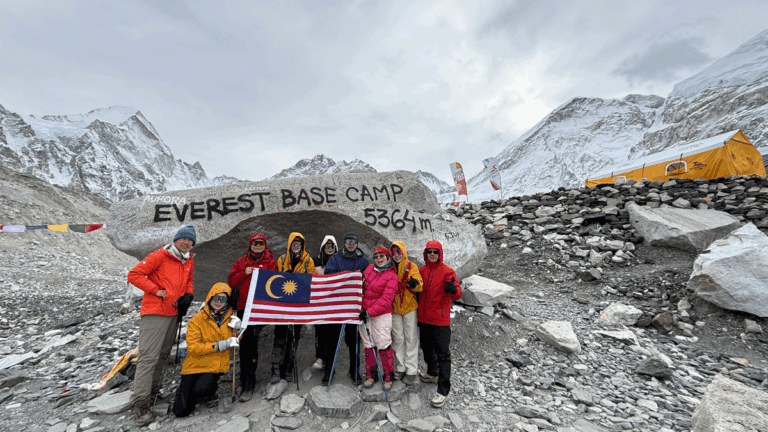
Kala Patthar (5,545m) is the iconic viewpoint that offers what Base Camp cannot, which is a clear, unobstructed view of Mount Everest. Lying just above the remote settlement of Gorakshep on Mt. Pumori’s southern ridge, it is the highest point of the Everest Base Camp (EBC) trek. And just like its name, which translates to “Black Rock”, the ridge is made up of dark metamorphic rock. The best views are at dawn and dusk when the summit of Everest glows gold and crimson, creating one of the Himalaya’s most unforgettable sights.
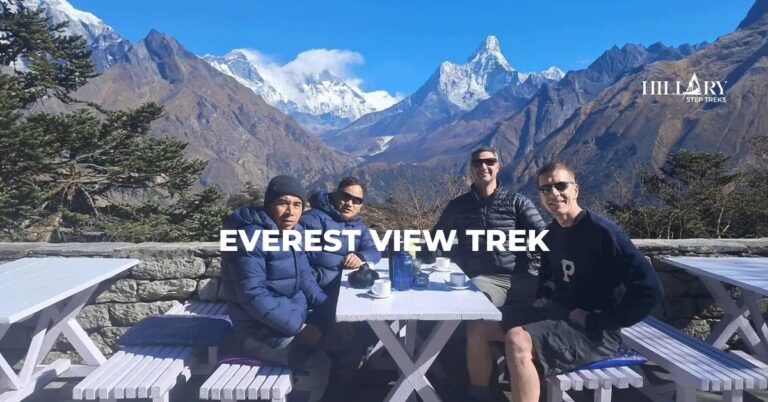
It’s often called“the highest point most trekkers will ever reach without ropes or climbing permits.” Because, unlike other climbing peaks (Island Peak, Mera Peak), Kala Patthar is also a peak, but it is non-technical. You don’t need any separate permits or mountaineering equipment; just the Sagarmatha National Park and Khumbu Rural Municipality Permit, which is typically bundled in the Everest Base Camp Trek. However, the climb is strenuous due to its high altitude and dry air, rather than technical difficulty. So, you really have to be careful with acclimatization. Do not skip either of the rest days in Namche or Dingboche.
| Detail | Information |
|---|---|
| Altitude | 5,545m |
| Location | Above Gorakshep, the south ridge of Pumori |
| Trek Duration | 8 days from Lukla (as per standard EBC trek itinerary) |
| Base Settlement | Gorakshep (5,163m) |
| Permits Needed | Sagarmatha National Park + Khumbu Rural Municipality |
| Best Seasons | Mar–May (spring), Sep–Nov (autumn) |
| Difficulty | Strenuous high-altitude hike; non-technical |
| Typical Hike Time | 1.5–2 hrs up; 45–60 min down |
The Kala Patthar Summit Experience from Gorakshep
Reaching the top of Kala Patthar is often described as the most memorable moment of the Everest trek. Although the hike itself and the time spent on the summit are short, the experience is highly rewarding.
- Overnight at Gorakshep: It is the last settlement on the EBC trek, ~1.5 km away from Kala Patthar. Here, gathering around the yak dung stove and sharing a hearty meal with other trekkers from around the world provides a heartwarming experience.
- Early Morning Hike to the Summit of Kala Patthar: Hike from Gorakshep to Kala Patthar dips into an old lakebed, climbs a steep rocky path, and finishes with a short boulder scramble. The ascent takes 1.5–2 hours; however, the descent only takes 45–60 minutes.
- Summit cairn and prayer flags: As soon as you reach the top, you’ll see a cairn draped in colorful flags. The local Sherpa people built it, symbolizing respect for the mountains and ensuring safe passage, but you’re welcome to add a stone here.
- The closest view of Everest: You come face-to-face with Everest, which lies 7 km away, but still looks so near. This breathtaking, unobstructed view is something even Base Camp itself cannot offer, due to the presence of Nuptse.
- Witness a 360-degree Himalayan panorama: The views from Kala Patthar are unmatched. Along with the Everest, Lhotse, Nuptse, Pumori, and Changtse surround you from every direction, while the Khumbu Glacier and Icefall sprawl below.
- Capture a Beautiful Sunrise or Sunset over the Himalayas: Watch Everest and the surrounding peaks turn soft gold against the blue morning sky. If you trek in autumn evenings, you can see them blaze in deep orange and crimson, making both sunrise and sunset unforgettable in their own way.
- Take Photographs: The thin air, strong winds, and cold may make photography a challenge. However, if you like capturing moments, then you’ll get some of the most rewarding images of the trek.
- Enjoy a moment of reflection: You’ll feel many things as you sit quietly at the summit in the thin air. The silence and the vast sweep of the Himalayas make you feel both small and deeply connected. It becomes less about reaching the summit. Many trekkers say that you feel connected here in the heart of the mountains.

Fun fact: Kala Patthar once hosted the highest webcam in the world, installed in 2011 for scientific monitoring. However, it is no longer operational as of 2026.
How to reach Kala Patthar from Kathmandu
There are three main ways to reach Kala Patthar: fly to Lukla or Tumlingtar and trek for 8–10 days, join a direct helicopter tour in a single day, or take an overland drive to Jiri or Salleri/Phaplu and continue on foot for a longer trek.
Lukla Flight, then a Multi-day Trek to Kala Patthar
The most popular way to reach Kala Patthar is to take a 30–35 minute flight to Lukla from Kathmandu (KTM). During peak trekking seasons (spring and autumn), flights are often rerouted to depart from Ramechhap/Manthali Airport, a 4– to 5-hour drive east of Kathmandu. From Lukla, you can take the standard 14 Day Everest Base Camp Trek route through Phakding, Namche Bazaar, Tengboche, Dingboche, and Lobuche to Gorakshep. Then, you finally get to hike up to Kala Patthar on the 10th day.
For a more adventurous alternative, you can trek to Kala Patthar from other routes in the Everest region, like the 15 Day EBC Trek via Gokyo Lakes, which adds turquoise lakes and a glacier crossing. This route follows the same EBC trail from Lukla to Namche, then passes through villages such asDole, Machhermo, Gokyo, and Thagnak, Dzongla, before rejoining the standard route again in Lobuche. From here, you trek to Gorakshep on the 11th day and climb the Kala Patthar on the 12th day.

If you’re an experienced trekker, you can also opt for the full circuit, the 18 Day Everest Three Passes Trek. It links three high passes to the EBC route: Renjo La, Cho La, and Kongma La, with additional stops in villages such as Chukung, Dzongla, Thagnak, Gokyo, Lungden, and Thame. So, it’s a way longer, more challenging, and more scenic route.
Flight to Tumlingtar, then a Multi-day Trek to Kala Patthar
The Arun Valley route begins with a short flight from Kathmandu to Tumlingtar. From there, it’s a long, immersive trek of about 8 to 10 days through the remote Arun Valley. You trek through villages like Bung, Gudel, Panggom before you reach the main Everest Base Camp trail near Lukla or Phakding. From there, it’s the same route to the Kala Patthar. This path avoids the crowded standard route, offering a unique cultural and scenic experience.
Overland Trekking Routes through Jiri or Salleri
There are also overland options available instead of flying into Lukla. The most historic is the Jiri route, followed by the earliest Everest expeditions and the Hillary Classical Trek. You trek through villages likeBandhar, Sete, Junbesi, Nunthala, and Chheplung before joining the standard trail at Namche.
More recently, many trekkers opt to drive by jeep or bus from Kathmandu to Salleri, Phaplu, or Thamdanda, then walk north to join the main EBC route. This adds 2–4 extra trekking days but avoids the uncertainty of Lukla flights.
Helicopter Tour to Kala Patthar
If you are short on time, you can take a helicopter to Kala Patthar instead of trekking. Flights leave from Kathmandu or Lukla, fly over Everest Base Camp, and stop briefly at the viewpoint for photos. The trip takes approximately 4–5 hours round-trip, with a stop of 5–15 minutes at the summit. Please note that landings are dependent on weather conditions. Sometimes, the pilot may only hover instead of touching down, providing stunning aerial views.
Note: Prices vary by operator, season, weight, whether it’s a landing or hover, and whether it’s a group or private charter.
Climate and the Best Time to Hike Kala Patthar
At high altitude locations like Kala Patthar and Gorakshep, conditions are extreme at all times of the year. The nights in Gorakshep drop well below freezing, and days on the ridge can be sunny, but you still get hit with icy cold winds. And because the hike to Kala Patthar usually starts at dawn or dusk, you must be prepared for biting wind chills and rapidly changing weather conditions.
| Season | Hike Weather at Kala Patthar (Morning) | Overnight at Gorakshep (Night) |
|---|---|---|
| Spring (Mar–May) | Clear, stable skies; 0 to 8 °C | –5 to –10 °C |
| Monsoon (Jun–Sep) | Cloudy, poor visibility; 5 to 10 °C | 0 to 5 °C |
| Autumn (Sep–Nov) | Crisp, clear air; –2 to 6 °C | –5 to -12 °C |
| Winter (Dec–Feb) | Very cold, snow/ice risk; –8 to 2 °C | –10 to –15 °C |
By the table, we can say that the best times to do the Kala Patthar Trek are in spring (Mar–May) and autumn (Sept–Nov). In the spring months, morning temperatures are slightly warmer and the weather is more stable, making the climb easier. Light snow may linger at higher altitudes, but trails to the viewpoint are usually clear. Lower down, you can also trek through rhododendron blooms between Lukla and Namche Bazaar.
Similarly, autumn months bring the clearest skies and the sharpest views of Everest from Kala Patthar. Occasional early snowfalls on Kala Patthar and the surrounding Khumbu trails can occur in late November, and mornings can be slightly colder than in spring. If you’re a photographer or someone who doesn’t mind colder mornings in exchange for the most reliable visibility, autumn is the best option for you.
Winter is brutally cold and suited only for very experienced trekkers. Temperatures at Gorakshep drop far below freezing, so overnight here will be very cold. More importantly, heavy snow and icy winds make the ascent to Kala Patthar dangerous. Likewise, trekking to Kala Patthar in the monsoon months is also not feasible. It brings clouds, rain, slippery trails, and frequent flight delays.
Comparison with Other Viewpoints in Everest Region
While Kala Patthar is the most popular and iconic viewpoint of Everest, it isn’t the only one in the region. Other summit ridges include Gokyo Ri and Kongde Ridge. Each of them offers a different perspective on the Himalayas in the following ways:
| Feature | Kala Patthar | Gokyo Ri | Kongde Ridge |
|---|---|---|---|
| Altitude (Height) | 5,545m | 5,357m | ~4,250m |
| Main Scenery | Closest, clearest view of Everest; Khumbu Glacier & Icefall | Wide views of Everest, Cho Oyu, Makalu, Gokyo Lakes, Ngozumpa Glacier | Wide views of Everest, Ama Dablam, Khumbu Valley |
| Starting Point | Gorakshep (EBC trek) | Gokyo village (Gokyo trek) | Namche or helicopter landing |
| Climb Duration & Effort | 1.5–2 hour steep hike at high altitude | 2–3 hour moderate hike | Easy to moderate; short climb or heli drop |
| Risk of Altitude Sickness | High: requires rest days in Namche & Dingboche | High: requires a gradual ascent via Gokyo Valley | Moderate: lower altitude, easier adjustment |
| Special Feature | Summit cairn with prayer flags | Turquoise lakes + four 8,000m peaks in one frame | Luxury lodges with terrace viewpoints |
| Best For | Trekkers wanting the iconic, closest face-to-face Everest view | Trekkers seeking wide landscapes with lakes and glaciers | Travelers preferring comfort, short side trips, or heli access |
Ready to hike to this iconic viewpoint in Nepal? Contact us today and plan an unforgettable visit to Kala Patthar.