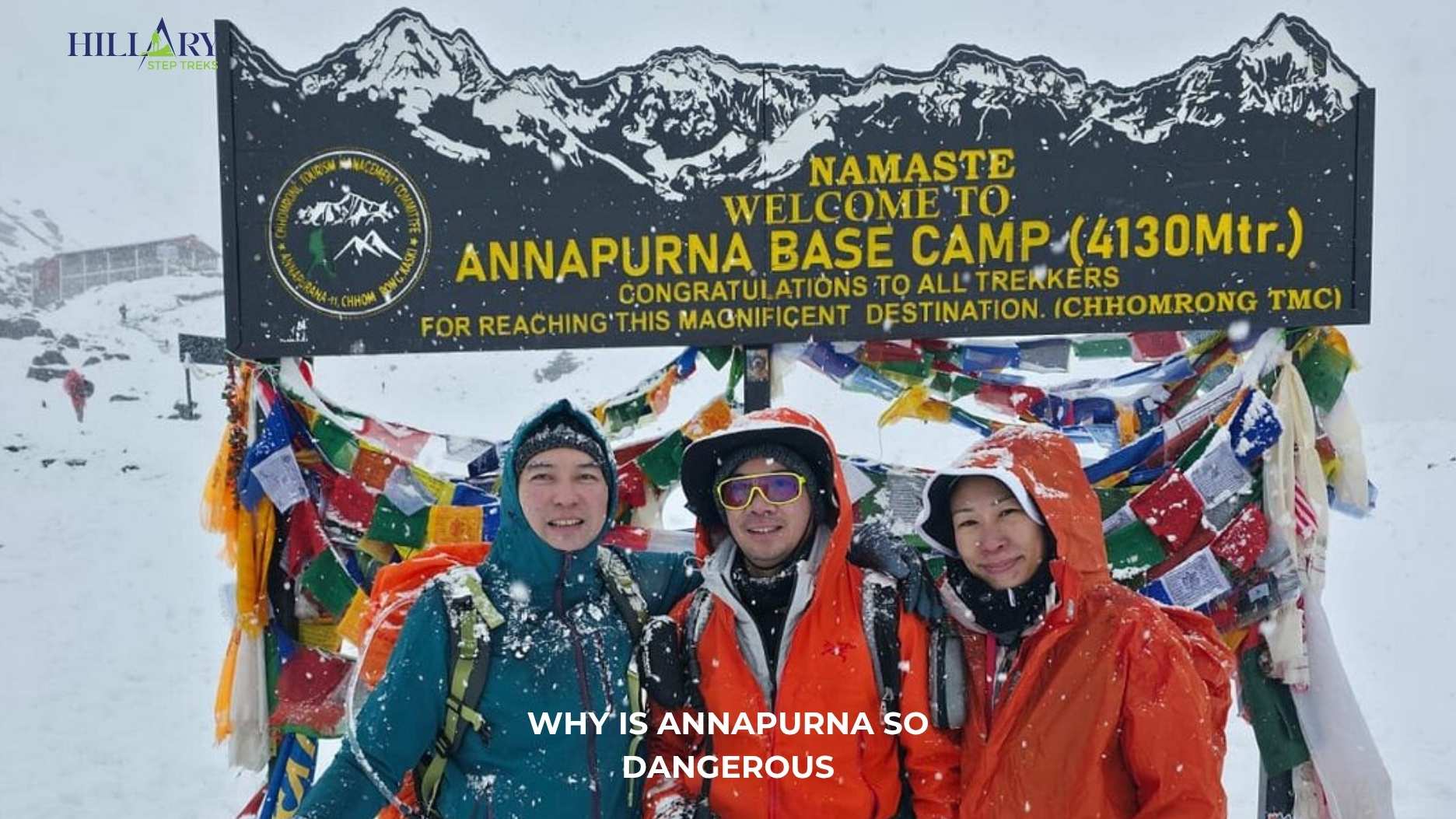
Yes. The ten days on the Annapurna Sanctuary Trek will feel more rewarding than any typical holiday. It covers everything you’d want: mountain views, peaceful walking trails, and a real escape from busy schedules. You’ll reach both Machhapuchhre and Annapurna Base Camp, with gigantic views of Annapurna I (8,091m), Annapurna South (7,219m), Hiunchuli (6,441m), Machhapuchhre (6,993m), Gangapurna (7,455m), and even Dhaulagiri (8,167m) far away. From the first day, the mountains feel close, growing larger and nearer as you climb toward the glacier-carved amphitheater of the Annapurna Sanctuary itself.
However, this trek is not just about peaks. You also pass natural hot springs at Jhinu Danda, Gurung villages like Chhomrong and Ghandruk, along the way. The paths are lined with prayer flags, not just as decorations, but with the spirituality and faith of the inhabitants. Each day begins with crisp air and sunrises over glowing mountains and green hills while trekking in the Annapurna region of Nepal. These elements make the trek more memorable than other vacations.
What Makes the Annapurna Sanctuary Trek One-of-a-Kind
The Annapurna Sanctuary Trek stands out because its two consecutive days never feel similar. First, you start in terraced farmlands and warm valleys, then you move through dense rhododendron and bamboo forests, and finally climb to open ridges and snowy trails. By the time you reach the Annapurna Sanctuary, you’ve passed through almost every kind of landscape the Himalayas can offer. The constant change keeps the trek to Annapurna Sanctuary exciting and gives you natural breaks from long climbs.

It might sound like a lot right now, but the trek keeps things manageable. You walk 4 to 8 hours on a daily basis. The route is mostly steady with gentle climbs instead of punishing ascents. And surprisingly, the highest point is just 4,130m at Annapurna Base Camp, a moderate altitude compared to other treks in Nepal. Tea houses on this route are simple but still well-designed to provide hot meals, warm beds, and a social space to connect with fellow trekkers, so you get the best mix of trekking adventure and comfort.
Trek in the Shadow of the Sacred Fishtail Peak, Machhapuchhre
Annapurna Base Camp is surrounded by the Himalayas’ most sacred and stunning peak, Machapuchhre. It rises sharply nearby at 6,993 meters and is also known as Fishtail Peak because of its double summit resembling a fish’s tail. The mountain is revered by locals and trekkers alike. Alongside it, Annapurna I and other towering giants create a breathtaking amphitheater of snowy ridges and glaciers.
Many trekkers say the moment they step into this sanctuary, they feel a deep calm and pride. You can feel the vastness of the peaks, while the quiet majesty encourages soulful reflection. It’s more than a destination. It’s a powerful travel experience of nature’s grandeur and human perseverance.
Experience High Alpine Views Without the Everest Crowds
The Annapurna Sanctuary Trek offers high alpine views that rival Everest Base Camp but with fewer crowds and hustle. Its maximum altitude is lower than 4,130 meters compared to Everest’s 5,364 meters, making it more accessible for beginners or those worried about altitude sickness.
Daily walking times tend to be shorter and less strenuous, with steady climbs instead of steep ascents. The trek starts near Pokhara, with easy transport options from Kathmandu, unlike the longer approach from Lukla for the Everest Base Camp Trek. This equals fewer crowds, more peaceful trails, and a more relaxed trekking experience.
Flora and Fauna Along the Annapurna Sanctuary Trail
The trek route through the Annapurna Conservation Area (ACA) is a living tapestry of nature’s diversity. As you gain elevation, the landscape shifts into dense rhododendron forests. During spring, the flowers bloom and the greens make a pleasing contrast with vibrant reds, pinks, and whites. Additionally, bamboo groves sway gently in the mountain breeze, creating a peaceful canopy that filters dappled sunlight onto the path. Sometimes, the langur may accompany you, hidden in the trees, or the call of a Himalayan monal in the underbrush.

This variety continues as you ascend to alpine meadows dotted with wildflowers, and eventually to rocky, snow-dusted ridges near the sanctuary. With some luck, you might spot a grazing Himalayan tahr or a snow pigeon flying overhead. The changing terrain keeps every day fresh and engaging, rewarding trekkers with a feast for the senses and plenty of moments that should be captured.
Savor Dal Bhat in Traditional Gurung Villages Along the Trail
One of the highlights of the Annapurna Sanctuary Trek is experiencing the warm hospitality of Gurung villages like Chhomrong and Ghandruk. Here, small teahouses serve hearty meals that are both comforting and nutritious for long days of hiking. Dal bhat, a classic Nepalese meal of lentil soup, steamed rice, seasonal vegetables (veg) or chicken or goat(non-veg), is a staple on every menu.
The teahouses themselves are basic but cozy enough. Most of them have warm twin shared beds, a communal dining area, and shared bathrooms. During colder months, the hosts often heat rooms with wood stoves. Staying in these villages also allows you to witness the local culture firsthand. Witness the prayer flags fluttering above stone pathways, traditional architecture, and exchange friendly smiles with village residents.
Share Stories with Trekkers from Around the World in Cozy Tea Houses
The teahouses serve as a resting place and a hub for trekkers from across the globe. The communal dining area allows everyone, international or national trekkers, guides, and porters, to gather in the evenings. For many, Nepal feels wonderfully different, but it might also be a little overwhelming at first, especially for homebodies and introverts. So, meeting others on the same journey as you can ease the feeling of being out of place. You can swap your story, compare routes, and share tips about the best viewpoints or hidden gems along the way.
Just as important are the local people. Nepalis are warm and open. Considering their long tradition of guiding and hospitality, and increasing access to education, some of them can speak English. And for those who don’t, your guide will translate. This helps you gain deeper insights into the mountains, the people, and the history of Annapurna Sanctuary. Through these connections, even a solo adventure in Nepal can turn into a shared experience, rich with culture and camaraderie.
Watch the Sun Rise Beneath Annapurna I at 4,130m

Wake up before dawn to witness the beautiful sunrise at Annapurna Base Camp. As you step outside your lodge, you’ll feel the cold and crisp air as it truly wakes you up. What better way to start a new day than sunrise? Watch the dark sky change its colour from dark blue to purple and then to soft reds and oranges. The snow-capped ridges shimmer and reflect this early light. Sunrises and sunsets are always beautiful, but the massive Annapurna I and the surrounding peaks shining brightly make it exceptional.
Soak in Natural Hot Springs at Jhinu Danda After a Long Day’s Hike
Unlike most treks, which give you sore legs and cold nights, the trekking in the Annapurna Sanctuary takes you to natural hot springs not just once, but twice. You’ll first reach Jhinu Danda on Day 3 (as per our standard itinerary) and again on your way back around Day 7. However, the experience will be very different. On your first visit, you’re only tired and trying to warm up your body.

However, on your second visit, it’s a whole celebration. You’ve reached Annapurna Base Camp, watched Annapurna ranges up close, crossed snowy ridges, and pushed through altitude and effort. Now, finally, the trek is near its end. Let the exhaustion go away and soothe your sore muscles before returning to our busy routine. Think of it like a warm goodbye.
Trek Affordably Without Compromising on Scenery
Annapurna Sanctuary trekking offers incredible mountain views, cozy stays, and hearty meals without emptying your bank balance. On Hillary Step Treks, the overall package starts at only USD 595. This cost is applied if you are in a group of 7-12 people. The cost rises if the group size is smaller. Here’s the Annapurna Sanctuary Trek Cost Breakdown:
| Inclusion | Cost Per Day (USD) | Estimated Total Cost (USD) |
|---|---|---|
| Trekking Permits (ACAP + TIMS) | — | 40-50 |
| Accommodation (Tea Houses) | 7-10 | 70-100 |
| Meals (Breakfast, Lunch, Dinner) | 10-15 | 100-150 |
| Licensed Trekking Guide | 25-30 | 200-250 |
| Porter (if included) | 15-20 | 120-150 |
| Transportation | — | 30-60 |
| Agency Support & Logistics | — | 100-150 |
| Total | — | USD 925 |
All in all, this budget trekking in Nepal offers a premium feeling as you explore the natural beauty in this region.
Your Trekking Route Through the Annapurna Sanctuary
The trek route starts from Dhampus, which can be reached by a 30-minute drive from Pokhara by private jeep or car. From here, you climb through terraced fields and traditional villages into the heart of the Annapurna region. Then, you continue going upwards to Landruk, Chhomrong, and Himalaya with gradual elevation gain. This allows you to acclimatize as you move closer to the high-altitude amphitheater of Annapurna Base Camp (ABC).

Your return route traces back through lush forests and riverside trails through Bamboo, Jhinu Danda, Chhomrong, and Ghandruk. Then the trek finally comes to an end at Syauli Bazar. After that, it’s a relaxing drive to Pokhara. It’s a well-paced itinerary that balances effort with rest, making it suitable even for intermediate trekkers.
Here’s a Day-by-Day Outline Itinerary for the trek to Annapurna Massif:
- Day 1: Drive from Kathmandu to Pokhara and Drive to Dhampus
- Day 2: Trek from Dhampus to Landruk
- Day 3: Trek from Landruk to Chhomrong
- Day 4: Trek from Chhomrong to Himalaya
- Day 5: Trek from the Himalaya to the Annapurna Base Camp
- Day 6: Trek from ABC to Bamboo
- Day 7: Trek from Bamboo to Chhomrong
- Day 8: Trek from Chhomrong to Ghandruk
- Day 9: Trek to Syauli Bazar and Drive to Pokhara
- Day 10: Drive from Pokhara to Kathmandu
Related Trip Packages


Things You’ll Experience During the Trek
Starting from Dhampus, this Annapurna Base Camp trek begins through forests filled with orchids and rhododendrons. The trail is mainly made up of mossy stone paths or dirt paths. Since it’s just the start of the trek, you’ll walk 5-6 hours a day across quiet forests and farmland. You can get the first panoramic views of Machhapuchhre and Annapurna South from here. Along the way, chortens are also built on hilltops and wrapped in silk scarves (Khada). Even before Chhomrong, you’ll spot mani walls and prayer wheels marking the spiritual trail.

From Chhomrong to the Himalaya and on toward Annapurna Base Camp, the terrain grows wilder and steeper. From here, the peaks will feel closer. You pass suspension bridges and bamboo forests as the air gets cooler and the trail turns rugged. Days can stretch to 7 or 8 hours, and the weather grows unpredictable. Due to the thinner air, your breaths shorten, steps become slow, and senses sharpen. Finally reaching the sanctuary, you’ll feel proud. Getting surrounded by Annapurna I, Machapuchhre, and other giants will silence you. Many sit, breathe, and take it in, kneeling to the earth’s most remarkable beauty.
The return feels more reflective and emotional. Descending to Bamboo and back through Chhomrong, the trail is bound to feel familiar, but your view of it will change. In Ghandruk, you’ll witness stone alleys, fluttering prayer flags, and a hillside monastery. The Old Gurung Museum (also called the Ghandruk Cultural Museum)is a preserved traditional Gurung house itself. Inside, you’ll find historical tools, local garments, and even traditional clothing you can try on for photos.
Quick Insight: During the trek, you cross paths with locals, children going to school, and of course, the fellow trekkers. Exchange hellos or Namastes. This way, you will carry more than just photos – a trip to Nepal that will outshine all adventure tours.
Staying in the Heart of the Sanctuary
On this tea house trek in Annapurna, you’ll find guesthouses and teahouses in every village. Villages like Ghandruk and Chhomrong have been in tourism for a long time, but now, even high-altitude stops like Deurali, Machhapuchhre Base Camp (MBC), and Annapurna Base Camp (ABC) no longer require camping. There are lodges which are usually family-run, so you experience local hospitality. They don’t require pre-booking unless it’s peak trekking months like October. Guides or porters usually help secure rooms if you’re trekking with one.

The rooms are simple, with wooden beds, mattresses, and blankets, sometimes with attached bathrooms in lower villages. Higher up, you’ll likely share common toilets and bathrooms. Dining halls are often heated with a central stove. Hosts tend to serve hot, fresh homemade meals that are usually Nepali staples like dal bhat, thukpa, or fried rice. Some teahouses may have solar-heated showers, Wi-Fi, and charging stations (sometimes at an extra cost). At ABC itself, options are fewer, but the views make up for any lack of luxury. Just bring a sleeping bag and a power bank for extra comfort.
How Comfortable (or Demanding) is the Annapurna Sanctuary Journey?
The Sanctuary Trek is rated an easy to moderate altitude trek in Nepal. It’s ideal for all types of trekkers, including first-timers. It does have challenges like the stone staircases between Chhomrong, Bamboo, and Himalaya, which feel endless and brutal on the knees. It throws in 7-8 hour trekking days, especially from Chhomrong to ABC, where you’ll need decent stamina. The maximum altitude is 4,130 meters, not as high as the Thorong La or Larkya La Pass of the Annapurna Circuit Trek, but still enough to give you headaches if you rush and don’t hydrate properly.

Above Deurali, the weather also seems to have mood swings. You could start in the sun, walk beneath dark, cloudy weather, and end up in snow or wind. Similarly, the trek route through Bamboo and Sinuwa can be slippery, wet, and mossy, especially if it rains. And temperatures at ABC drop below freezing, even in spring. So, you have to gear up with warm waterproof layers and a sleeping bag rated to at least -10°C (14°F).
Although teahouses are abundant, facilities get limited as you get to higher altitudes. Expect basic teahouses, no hot showers, and limited network coverage beyond Chhomrong. And if you’re carrying your own pack, that’s another challenge. Make sure you don’t jeopardise your health. As there’s no road access beyond Syauli Bazar, emergency evacuations rely only on helicopters.
In short, it is obviously not as challenging as the Everest Three Passes Trek or the Manaslu Circuit Trek. But the mental fatigue from cold, back-to-back hiking days will quietly test your limits. Prepare with some basic fitness, proper gear, pacing, acclimatization, and hydration, and then you can overcome the challenges for memories that will last a lifetime.
The Best Times to Trek to Annapurna Base Camp for Snow Peaks and Clear Skies
The best time to trek to Annapurna Base Camp is during spring (March to May) and autumn (late September to November). Spring brings rhododendron blooms, warm days, and clear skies, which are perfect for scenic views and smooth trekking. Similarly, Autumn months, especially October, offer crisp air and unhindered beauty of the Himalayas: Annapurna I, Machhapuchhre, and more. These months are dry, stable, and perfect for both experienced trekkers and first-timers.
Monsoon season (June to mid-September) and Winter (December to February) are best avoided. During the monsoon, trails become muddy, visibility is zero, and landslides can block the way. Likewise, winter can be brutally cold, with snow-covered paths and sub-zero nights at base camp. If you’re trekking, then bring proper gear and check weather updates. We recommend sticking to spring or autumn, as they are by far the best and safest times for your next adventure.
Ready to See If the Annapurna Sanctuary Can Top Your Best-Ever Trip?
If you enjoy mountain scenery, peaceful nature trails, and meeting like-minded travelers, the Annapurna Sanctuary Trek has it all packed into a rewarding journey. It takes you through blooming forests, quiet hilltop villages, and high alpine terrain, with Annapurna and Machhapuchhre constantly in view. Its route is considered one of the most beautiful trek routes in Nepal, so what’s stopping you? Let these ten days on the Annapurna Sanctuary trek outshine all other vacations. Plan your trip with us now and experience a route that blends beauty, culture, and comfort in the heart of the Himalayas.