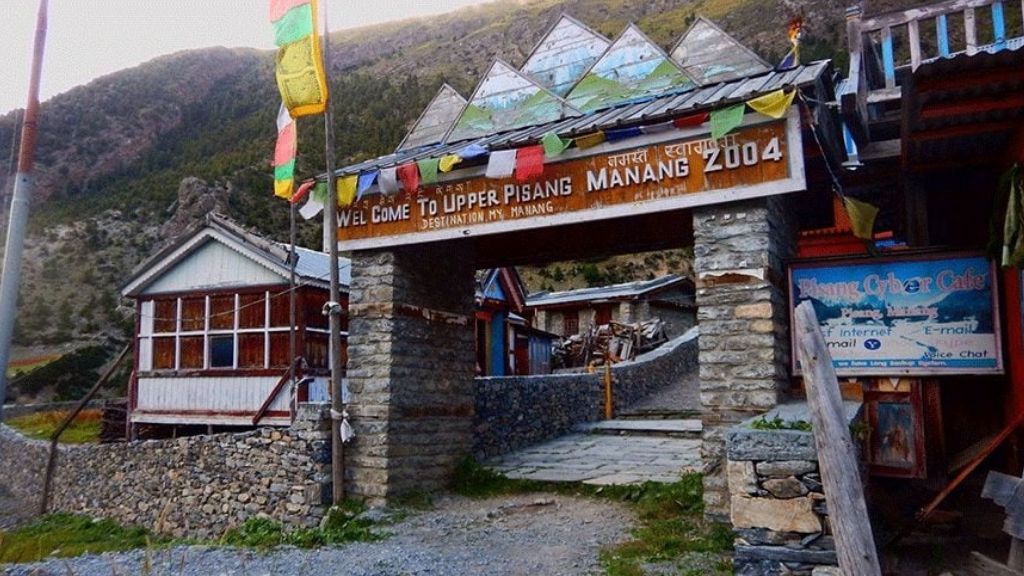
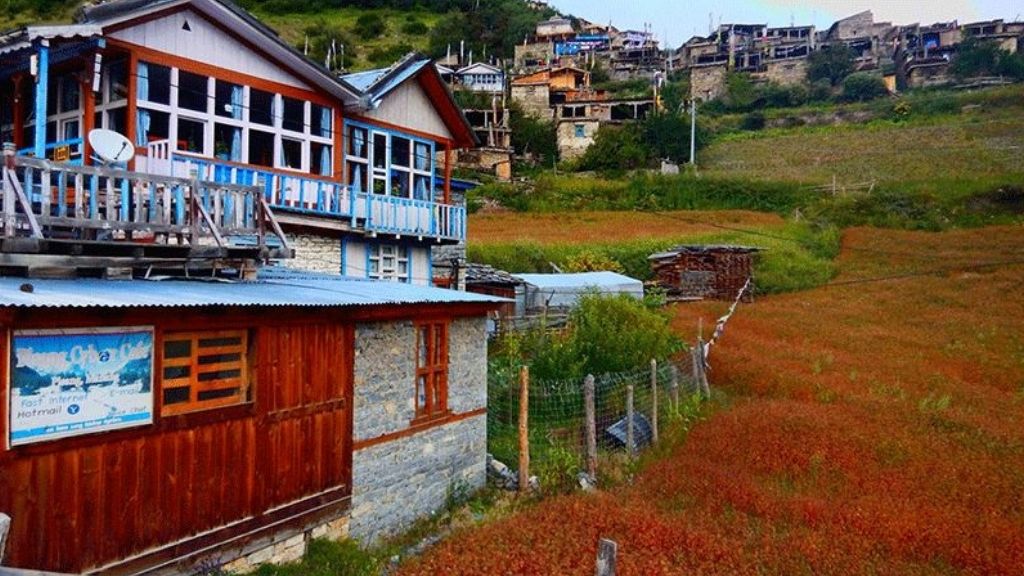
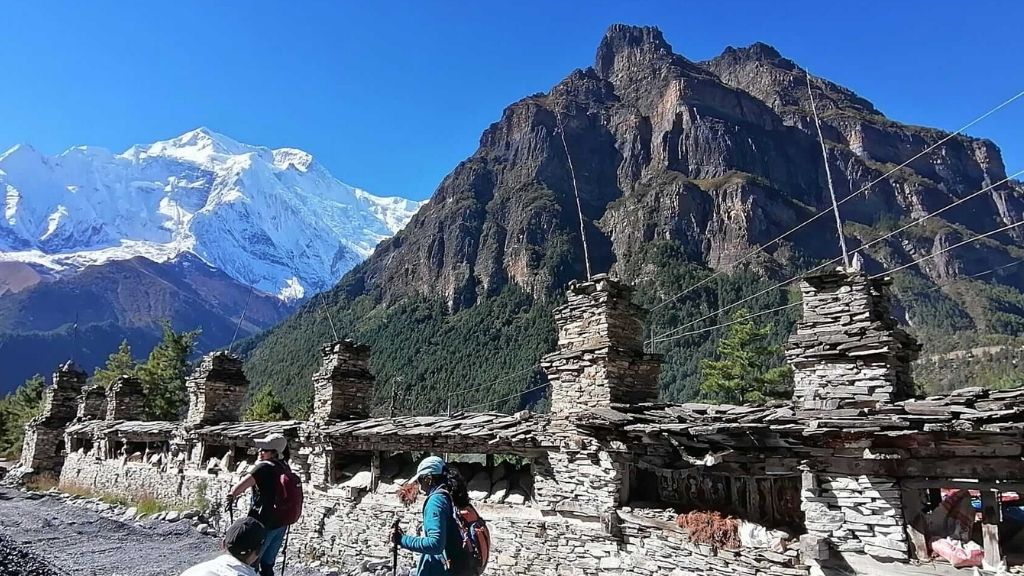
The Short Annapurna Circuit Trek is graded moderate to strenuous, but its condensed schedule makes it feel harder than many moderate treks in Nepal. The main reason is that the itinerary is shorter. Instead of spending several days gradually gaining altitude, you’ll drive to Chame and start trekking at around 2,700m on your very first walking day. From there, you move higher fairly quickly and spend several days above 3,500m.
Physically, expect to walk between 5 and 8 hours on key trekking days. The trail includes steep climbs, long descents, rocky sections, and the occasional landslide area. As you get closer to Thorong La Pass, you’ll also be dealing with colder temperatures, stronger winds, and thinner air.
The physical challenge is manageable if you’re fit, but altitude is what catches most people off guard and affect mentally. Crossing Thorong La usually means an early start, a long day on the trail, and staying patient when every step feels slower than normal.
Is the Short Annapurna Circuit Trek Safe for Solo Trekkers?
Yes, the Annapurna Circuit Short Trek is considered a safe trek for solo trekkers. And the reason is that the Annapurna Circuit is one of Nepal’s most established trekking routes. You’ll find teahouses in every village, plenty of other trekkers during the season, and mobile coverage in many places. Nonetheless, the higher sections between Manang, Thorong Phedi, High Camp, and Thorong La Pass are still remote, and mountain weather can change quickly.
But even if you’re traveling alone, hiring a licensed guide is a good idea. For solo travelers, having someone who knows the route often makes the experience more enjoyable and less stressful. A guide can:
- Keep an eye out for signs of altitude sickness.
- Help you maintain a comfortable pace.
- Assist if the weather changes unexpectedly.
- Arrange accommodation during busy trekking seasons.
- Coordinate help if an emergency evacuation is needed.
Can Beginners Complete the Short Annapurna Circuit Trek?
Yes, beginners who are physically fit, well prepared, and have some trekking experience can complete the short Annapurna Circuit Trek, but it isn’t the easiest introduction to trekking in the Himalayas. If this is your first high-altitude trek, there are more beginner-friendly options in Nepal. The biggest challenge isn’t the trail itself; it’s the altitude. Once you’re above 3,500m, even simple uphill sections can feel surprisingly difficult.
If you insist on the short itinerary, it’s important that you focus on pre-trek training and fitness building, and book a guided Short Annapurna Circuit Trek package. Some preparation tips include:
- Train for at least 6-8 weeks before your trip.
- Get used to walking 6-7 hours a day.
- Include stair climbing or hill walks in your routine.
- Arrive in Nepal rested and hydrated.
- Pay attention to your guide’s advice on acclimatization.
People who already run, cycle, swim, or hike regularly usually adjust much more easily. If you’d prefer to start with something less demanding, Mardi Himal, Langtang Valley, or Poon Hill are great alternatives before taking on Thorong La Pass.
Is Crossing Thorong La Pass as Difficult as People Say?
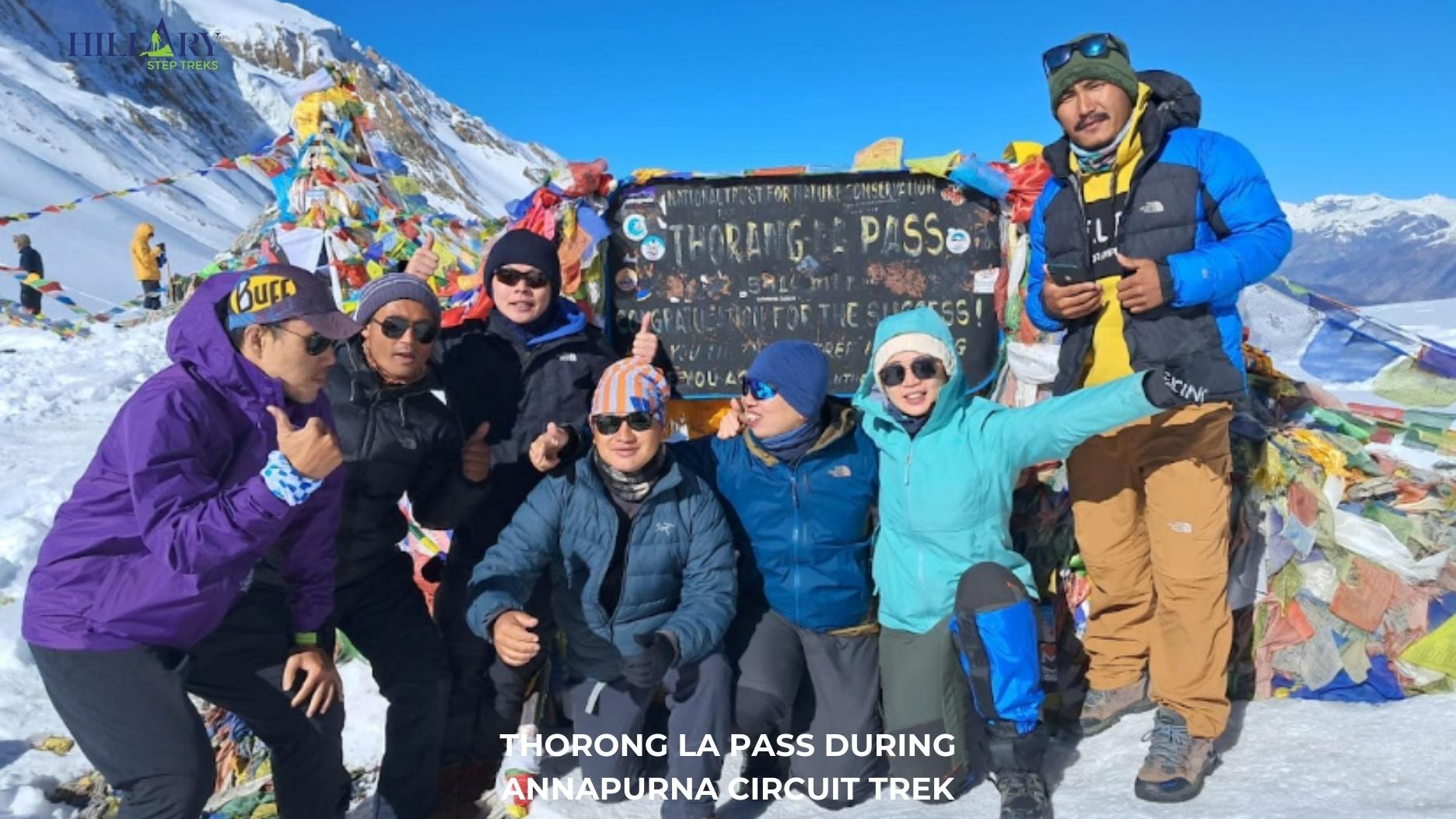
Thorong La Pass has a reputation for being one of Nepal’s toughest trekking passes, but it’s not technically difficult. You won’t need climbing equipment or mountaineering skills. You just need to cope with altitude, distance, and weather.
Above 5,000m, you’ll notice that your pace slows down naturally. The trail can be steep in places, and depending on the season, you may encounter snow, ice, or loose rocks. Strong winds are also common near the top.
The weather also plays a big role. A clear morning can turn into snowfall or poor visibility within a few hours, which is why most trekkers start before sunrise and follow their guide’s recommendations.