


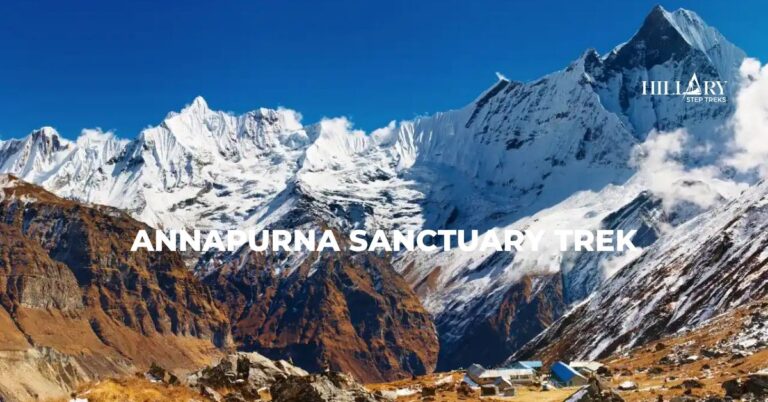
The Annapurna Sanctuary trek, also known as the Annapurna Base Camp trek, is officially rated as moderately challenging. The difficulty is not because of altitude, at least not until the final two days. It holds a specific kind of hard that most people don’t anticipate. That thing is the steep, uneven stone staircase. You ascend and descend thousands of them, starting on day one, and they again show up on the way back. Trekkers who have only trained on flat ground until now feel it in their knees by day three at the latest.
The route goes in through Dhampus, reaches the Annapurna Base Camp at 4,130m, and comes back out via Ghandruk. You trek for eight days straight, plus drives at each end. So, the difficulty builds in two waves: first, terrain, then altitude. If you’re planning to trek to Annapurna Base Camp, this blog will guide you and help you understand why the trek is moderately challenging.
| Factor | Detail |
|---|---|
| Maximum altitude | 4,130m (Annapurna Base Camp) |
| Hardest physical section | Chhomrong to Himalaya Hotel |
| Hardest altitude section | Himalaya Hotel to ABC |
| Daily walking time | 5-7 hours |
| Fitness level benchmark | 5-6 hrs continuous on hilly terrain with an 8-10kg pack |
Understanding Annapurna Sanctuary Trek Difficulty According to the Itinerary Days
The Annapurna Sanctuary trek is short as compared to other base camp treks. But over eight trekking days, the trail changes constantly. The first couple of days ease you in with a rhythm that drops to the river, then climbs back up. But by day three, that ease disappears. Here’s how each section breaks down the challenges of the Annapurna Base Camp trek.
Dhampus to Landruk
The trail drops from Dhampus through farmland and forest, crosses the Modi Khola valley, then climbs back up to Landruk. It seems manageable, but the lower altitude traps heat, making these open sections feel much tougher than expected. The pattern of descending and climbing puts steady pressure on your knees. So, the real challenge here is the heat and pacing. If you push too hard in the midday sun, you’ll burn energy fast and feel it later when the trail gets steeper and colder.
Landruk to Chhomrong
Landruk to Chhomrong follows the same pattern of dropping to the river, then climbing all the way back up. Chhomrong sits at 2,170m on a steep hillside, and the final stretch tests your patience. You can see the village the whole time, but the endless stone steps make progress feel slow.
By the time you reach it, two days of constant ups and downs will catch up with your legs. Chhomrong is your last proper resupply point before the Sanctuary, so make the most of it. Rest, adjust your gear, and pack smart. Any extra weight you carry from here will hit hard on the next day’s long descent, which starts the toughest part of the trek.
Chhomrong to Himalaya Hotel
This is where the trek turns serious and where unprepared trekkers start to struggle. You drop straight down 2,500+ stone steps to the Modi Khola from Chhomrong, then climb steeply back up to Sinuwa. It’s one of the hardest back-to-back descents and ascents on the ABC trek route. After Sinuwa, the trail shifts into dense, humid, shaded forest, often wet. You have to be careful as moss-covered steps and mist make the path slippery and slow.
This stretch often catches people off guard. Not because of altitude, but because three days of constant stairs finally hit their limit. There are no flat sections to recover. If you didn’t carry trekking poles, get them in Chhomrong. Without them, your knees won’t hold up well by the time you reach the next stop. The only thing that keeps you going is the sight of the Annapurna massif, pulling you deeper toward the heart of the Annapurna Sanctuary.
Himalaya Hotel to Annapurna Base Camp
The trek from the Himalaya to ABC is the longest day and the toughest section of the trek. You gain around 1,200-1,400m in this single day. The first part up to Dovan stays forested and manageable, but after that, the terrain shifts sharply. It opens into a rocky, exposed climb where altitude starts to feel physical, not just numerical.
From Hinku Cave toward Deurali, the trail moves into a known avalanche-prone stretch. The valley tightens, slopes get sharper, and things get a bit more serious underfoot. Once you clear that section, you step into the AMS zone. This is where symptoms of altitude sickness, like a mild headache, a low appetite, and heaviness in your chest, appear. Nothing loud, but noticeable. At this point, it’s no longer about strength. It’s about how well your body is adapting to thin air.
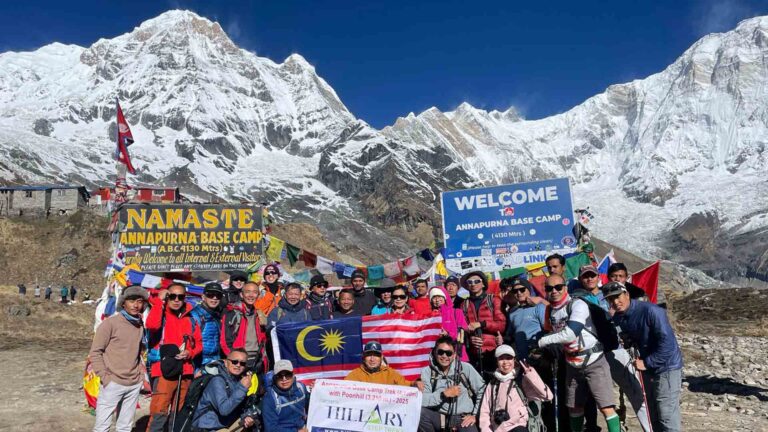
Then, the final stretch from Machhapuchhre Base Camp (MBC) to ABC takes only 2-3 hours, but it feels much longer. Six days of fatigue, combined with thin air, slow you down after every step. Hence, you need to start before 7:00 AM. By late morning, clouds often roll into the Sanctuary, blocking views and making the final push colder and mentally heavier.
ABC to Bamboo
ABC to Bamboo is a descent of 1,600m, retracing the route through MBC and Dovan. Here, the gravity is supportive, but this section often causes more injuries than the climb. After reaching ABC, fatigue sets in, and focus usually slips. The main challenge here is eccentric muscle strain. Every step downhill forces your legs to control your body weight and pack, putting heavy stress on your knees and tendons.
You have to treat the descent with the same respect as the ascent. Move slowly, use trekking poles to reduce impact, and don’t get fooled by the lower altitude or “easier” feeling. If you rush, your legs will turn into jelly, and the final exit day will feel twice as long.
Bamboo to Chhomrong
You now retrace the day three crux in reverse. You climb back up to Sinuwa before the final drop and rise into Chhomrong. The ascent feels easier on the joints than the descent, but your legs already carry six days of accumulated micro-tears.
The real difficulty here is mental. You’ve already reached Base Camp, so your mind wants the trek to be over, but the trail still asks for one more solid climb. On paper, it looks moderate, but on the actual trek, with tired legs, it feels much harder.
Once you reach Chhomrong, conditions improve fast. The air feels thicker. You get better sleep and proper meals, which give you a noticeable morale boost. Still, don’t underestimate this section. It’s the last real effort before the final descent.
Chhomrong to Ghandruk
The hardest terrain is now behind you. The trail descends and crosses toward Ghandruk, a major Gurung village at 1,940m. The walking feels noticeably easier after days of steep ascents and descents, and the higher oxygen levels usually bring back a lighter, faster rhythm. The real risk here is carelessness. After intense trekking, you naturally relax your focus on these gentler paths, which can lead to small slips or ankle rolls.
After reaching Ghandruk, the challenge shifts from physical effort to pacing yourself. Slow down, explore the stone alleys, and visit the Gurung Museum instead of rushing through. Here, you can witness the views of Annapurna South without needing another staircase for them.
Ghandruk to Syauli Bazar
This section of the trek typically takes 3-4 hours and descends through terraced farmland. With this, you go down to Syauli Bazar, the roadhead, dropping about 800m. While the trail is technically easy, your legs will likely feel shaky after eight days of constant up-and-downs.
Here, it is important to manage knee impact on the final stretch of stairs before the terrain finally flattens out. Slow down mentally because this section is more than physical effort. Take the time to reflect on the journey without pressure on the gentle slopes.
By the time you reach the jeep for the drive back to Pokhara, even the steep staircases of day one will feel distant. You’ve completed a “moderate” trek that quietly demands far more than it first suggests.
Can Beginners Handle the Annapurna Sanctuary Trek?
Yes, a beginner can absolutely do this trek if they prepare enough for the difficulty of Annapurna Base Camp Trek. Aside from that, success depends primarily on your level of fitness and preparation for verticality, rather than just general cardio and elevation gain. Most people who struggle don’t fail because they aren’t fit enough. They fail because they trained for flat ground. Since this itinerary through Dhampus and Chhomrong is essentially a “staircase war,” you need at least two months of training on real stairs or a stair-climber while wearing a weighted backpack. This mimics the actual load your knees and quads will carry through the relentless 600-meter drops and re-ascents that define the region.
Second, you must prioritize footwear discipline over high-end gear. Beginners often suffer most from preventable blisters caused by brand-new boots or the tropical humidity in lower farmland areas like Landruk. A single hot spot on Day 2 can turn a moderate trek into a grueling ordeal by Day 4. So, make sure your boots have at least 50km of trail wear before you land in Nepal. You also need to practice your hydration strategy. At high altitude, your appetite often struggles, but you must force-feed your body carbohydrates to avoid a power crash before reaching base camp.
Finally, you have to prepare for the “Mental Wall” that typically hits around Day 4, before your trek to reach Annapurna Base Camp. This is the point where accumulated muscle fatigue, cold teahouses, and the thinning air above 3,000m all collide at once. Most beginners feel like quitting here. It’s rarely because of injury, but because the psychological grind feels permanent. If you go into the trek expecting this dip in morale, you can manage it.
By slowing your pace and recognizing that the “Sanctuary” is just one more push away, you’ll find that the mental challenge is actually easier to overcome than the physical challenge of the stairs on the Annapurna Base Camp Trek route.
Comparing the Difficulty Level of the Annapurna Sanctuary, Annapurna Circuit, and Everest Base Camp Trek
The Circuit is officially the most difficult among the three, with EBC in second and the Sanctuary in third. But the ranking alone doesn’t tell you much. The reasons each one is hard are completely different.
The Sanctuary is a moderately challenging trek, with difficulty almost entirely physical rather than altitude-driven. Because the route crosses deep river valleys multiple times, you face more stone stairs than on either the EBC or the Circuit. The hard part isn’t reaching 4,130m, it’s the cumulative fatigue of repeatedly dropping to the Modi Khola and climbing back out. Your knees suffer the most here, not your lungs. If you have 8-10 days, have a reasonable level of fitness, but want somewhat challenging terrain without extreme altitude gain, this is the ideal trek.
In contrast, EBC is strenuous primarily because of sustained altitude. You spend nearly a week sleeping above 3,500m and reach the maximum elevation at 5,364m. The terrain is rockier with fewer stairs, but thin air makes ordinary effort feel significantly harder. Hence, the Sanctuary tests your joints, EBC tests your body’s ability to recover in an oxygen-poor environment, night after night.
Then there’s the Annapurna Circuit trek, which combines long-distance endurance with the Thorong La crossing at 5,416m. The trek to the pass is higher, colder, and more exposed than anything on the other two routes. Although both the sanctuary and circuit treks are within the Annapurna Conservation Area, the Circuit is far more complex. Its terrain shifts from subtropical forests to near-Arctic conditions at the pass, demanding more gear and preparation for extreme temperature swings that you won’t encounter in the Sanctuary.
| Factor | Annapurna Sanctuary Trek | Everest Base Camp Trek | Annapurna Circuit Trek |
|---|---|---|---|
| Maximum altitude | 4,130m (ABC) | 5,364m (EBC), 5,545m (Kala Patthar) | 5,416m (Thorong La) |
| Duration | 7-12 days | 12-14 days | 14-21 days |
| Hardest section | Chhomrong stairs + ABC push | High camp approach | Thorong La crossing |
| Altitude sickness risk | Moderate | High | High |
| Beginner-friendly | Yes, with prep | Not recommended | Not recommended |
| Overall difficulty | Moderate | Challenging | Challenging-Strenuous |
Tips & Tricks To Overcome Annapurna Base Camp Trek Difficulty
Most trekkers prepare for the Annapurna Sanctuary Trek the wrong way. They log miles on flat roads, do a few gym sessions, and assume general fitness will carry them through. It won’t, not on this trail. What makes the Annapurna Base Camp trek difficult is specific: stone staircases that punish untrained knees, steep valley descents that require eccentric leg strength, and Acute Mountain Sickness.
The good news is that this trek rewards targeted preparation. You don’t need to be an athlete. You need to train for the exact challenges the trail throws at you and make a few smart decisions before you even land in Kathmandu. Here are some tips to overcome the ABC difficulty and complete the trek successfully:
Physical Preparation to handle the Verticality
- Adopt the half-step technique. Keep your strides short and plant your heels firmly on steep stone steps. This stops your calves from burning out during the long climbs to Chhomrong and Sinuwa.
- Train for the downhill, not just the climb. The 1,600m descent from ABC to Bamboo is harder on your joints than the ascent. Add step-down lunges to your preparation; your knees will thank you on descending sections.
- Use poles from Day 1. Start with trekking poles in Dhampus, not just when it gets steep. Doing so distributes your weight early, significantly reducing the cumulative impact on your knees across the entire route.
Logistical & Gear Secrets
- Sleep with your power bank and phone inside your sleeping bag. Cold at high altitude drains batteries fast. This simple habit keeps your electronics alive when you need them most, especially on MBC and ABC nights.
- Hydrate strategically. Aim for 3-4 liters of water daily, especially in the humid lower valleys. Use purification tablets or a filter instead of buying plastic bottles. It’s cheaper, lighter, and more environmentally friendly. Hydration also reduces the risk of altitude sickness during the trek.
- Start trek within the 7 AM window. The weather in the Annapurna region is unpredictable. Clouds typically fill the sanctuary basin by noon, dropping visibility and temperature fast, turning a manageable section into a miserable one.
Health & Altitude Safety
- Force-feed yourself at MBC. Your appetite will likely disappear at higher altitudes. Eat a high-carb dinner like Dal Bhat anyway. Without that glycogen, the early morning push to ABC will feel significantly harder than it should.
- Apply blister tape to the first hot spot, not after. Stop immediately when you feel friction building. The humid forest air on the lower sections softens your skin faster than expected, and a blister on Day 3 ruins every section after it.
- Wear SPF 50+ even on cloudy days. UV intensity increases significantly at 4,000m, and sunburn at altitude can produce symptoms such as headache, fatigue, and nausea that closely mimic those of altitude sickness. Don’t add confusion when you’re already watching for AMS signs.
The Annapurna Sanctuary Trek is hard in ways most trekkers don’t warn you about. We’ve guided trekkers through every section covered in this blog, and we know exactly where it gets tough. Have questions before you commit? Check our Annapurna Sanctuary Trek or reach out, we’ll give you an honest answer and make sure your trek in Nepal is one you finish strong, not just survive.
Frequently Asked Questions For Everest Three Passes Trek
Expand AllHow does the difficulty of the Annapurna Base Camp trek change if I trek in the off-season?
Does the direction of the trek affect difficulty, Dhampus entry vs. Ghandruk entry?
How much harder does the trek get without a porter?
Can I acclimatize properly, or is the ascent too fast?
What happens if I need to turn back? Is rescue accessible?
Do the permit requirements make the ABC trek more difficult to organize?


