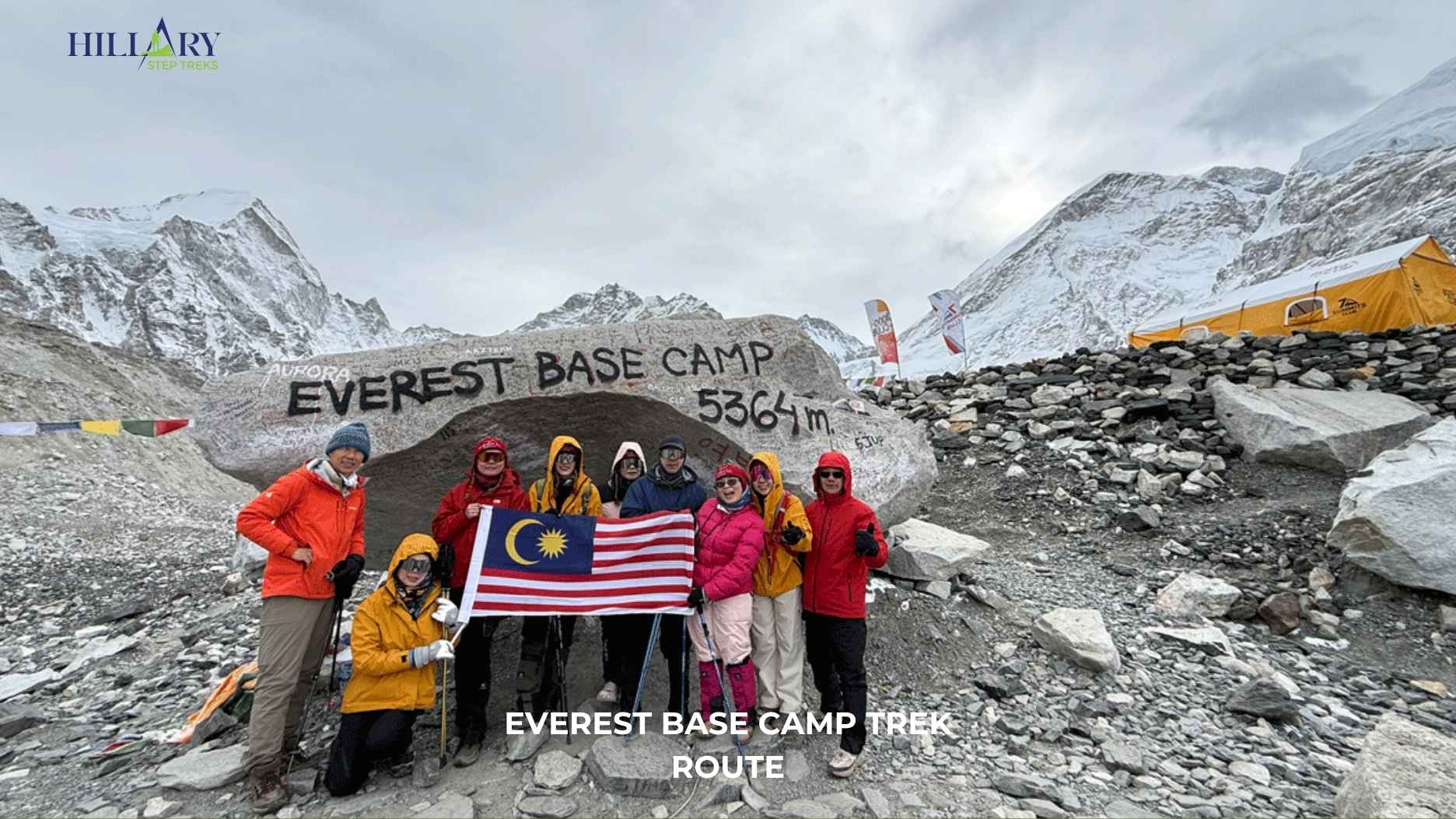
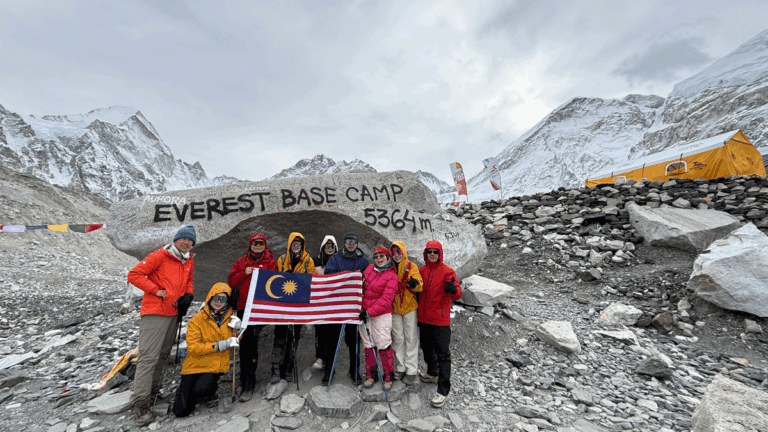
The standard Everest Base Camp Trek route begins with a flight to Lukla and follows the Khumbu Valley through Phakding, Namche Bazaar, Tengboche, Dingboche, Lobuche, and Gorakshep before reaching Everest Base Camp at 5,364 m. The 14-day itinerary includes acclimatization stops in Namche Bazaar and Dingboche, helping trekkers adjust before heading toward the higher sections of the trail. After reaching Everest Base Camp, the route continues to Kala Patthar for mountain views before descending through Pheriche and Namche Bazaar to Lukla.
The route combines mountain scenery, Sherpa settlements, Buddhist monasteries, suspension bridges, forests, and glacial landscapes along the way. The standard itinerary uses Lukla as the main starting point, while alternative Everest Base Camp itineraries offered by Hillary Step Trek follow different approaches. The 10-day Short Everest Base Camp Trek reduces the overall trekking time, while the Everest Base Camp Trek via Gokyo Lake adds the Gokyo Valley to the journey. Trekkers looking for a climbing extension can also combine the EBC route with Lobuche Peak Climbing and Island Peak Climbing. These routes share the Everest Base Camp section but differ in duration, trail sections, acclimatization schedule, and overall difficulty.
Trekking Routes to Everest Base Camp?
Now that you know how to prepare for trekking in Everest Base Camp, you are ready to start your journey to conquer the snow-capped mountains and experience heavenly nature in the sublime Khumbu region of Nepal.
Your journey begins with selecting the route based on your preferences and availability. In this section, we have listed popular routes to EBC, but the start of the trek is usually the same for all routes. First, you have to take a flight from Kathmandu to Lukla. The small town of Lukla is considered the getaway to the Eastern region. After landing at the Lukla Airport, you will begin your Everest Trek.
Another alternative is to take a roadway from Kathmandu to Phaplu or Jiri. These two places also serve as a gateway to Everest. You can begin your trek from Phaplu or Jiri to Everest Base Camp, but it will take additional days.
The EBC Trek is the most popular trekking destination, followed by Annapurna Base Camp Trek and Annapurna Circuit Trek. Each route offers a unique and immersive experience of the stunning Nepalese Himalayas. Take a look:
Classic Everest Base Camp Trek

The Classic Everest Base Camp Trek is the most popular and well-traveled way to Everest. It generally takes 12-14 days to complete. The trek begins from Lukla and takes you through the heart of the Khumbu region. The trail goes alongside the Dudh Koshi River and then passes charming Sherpa villages like Namche Bazaar, Sagarmatha National Park, and picturesque landscapes.
Similarly, during your acclimatization day in Namche, you can hike to the Everest View Hotel for the best views of Everest, explore the Sherpa Museums, or shop around.
During the trek, you will encounter beautiful rhododendron forests and cross suspension bridges over roaring rivers. Upon reaching Everest Base Camp, you can witness stunning views of the Himalayas, including Mount Everest, Lhotse, and Nuptse.
Gokyo Renjo La Trek

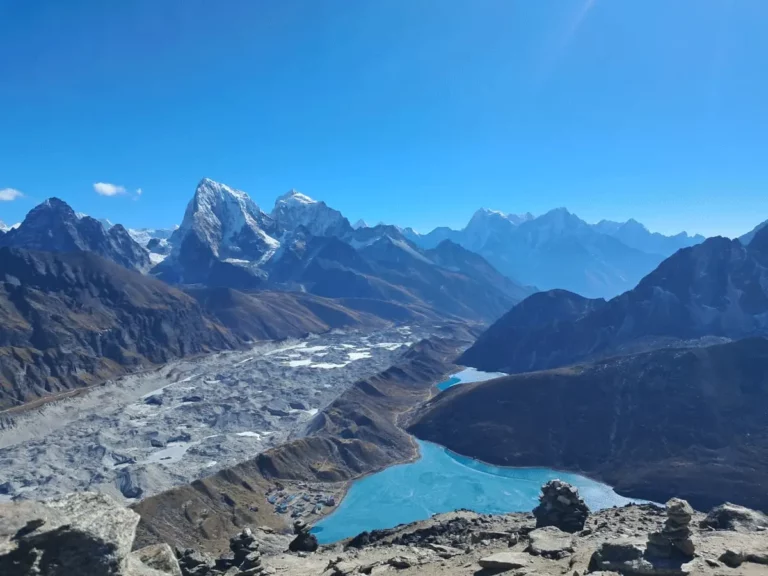
Though the Gokyo Renjo la Trek is a less traveled route, it is an equally beautiful alternative to the Classic Everest Base Camp Trek. This trek takes you to the fantastic Gokyo Lakes, located at 4,700 meters (15,420 feet), offering stunning views of the surrounding mountains.
Along the trek, you will cross the challenging Cho La Pass at 5,420 meters (17,782 feet). You can enjoy breathtaking views of Everest and other peaks while experiencing the unique culture and lifestyle of the Sherpa people.
Three Passes Trek

If you want a more challenging trek, the Three Passes Trek 18 days is an excellent choice. The challenging trails take you through three high mountain passes, each over 5,000 meters (16,400 feet) in altitude.
Enjoy breathtaking Everest views and other Himalayas while the trail takes you off the beaten path. Likewise, Three Passes Trek allows you to experience the remote and untouched beauty of the Khumbu region. We encourage experienced trekkers to take this route.
Everest Base Camp via Gokyo Lakes and Cho La Pass

This trek combines the Gokyo Lakes Trek with the Classic Everest Base Camp Trek. The trekking trails pass through the high mountain pass of Cho La, located at an altitude of 5,420 meters (17,782 feet).
En route, you will experience diverse landscapes and panoramic views of Everest and the surrounding Himalayas. You will also pass across glaciers and moraines. If you are looking forward to experiencing the beauty of the Gokyo Lakes and Everest Base Camp, this challenging yet rewarding route is for you.
Everest Base Camp Trek Difficulty
The Everest Base Camp Trek is a challenging trek. While on the trek, you must ascend and descend rough and rugged terrain, which includes steep, narrow, and slippery sections. Likewise, you must cross several suspension bridges, glaciers, and moraines en route.
The Everest Base Camp Trek duration usually lasts 12 to 14 days. You must be prepared to walk 5 to 6 hours daily on the rough trails, which makes it physically strenuous. Likewise, the weather is unpredictable at higher elevations. Sudden changes in weather, high winds, and temperature further challenge the trekkers.
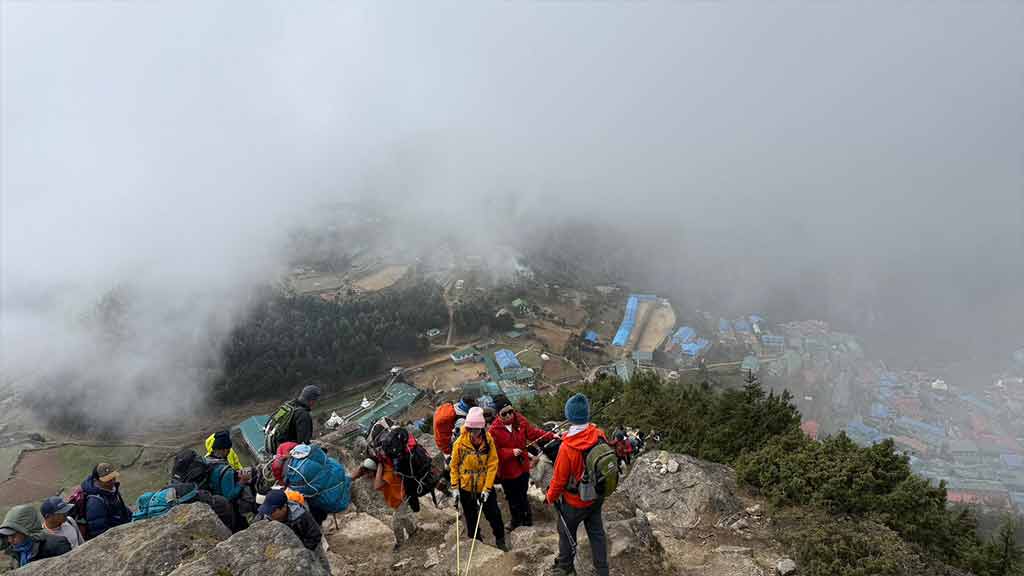
During the EBC Trek, you will climb above 5000 meters, which makes trekkers prone to altitude sickness. After crossing the elevation of 2500 meters, the oxygen level in the atmosphere decreases, and the air pressure reduces. Due to a lack of oxygen, trekkers start to experience symptoms of altitude sickness. The symptoms can range from mild to severe and require immediate treatment. So, taking a rest day is crucial for acclimatization.
Another factor making the Everest Base Camp Trek difficult is the lack of infrastructure and facilities. The higher you go, the more basic the facilities become. Internet access/Wi-Fi is limited or nonexistent in higher regions, and phone signals may also not work properly.
These difficulties make the Everest Base Camp Trek challenging yet adventurous. So, trekkers who want to embark on the extraordinary trek to the Himalayas must undertake physical and mental preparation.
What Are the Hardest Sections of the EBC Route?
The hardest sections of the Everest Base Camp route are generally found after Dingboche, where the trail climbs above 4,400 m and the air becomes noticeably thinner. The Dingboche to Lobuche section involves a steady ascent through rocky terrain, including the climb toward Thukla/Dughla and onward to Lobuche at around 4,910 m. The following Lobuche to Gorak Shep to Everest Base Camp section is even more demanding, with rocky, uneven ground, repeated short ascents and descents, and high-altitude walking. Hillary Step Trek lists this as a 7-hour trekking day on its standard itinerary, with Everest Base Camp at 5,364 m.
For trekkers following the 10-day Short Everest Base Camp Trek, the challenge is greater because the itinerary compresses the route into fewer days. The Lobuche to Everest Base Camp and return to Gorak Shep day is scheduled for around 9 hours, with a demanding section alongside the Khumbu Glacier followed by the continued hike to Base Camp. The next morning also includes the climb to Kala Patthar at 5,545 m, followed by the descent to Pheriche. These sections require a steady pace, good physical preparation, and careful attention to acclimatization, particularly because the short itinerary allows less time for gradual adjustment to altitude.
Acclimatization Points Along the EBC Route
Acclimatization is an important part of the Everest Base Camp Trek because the trail rises from Lukla to elevations above 5,000 m. The itinerary includes key acclimatization stops where trekkers can adjust to lower oxygen levels before continuing toward the higher sections of the EBC route.
Namche Bazaar
Namche Bazaar sits at around 3,440 m (11,286 ft) and is the first major acclimatization point on the Everest Base Camp route. In the 14-day itinerary, trekkers spend an additional night here after walking from Phakding, allowing the body time to adjust before continuing toward Tengboche and higher elevations. The acclimatization day can include a short hike toward Khumjung, the Everest View Hotel, or nearby viewpoints, followed by a return to Namche for the night.
Dingboche
Dingboche is another important acclimatization point at approximately 4,410 m (14,469 ft). The standard 14-day EBC itinerary includes a dedicated acclimatization day here before the route continues to Lobuche and the higher sections of the trail. Trekkers can take a gradual hike toward Nangkartshang (Nagarjuna) Hill, reaching about 5,083 m, and then return to Dingboche to sleep at the lower elevation. This helps introduce the body to thinner air while keeping the overnight altitude unchanged.
Why Acclimatization Changes How the Route Is Planned
Acclimatization affects the EBC itinerary because the trail does not simply aim to reach the highest point as quickly as possible. The standard itinerary places rest and acclimatization days at Namche Bazaar and Dingboche, creating time for trekkers to adjust before the route climbs above 4,900 m toward Lobuche, Gorak Shep, Everest Base Camp, and Kala Patthar.
This is also why a shorter EBC itinerary needs to be planned carefully. Hillary Step Trek’s 10-day Short Everest Base Camp Trek still includes Namche Bazaar and Dingboche as key stops, but compresses the overall trekking schedule. For trekkers comparing a standard and short EBC itinerary, the number of days available for gradual altitude gain and acclimatization is an important difference to consider.
Villages and Landmarks Along the Everest Base Camp Route
The Everest Base Camp route takes you through a series of Sherpa villages and mountain landmarks, each adding a different part of the Khumbu experience. Starting from Lukla, the trail passes through Phakding, Monjo, Jorsale, Namche Bazaar, Tengboche, Pangboche, Dingboche, Lobuche, and Gorak Shep before reaching Everest Base Camp at 5,364 m. Along the way, trekkers cross suspension bridges, walk through rhododendron and pine forests, pass mani walls and prayer wheels, and experience the changing landscape as the trail climbs toward the high Himalayas.
Several landmarks make the route especially memorable. Namche Bazaar is the main Sherpa trading hub and an important acclimatization stop, while Tengboche Monastery is one of the region’s major Buddhist cultural sites. Higher on the trail, Dingboche is surrounded by terraced fields and mountain views, Lobuche sits beneath dramatic peaks and glaciers, and Gorak Shep serves as the final settlement before Everest Base Camp. At the destination, trekkers can see the Khumbu Glacier and Khumbu Icefall, while the nearby Kala Patthar provides a renowned viewpoint for sunrise over Everest and the surrounding peaks.
Best Time For Everest Base Camp Trek
Nepal experiences four seasons annually: spring, summer, autumn, and winter. Each season significantly influences the weather and temperature of Nepal, including the Everest region. Spring and autumn are the two best times to trek to Everest Base Camp.
Spring (March to May) is the ideal time to visit Everest Base Camp for its pleasant weather and brilliant visibility. The daytime temperature can reach up to 20 degrees Celsius. Meanwhile, the nighttime temperature can drop to -5 degrees Celsius. Spring also offers the best mountain views and colorful landscapes with blooming rhododendrons.
Autumn (September to November) has stable weather with mild temperatures, making it ideal for trekking to the Himalayas. The crisp air and clear sky offer magnificent views of the snow-covered peaks and landscapes. The daytime temperature can reach 25 degrees Celsius, while the nighttime temperature can drop to -10 degrees Celsius. The festive season also falls in autumn. So you can participate in the celebaration, experiencing the culture.
The weather is not very favorable for trekking to EBC in the summer (June to August) and winter (December to February) seasons. Summer coincides with the monsoon, so there is heavy rainfall. The trails become muddy and slippery. The daytime temperature can reach 27 degrees Celsius, and the nighttime temperature can drop to 5 degrees Celsius.
Meanwhile, in winter, the temperature gets extremely cold, especially at higher altitudes. There is also heavy snowfall and blizzards. There is a high chance of road blockage at high mountain passes. The daytime temperature in winter can reach 15 degrees Celsius. Meanwhile, the nighttime temperature can drop to -20 degrees Celsius.
But with proper preparation, trekking is still possible in summer and winter. Consult with your trekking agency and check the weather forecast before embarking on the journey.
Everest Base Camp Route Planning Mistakes
One common Everest Base Camp route planning mistake is choosing an itinerary based only on the number of days rather than considering altitude, daily walking hours, and acclimatization. The standard 14-day itinerary includes an acclimatization day at Namche Bazaar and another at Dingboche before reaching Lobuche, Gorak Shep, and Everest Base Camp at 5,364 m. A shorter 10-day option follows a more compressed schedule, so trekkers should understand the longer walking days and higher physical demands before choosing it.
Another mistake is assuming every EBC route offers the same experience. The standard Lukla–Namche–Tengboche–Dingboche route is different from the Everest Base Camp Trek via Gokyo Lake, which adds Gokyo Lakes and the Cho La section, while the Everest Base Camp with Lobuche Peak Climbing itinerary adds a 6,119 m peak-climbing objective. Planning the route around your available time, trekking experience, acclimatization needs, and whether you want a classic EBC journey, a Gokyo extension, or a peak-climbing adventure can help avoid an itinerary that is unnecessarily rushed or unsuitable for your goals.
Equipment Required For Everest Base Camp Trek
The list of equipment and gear for the Everest Base Camp Trek is as follows:
- Long-sleeved shirts, trekking pants, and moisture-wicking layers
- Fleece jackets, down jackets (that can withstand -10 degrees temperature), windproof/waterproof jackets, and sweaters
- Hats, gloves, and scarves
- Moisture-wicking socks and inner garments
- Comfortable and sturdy boots
- Backpack with 40-50 litres capacity, duffle bag
- Trekking poles, flashlights, water bottles, and water purification tablets/ filter
- Trekking map, toiletries, and sunglasses
Conclusion
Trekking in Everest Base Camp is an incredible adventure that allows you to witness the most astonishing scenery on the planet as you journey to the world’s tallest mountain. The trekking trails mesmerize you with the incredible Himalayas views alongside Nepal’s fascinating culture.
While trekking is exhilarating and enjoyable, there are numerous risk factors. Therefore, you must select the best travel agency in Nepal that looks after you throughout your journey. Regarding providing authentic and best travel service with safety assurance, the Hillary Step Trek ranks the highest. Whether you want to trek in Nepal or a trip to Everest Base Camp, we have everything you need. Our representatives ensure you have the safest journey while making the most mesmerizing memories to cherish forever.
FAQs
Expand AllIs trekking to Everest Base Camp difficult?
Is trekking to Everest Base Camp worth it?
Can a beginner climb Everest Base Camp?
Is it hard to breathe at Everest Base Camp?
Do you lose weight trekking at Everest Base Camp?
Can you do Everest Base Camp without training?