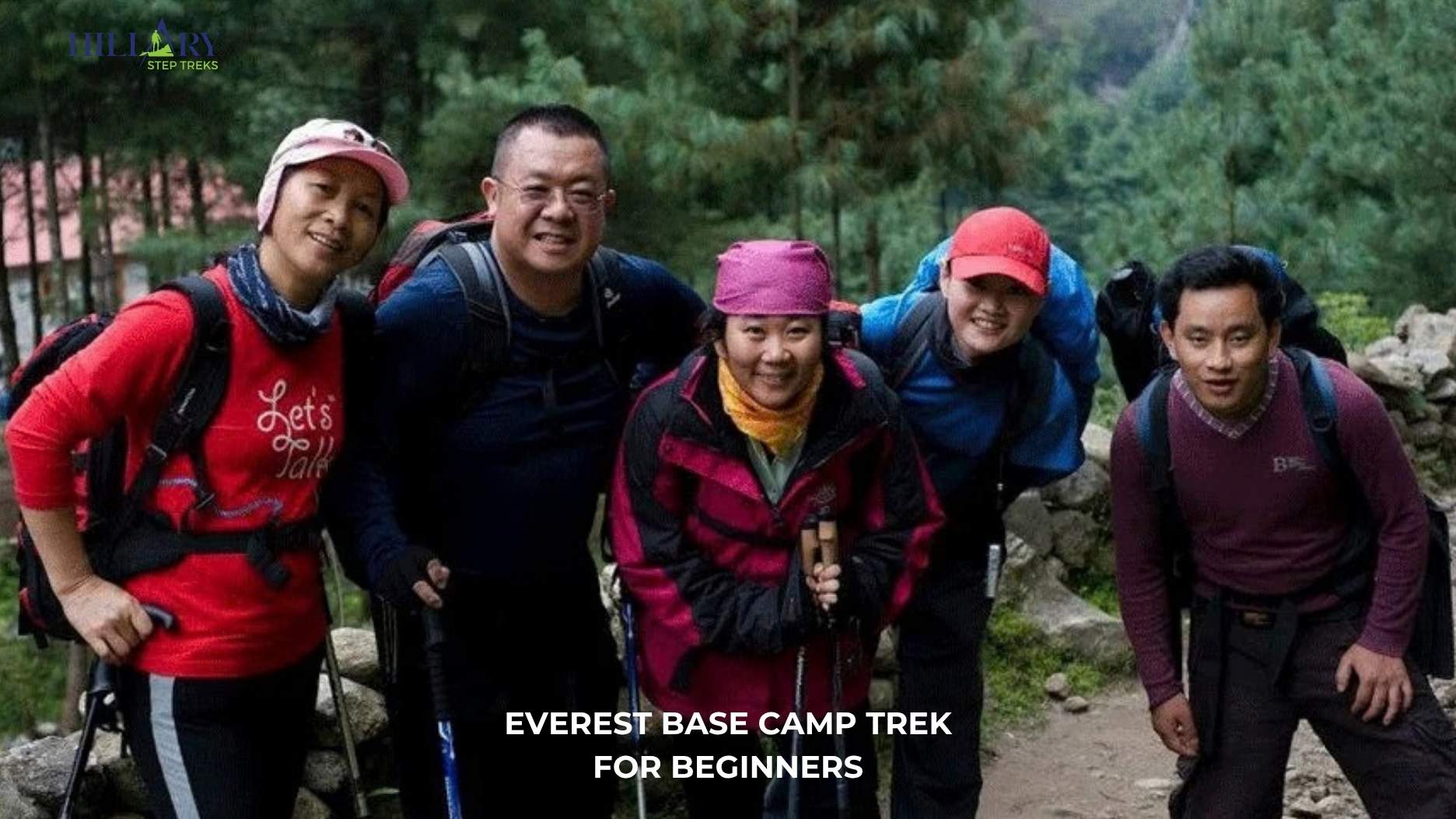
Everest Base Camp Trek is a lifetime experience. But is it suitable for beginners? This question arises when considering trekking the Khumbu region and if it is their first time going into any trekking region. The Everest Base Camp trek offers everything from stunning mountain views and trekking alongside rhododendron trails to stunning flight views while traveling from Kathmandu to Lukla. You will be up close to nature during your Everest Base Camp Trek. You will also be trekking alongside Sagarmatha National Park.
Everest Base Camp is not the most challenging trek in Nepal. However, if you don’t have much experience in trekking, it can be difficult. The feeling of overcoming rugged terrains, spending time in remote Himalayan villages, and passing through mesmerizing Namche Bazaar to reach the foot of Mt Everest in Everest Base Camp will hit differently. Moreover, it will be even more achievable for beginners without prior trekking experience.
So, let’s take an in-depth look at whether Everest Base Camp is appropriate for beginners.
Is Everest Base Camp a Good First Himalayan Trek?
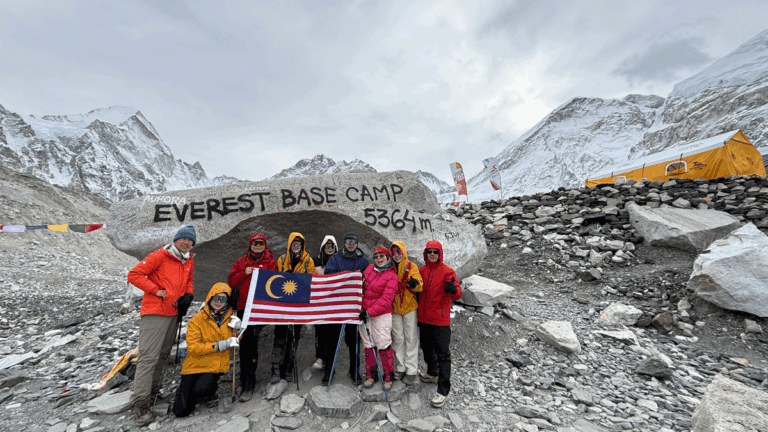
Yes, Everest Base Camp can be a suitable first Himalayan trek for trekkers who are physically prepared and comfortable with high altitude, even without previous high-altitude trekking experience. The standard 14-day itinerary is designed with acclimatization days in Namche Bazaar and Dingboche, giving your body time to adjust as the trail climbs from Lukla to Everest Base Camp at 5,364 m. The route does not require technical climbing skills, but it includes several 5–7 hour trekking days and increasingly demanding terrain at higher elevations.
For first-time Himalayan trekkers, the 14-day Everest Base Camp Trek is a more gradual option than the 10-day short itinerary. The short EBC trek reaches the same high-altitude areas but compresses the journey, including a demanding 9-hour day from Lobuche to Everest Base Camp and back to Gorakshep. Therefore, beginners should focus on building endurance before the trek, walking at a steady pace, staying hydrated, and following the acclimatization schedule rather than choosing the shortest itinerary simply to save time
What Makes EBC Different for a First-Time Trekker?
The Everest Base Camp Trek stands out for first-time Himalayan trekkers because it combines a well-established trail with a gradual increase in altitude, allowing trekkers to experience high-altitude trekking without technical climbing. The journey passes through well-known Sherpa settlements such as Namche Bazaar, Tengboche, Dingboche, and Lobuche, while the route gradually climbs toward Everest Base Camp at 5,364 m. The standard itinerary also includes acclimatization time, which is particularly important for someone experiencing Himalayan altitude for the first time.
Another difference is that the challenge comes mainly from altitude, consecutive trekking days, and uneven mountain terrain, rather than technical climbing. First-time trekkers should be prepared for long walking days, colder conditions at higher elevations, and reduced oxygen levels as the trail climbs. Compared with the standard EBC itinerary, the 10-day short EBC trek compresses the journey and includes longer trekking days, making itinerary length an important consideration for beginners.
What Should a Beginner Expect on the Everest Base Camp Trek?
For a beginner, the Everest Base Camp Trek is a moderate to challenging high-altitude trek rather than a technical climb. The standard 14-day itinerary starts with a flight to Lukla, followed by trekking through Phakding, Namche Bazaar, Tengboche, Dingboche, Lobuche, Gorakshep, and Everest Base Camp at 5,364 meters. Expect several hours of walking each day, with a mix of gradual climbs, rocky trails, suspension bridges, forest paths, and steep sections. The itinerary includes acclimatization days in Namche Bazaar and Dingboche, giving your body time to adjust before reaching higher elevations.
Beginners should also expect early mornings, simple teahouse accommodation, full-board meals during the trek, changing weather, and colder conditions as the altitude increases. One of the main challenges is altitude, so walking at a steady pace, staying hydrated, and following your guide’s advice are important. The trek is demanding but does not require previous high-altitude trekking experience when you prepare properly and follow a suitable itinerary. For travelers with less time, the 10-day Short Everest Base Camp Trek provides a compressed option, although the shorter schedule requires careful consideration of the daily walking demands and altitude profile
How Difficult is the Everest Base Camp Trek?
Everest Base Camp Trekkers don’t need any trekking experience or peak climbing skills. Although only a few selected climbers climb Mount Everest, over 300,000 people hike to Everest Base Camp monthly. Despite not needing any experience for the EBC trek, some glaring factors make it a difficult trek.
Since the EBC trek lies at a high altitude, not many people know it differs from trekking at a lower altitude. The difficulty increases even more when you compound it with long distances and duration and harsh, colder climates. These are called factors that determine the trek difficulty,
Some of these factors increase and decrease based on the time or season. For example, if you travel during monsoon season, the terrain becomes even more difficult as it becomes wet and slippery.
Several factors determine the difficulty level of any trek in Nepal. Let’s examine some of them.
Trek Distance and Duration
To reach Everest Base Camp, you must cover at least 130km. This distance is quite long based on the normal route, but the difficulty compounds when you consider the tough terrain, high altitude, and harsh weather conditions.
Furthermore, the EBC expedition takes about 10-14 days if you are looking for a short or complete trek. However, adding a few more excursions to your itinerary, like the Lobuche Trek, can extend it up to 16 days.
You must walk at least 7-8 hours daily to cover this distance in the given duration. Furthermore, the trail is upward ascent with steep hills, rocky boulders, and snowtimes snow-capped hills. However, if you are physically fit and mentally prepared to go to Everest Base Camp, this difficulty will not affect you much.
Altitude Sickness
The high altitude can create difficulty, especially for beginners during their trek. During this trek, you will ascend to an elevation of 5,644 meters. It’s important to know that altitude sickness can occur after reaching 3,000 meters. This trek takes you over 3,000 meters for several days, which increases the chance of sickness. It’s important to take necessary precautions and prepare properly before embarking on this trek in the Himalayas.
Altitude sickness is one of its types. One is Acute Mountain Sickness, in which the patient shows symptoms like headache, fever, nausea, vomiting, dizziness, and shortness of breath. There are two more serious types of this illness
They are HACE and HAPE. In HACE, it affects the brain portion of the patient, whereas in HAPE, the affected portion is the respiratory area. The easiest way to prevent acute mountain sickness is acclimatization during your trek. You have to ascend and descend gradually during your trek. This information may not be available to beginners, which will cause difficulty during their trek.
Weather and Temperature
Other factors that can cause major difficulty during the trek are weather and temperature. Choose the right season and time for trekking, or else it can be difficult. Spring and autumn have clear and sunny days, making it easier to trek, but the temperature drops significantly at night, especially at higher altitudes.

During the winter, the harsh cold weather lingers even in the daytime. However, the temperature falls well below freezing point at night and can reach even -20 degrees. There is a chance of heavy snowfall and sometimes even snowstorms. Due to fog and cold surroundings, the views of the mountains become hazy.
Among all the bad weather, rainy weather during monsoon season is the worst to trek. The trails are not appropriate for trekking as they get wet and slippery. The chances of floods at lower altitudes and landslides can also affect your trek.
Rough Terrains and Trails
When you go trekking, sometimes you may encounter difficult trail conditions. This can be due to natural hazards like avalanches and landslides or extreme weather events like rain or snow. It’s important to be aware of potential risks and plan accordingly.
Navigation and planning are crucial for maintaining trail conditions during treks. Having the right skills and knowledge of terrain features and weather conditions can reduce the risks associated with trail conditions.
What Beginners Often Get Wrong About Everest Base Camp
The Everest Base Camp trek is more than simply reaching the base of Mount Everest. Beginners often underestimate the effects of altitude, long walking days, changing terrain, and the need for proper acclimatization.
- Focusing only on distance: The trek can feel harder than the mileage suggests because of steep climbs, descents, and high altitude.
- Underestimating altitude: Everest Base Camp sits at 5,364 m, where reduced oxygen can affect even fit trekkers.
- Rushing the itinerary: Skipping or shortening acclimatization days can make altitude adjustment more difficult.
- Assuming fitness prevents altitude sickness: Good fitness helps with endurance but does not eliminate the risk of altitude-related problems.
- Expecting a simple uphill walk: The trail includes rocky paths, steep sections, suspension bridges, and uneven terrain.
- Packing only for cold weather: Conditions can vary considerably between lower villages and the higher sections of the trail, so layering is important.
- Ignoring recovery: Long trekking days require adequate food, water, sleep, and rest, particularly as elevation increases.
Tips to Trek Everest Base Camp for Beginners
Here are some of the tips to trek EBC Camp for beginners:
Physical and Mental Exercise
The trek route during your Everest Base Camp Trek is challenging. As mentioned earlier, trekking these trails for several days and trekking seven to eight hours every day will take a toll on your body. During your trek, you’ll have to pass through various terrains, suspension bridges, pine and rhododendron forests, and snow-capped mountains. Hence, even before heading out on a trek, you can prepare for your trek by being physically ready. Go out on a day-to-day walk or hike at a higher altitude carrying a backpack.
Pack Accordingly
The trek becomes easy and effective if your packing list contains all the necessary items. Since EBC is a high-altitude trek, woolen clothes are essential. However, you must also take easy-to-wear clothes and shoes to trek in tough terrains. Furthermore, you must also carry toiletries and medicinal items. Small items like sunscreen, sunglasses, lip balm, and first aid items can prove valuable during your trek.
While packing, you must check all the documents you need to carry. Passports, photos, visas, and travel insurance are extremely essential for your trek and for entering the region.
Acclimatize Properly
Acclimatizing properly is important while trekking at high altitudes, especially for beginners. Every trekking agency and experienced guide will include an acclimatization day in your itinerary. Acclimatizing is very important whether you’re a seasoned trekker or a beginner.
In higher altitudes, acclimatizing can prove to be vital for your health and trekking experience as a whole. It is also a major way to prevent altitude sickness. There are a few ways to acclimatize, and they are taking complete rest or hiking in higher areas but coming to lower altitudes to sleep.
During your trek to EBC, Namche Bazaar is the place of your accommodation where you can take a brief break. Another place for acclimatization during your trek can be in Dingboche, based on your itinerary.
Stay Hydrated
Staying hydrated during your trek is also very important. Beginners might not know that you’ll not get thirsty when you are at a high altitude. Hence, excreting sweat and urine may cause dehydration if you are not drinking water. Dehydration is also the major cause of altitude sickness, so always go out of your way to stay hydrated.
Drink plenty of water early in the morning after you wake up. You might want to drink hot drinks like tea or coffee mixed with ginger, lemon, or honey during breakfast. The combination of hot tea with honey or ginger makes your body warm and keeps you safe from dehydration.
Book in Advance
Trekking Companies during peak seasons like Autumn and Spring get lots of queries and confirmations for booking. Due to stable weather, perfect views, and beautiful trails, millions of trekkers overcrowd the Everest region during these times.
Hence, if you are a beginner, it is even wiser to book in advance. Advance booking during your trek will help you get the most favorable hotel rooms and food services.
Your Everest Base Camp Adventure will be highly affected if you don’t get good food and an amazing opportunity to sleep.
Hire Guide and Porter
Another important tip for beginners trekking EBC is to hire a guide and porter. In Nepal, you’ll need to hire a guide mandatorily. Guides will be valuable during your expedition as they have the experience and training to ease your trek.
On the other hand, hiring porters is not compulsory. However, they will prove valuable during your trek as they carry heavy loads. The EBC trek can become overwhelming for beginners; however, a guide and porter will reduce stress and let you enjoy your adventure.
Conclusion
Hence, if you plan to trek Everest Base Camp for the first time, we hope you like our beginner’s guide. Getting close to the world’s highest mountain base camp can be tempting, but you don’t have anything to worry about if you are doubtful due to lack of experience.
Please take a look at some of the factors you must consider. Furthermore, consider some of our trekking tips, especially those curated for beginners.