


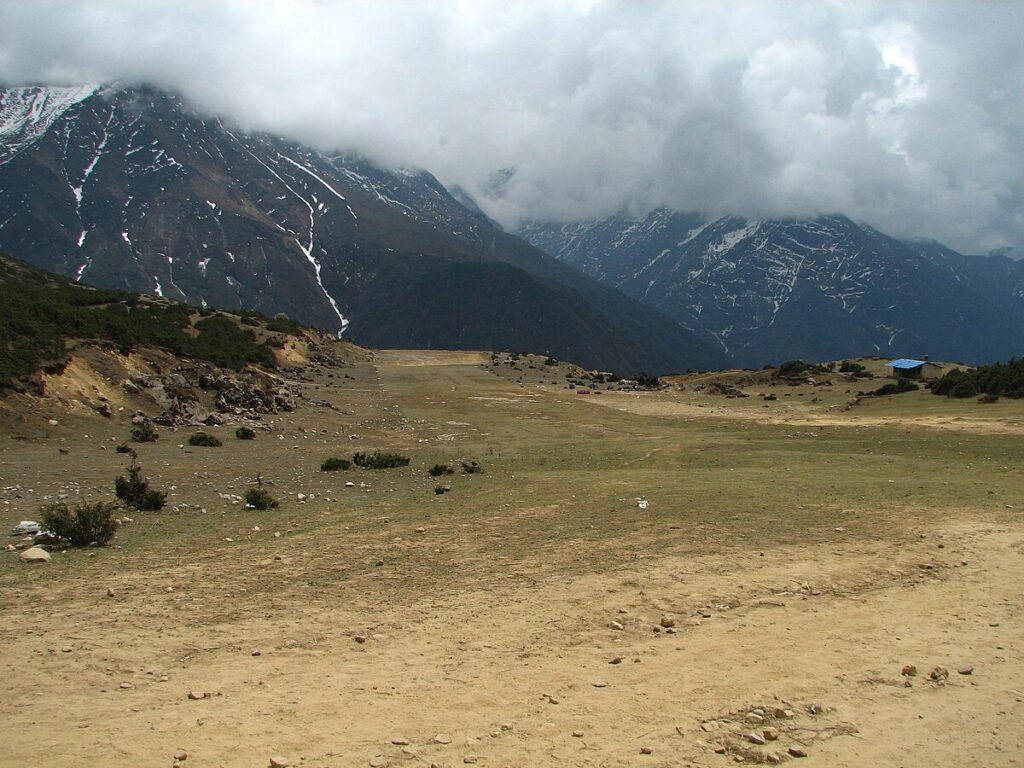
Have you seen and been in an abandoned airport? If not, you’ll get a chance to witness it at Syangboche Airport on your trek in the Everest region. It was built as a short takeoff and landing airstrip high above the main trekking trail. The plan was for it to become another airport for the Khumbu region, but that never happened. Today, Syangboche is better known as a scenic viewpoint and a popular acclimatization hike above Namche Bazaar.
The airport is officially listed as “not in operation” by Nepal’s Civil Aviation Authority. There are no scheduled flights, no terminal, and no regular aviation services. But occasionally, it does serve as a landing stop for private and chartered flights, primarily helicopters and STOL (Short Takeoff and Landing), which can be expensive. So, walking all the way to Syangboche is best. You gain altitude slowly while being able to enjoy wide mountain views, and pass through a quiet part of Everest’s history.
What was once planned as a transport hub is now a trekking landmark, not an airport.
Locality and Location of Syangboche
Syangboche Airport sits in the Khumjung Municipality, Solukhumbu District. It is a wide plateau just above Namche Bazaar. It lies inside Sagarmatha National Park and takes you straight toward the heart of the Everest region. It was built in the early 1970s to serve as a gateway to the nearby Hotel Everest View, the highest hotel in the world.
The idea was to fly wealthy travelers close to Namche Bazaar so they could enjoy views of Everest and Ama Dablam without having to trek up from Lukla, Phakding, and Namche. If you directly landed at Syangboche, it would have saved days of walking and avoided the steep climb from Lukla. But in reality, the plan didn’t work out and the airport stopped being used for regular planes and never developed into a proper aviation hub.
How to get to Syangboche Airport?
Syangboche lies only about 13 km away from Lukla, the rough mountain terrain means it takes around two days to walk between the two. From Namche Bazaar itself, the hike to Syangboche is much shorter. The trail climbs steeply for about 2 km and usually takes 45 minutes to 1.5 hours.
How High Is the Syangboche Airstrip?
Syangboche Airport sits at around 3,750 to 3,780 meters above sea level. At this height, the air is much thinner. This makes takeoff and landing risky because engines and wings of the aircraft don’t perform as well compared to Lukla airport. Meanwhile, for trekkers, this is often the first place where you can experience signs of altitude sickness. You may feel short of breath, tired, or get a mild headache. The environment is also harsher here. You can get sunburn faster due to strong UV rays. Similarly, temperatures can drop quickly, even if the day starts sunny.
Culture, Trails, and Landscape Around the Airstrip
The area around the airstrip is deeply connected to Sherpa life. Trails from Syangboche lead to Khumjung and Khunde villages, which are pretty known for monasteries, stone houses, and strong traditions. Here, yaks often graze across the open plateau, and prayer flags line the ridges. The airport area slowly shifted local life toward tourism, especially after the Hotel Everest View opened. Still, the land feels more like pasture and trail than an airport.
Why the Airport Never Became a Hub?
The airport at Syangboche never developed into a regional aviation hub mainly because its limitations were baked in from the start. The runway itself is a short, unpaved dirt strip measuring about 405 meters, laid on a natural slope rather than an engineered surface. Unlike Lukla’s reinforced runway, Syangboche’s earthen strip is highly vulnerable to weather damage, erosion, and surface instability. Basically, the airport is just little more than a flattened patch of ground, with space for only a couple of small aircraft or helicopters at a time.
And the challenges extend far beyond the short runway. Syangboche lacks nearly all the infrastructure required for modern commercial aviation. There are no refueling facilities. Aircrafts need to make sure they carry enough fuel for the return journey. This is an impractical burden at high altitude where performance is already reduced.
It also has no passenger terminal, no security screening, no navigation aids, and no air traffic control. Most critically, it does not meet Civil Aviation Authority of Nepal (CAAN) requirements for firefighting and emergency rescue services. Without these, regular commercial operations cannot be licensed, insured, or safely sustained. As a result, Syangboche airport is excluded from Nepal’s aviation network.
Snow, Migration, and Maintenance Gaps at Syangboche
Syangboche’s already-limited operations are further weakened by harsh weather conditions and a lack of year-round maintenance. In winter (December to February), the airstrip is frequently hit by heavy snowfall, freezing fog, and strong ridge-top winds. Because the runway is unpaved, even light snow quickly turns the surface into slippery. There is no snow-clearing equipment, de-icing system, or weather-monitoring support on site.
Adding to this challenge, the seasonal migration of the local Sherpa community also happens during the coldest months. Many residents from Khumjung and Namche move to lower elevations or Kathmandu. With no permanent staff or maintenance crew, the runway is left unchecked, meaning no snow removal, no surface inspections, no basic upkeep.
When and Why Helicopter Landings at Syangboche Happen
While fixed-wing planes have largely abandoned the Syangboche strip, helicopter landings remain a common sight in 2026. Because helicopters do not require a long runway or sophisticated navigation aids, they have turned this abandoned airport into a strategic high-altitude landing zone.

Top Reasons Why Helicopters Land Here
- Hotel Everest View access: Helicopters regularly ferry guests straight to Hotel Everest View, dropping them at nearly 3,880 meters in minutes. You get to enjoy instant Everest, Ama Dablam, and flex-worthy breakfast views.
- Everest scenic flights: Many Everest Base Camp Trek with helicopter tours from Kathmandu use Syangboche as a planned stop. Passengers can get out for photos or breakfast, while pilots reshuffle loads before pushing higher to Kala Patthar or Everest Base Camp. This is necessary because thin air limits passenger capacity at extreme altitude.
- Medical evacuations: Syangboche plays a vital role in high-altitude rescues. Its open terrain makes it a safer landing option than cramped Namche Bazaar, especially for evacuating trekkers hit by Acute Mountain Sickness (AMS).
- Local supply lifeline: For Khumjung and Kunde villages, helicopters carry heavy goods like construction materials, solar panels, fuel, and bulk food supplies. Without the airport, the locals would have to rely on traditional porterage and pack animals, such as yaks and zopkyos.
However, keep in mind that Syangboche strip isn’t a proper heliport. There’s no control tower, no hangar, no permanent ground crew. Every landing is weather-dependent, and mountain fog or afternoon winds can shut everything down instantly. On top of that, because the flight is inside Sagarmatha National Park, it has to follow strict environmental rules to limit noise and not to disturb wildlife.
 USD 150 OFF
Syangboche Airport vs Lukla Airport
Lukla Airport (Tenzing-Hillary Airport) is the undisputed aerial gateway to the Everest region. Syangboche Airport, on the other hand, sits higher. It is quieter, and largely out of the commercial aviation service. Though they’re often mentioned together, their roles are fundamentally different.
Lukla is a fully licensed commercial airport with daily scheduled flights in trekking season. Meanwhile Syangboche isn’t approved for passenger operations at all, so there’s no such thing as a simple reroute. The altitude difference makes it even worse. You have to land straight at nearly 3,800 meters with no acclimatization. This increases the risks of Acute Mountain Sickness.

Moreover, Lukla has a paved runway, air traffic control, trained crews, and standardized safety systems, while Syangboche is little more than a basic landing strip suitable mainly for helicopters. Lastly, opening Syangboche for commercial flights would mean trekkers can bypass Phakding, Namche Bazaar, and other villages that depend entirely on the Lukla trekking route. That’s why local Sherpa communities strongly oppose the idea.
Thus, Syangboche simply cannot replace Lukla on any level, be it legal, medical, technical, and economic.
| Feature | Syangboche Airport (VNSB) | Lukla Airport (VNLK) |
|---|---|---|
| Altitude | 3,780 m (12,402 ft) | 2,860 m (9,334 ft) |
| Runway | 405 m, unpaved dirt/grass, sloped | 527 m, paved asphalt, sloped |
| Scheduled Flights | None (non-commercial) | Daily commercial flights in peak seasons |
| Infrastructure | No terminal, refueling, or navigation aids | Basic terminal, security, ATC support |
| Operational Role | Private helicopters only | Primary access point for trekkers |
| Safety Framework | Ad hoc, weather-dependent | Highly regulated with trained STOL pilots |
Trekking to Syangboche
To reaching Syangboche comfortably, you need to plan a gradual, step-by-step journey as there are no direct commercial flights to this high-altitude location. Trekkers typically follow the standard Everest region route, moving from lower elevations to higher ground over several days to reduce altitude-related risks.
| Stage | Route | Elevation | Typical Duration | Notes |
|---|---|---|---|---|
| 1 | Fly to Lukla | 2,860 m | 30-40 minutes (flight) | Main air gateway to the Everest region |
| 2 | Lukla to Phakding | 2,610 m | 3-4 hours | Easy trek along the Dudh Koshi River |
| 3 | Phakding to Namche Bazaar | 3,440 m | 5-6 hours | Steep ascent; major acclimatization stop |
| 4 | Namche Bazaar to Syangboche | 3,780 m | 45 minutes-1.5 hours | Steep uphill walk, often done as an acclimatization hike |
How Syangboche Fits Into Your Trek
Syangboche plays a key role in the standard acclimatization process for treks in the Everest region. After reaching Namche Bazaar (3,440m), most itineraries include a scheduled acclimatization day to help the body adapt to increasing altitude. Rather than remaining inactive, you can use this day for a short ascent to higher ground before returning to Namche for the night.
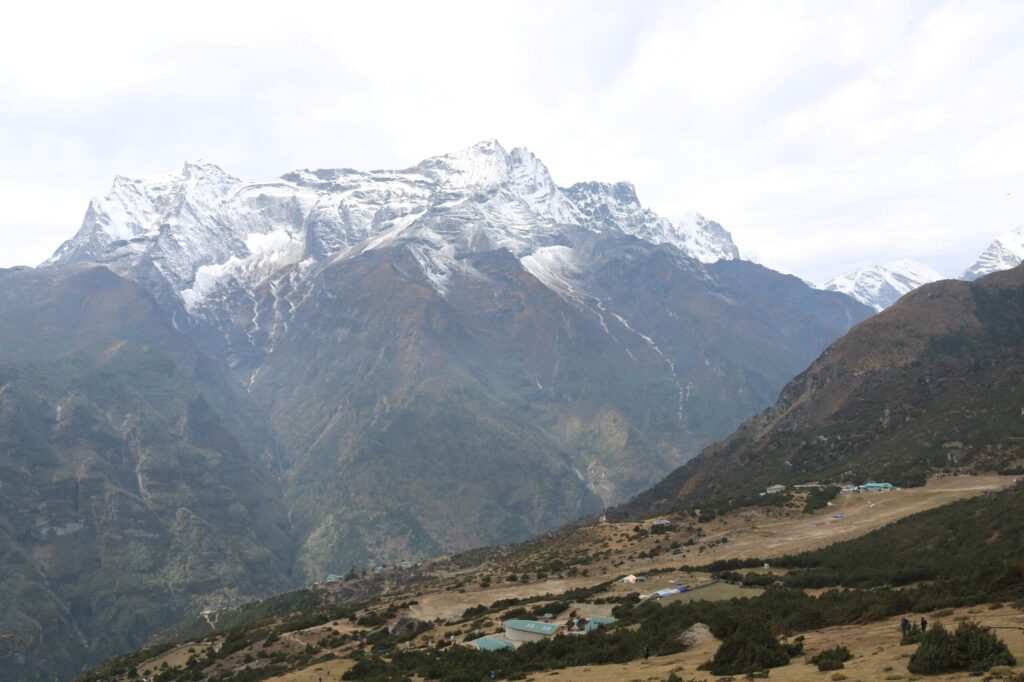
During your acclimization day in Syangboche, you can hike up to Syangboche ridge and the Hotel Everest View, reaching approximately 3,880m. This controlled exposure to thinner air during the day and rest at a lower altitude, significantly reduces the risk of Acute Mountain Sickness (AMS) in subsequent stages of the trek.
Who the Syangboche Experience Is (and Is Not) For
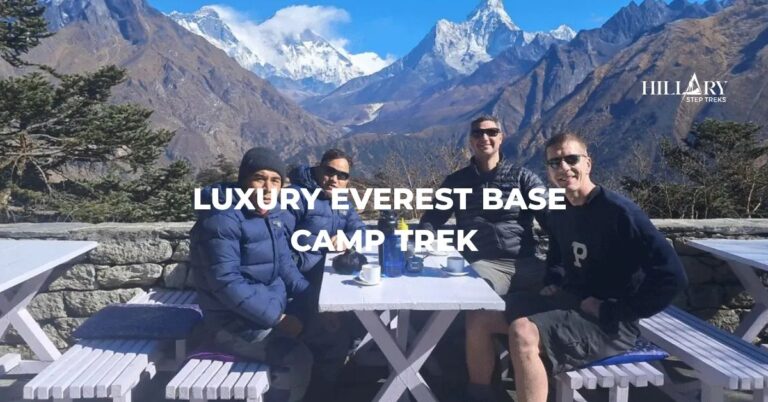
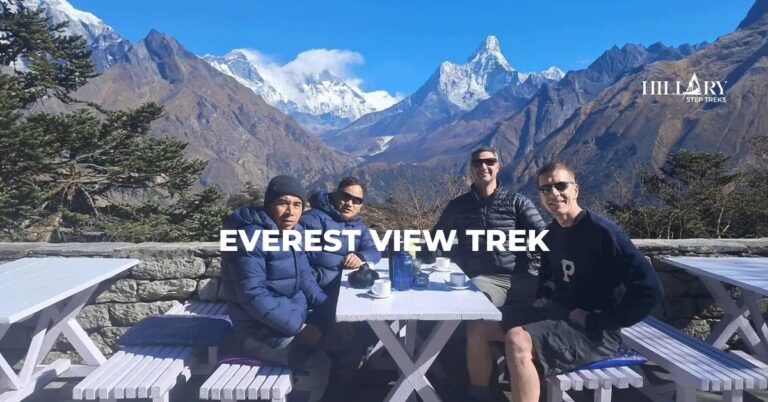
Syangboche offers one of the most beautiful viewpoints, along with locations for photography, and cultural exploration. From the ridge, you can witness expansive views of Mount Everest, Ama Dablam, Lhotse, Nuptse, and Thamserku. It is particularly meaningful for those already trekking in from Lukla, as it enhances the overall Everest Base Camp experience without adding excessive physical strain.
However, using Syangboche flight as direct access and avoiding the initial Lukla-Namche trail section is impractical and unsafe. You put yourself at an extreme risk of AMS by skipping the essential two-day trek from Lukla.
Why Syangboche Airport Still Matters to Trekkers Who Never Fly There
Syangboche Airport serves as a unique reminder of early attempts to provide quick, high-altitude access to the Everest region, a plan that proved impractical. It now functions mainly as a trekking waypoint rather than an active airport. This plateau offers expansive, unobstructed views of Everest, Ama Dablam, Lhotse, and surrounding peaks, making it a prime spot for photography and acclimatization.
Aside from the views, the ridge has a different atmosphere from nearby trails to Khumjung or Kunde. Here, you can clearly realize why going up slowly and safely is important. Hence, its mix of history, culture, and scenery makes it a memorable and educational stop for all trekkers on the Everest journey.
Plan Your Visit Around Syangboche
A visit to Syangboche make the most of your Everest journey, both as a key viewpoint and acclimatization stop. This high ridge offers sweeping mountain views and a glimpse into the history of Everest tourism. Thus, make sure it is include in our trekking itineraries like Everest Base Camp, Gokyo, or heli-assisted routes to ensure you get there and enjoy the combination of scenery, culture, and safe altitude exposure as one memorable experience.


