

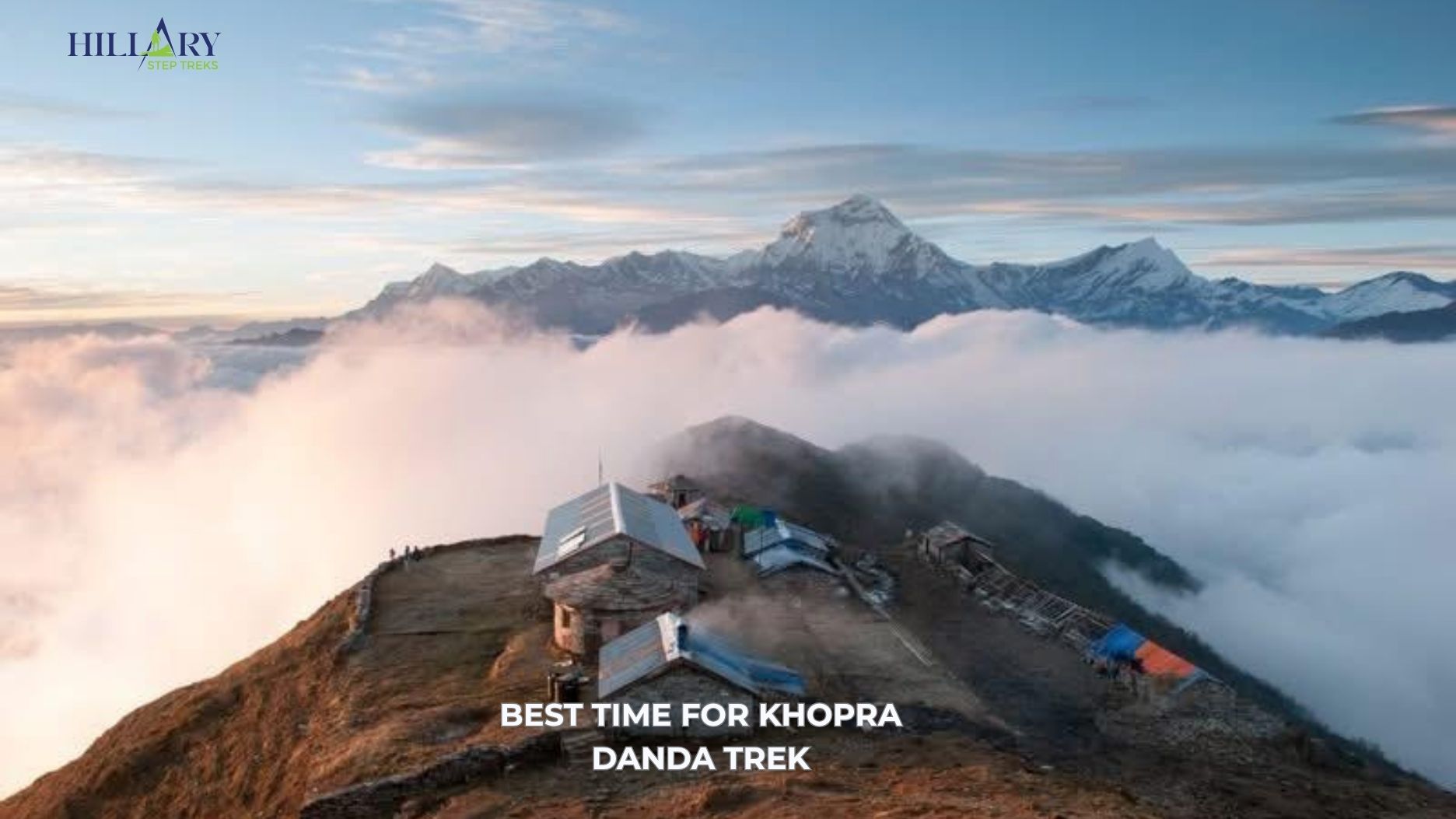
Most trekking guides tell you spring and autumn are the best times for the Khopra Danda Trek and then stop there. That’s true, but it’s only half the picture. What actually matters is what you get in each season, and whether that matches what you’re looking for.
Khopra Danda sits deep in the Annapurna region. The trail is open year-round, but timing affects the highlights and experiences of the trek. The same ridge that’s dusted in snow in January turns into a tunnel of blooming rhododendron in April and a golden, festival-lit viewpoint in October. To add, you’ll get stable weather, clear skies, and ideal temperatures across the full route. Winter and monsoon also have their highlights for the trekkers with the right expectations.
Everything in this blog comes from guides who’ve led this trail across all four seasons and gained firsthand experience.
Khopra Danda Trek in Spring (March to May)
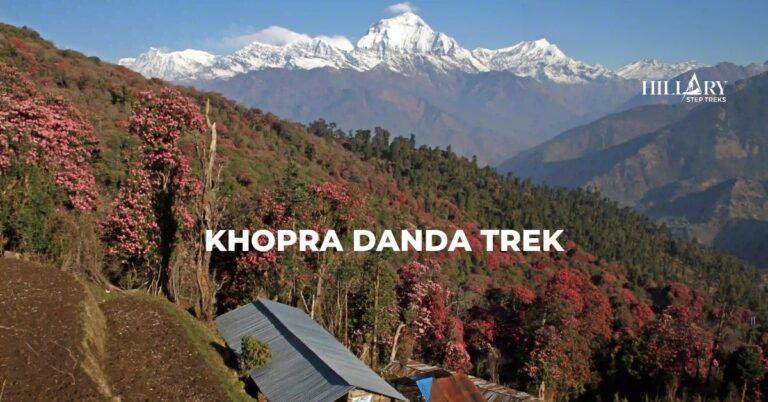
There’s a specific moment on the Tadapani-Dobato section in April that trekkers tend to remember for years. The trail disappears into a tunnel of red and pink rhododendron around 2,800m. The air carries that earthy-fresh spring smell, and the mountains are still sharp enough to stop you mid-step. That moment is why spring remains the best time to trek to Khopra Danda. No other season can replicate its charm.
Khopra Danda Weather and Temperature in Spring
In spring, the daytime temperatures range from 10°C to 20°C at mid-elevations (2,500m-3,500m). Here, mornings are crisp, afternoons warm up steadily, and the long daylight hours give you room to breathe that shorter winter days don’t. March and April usually bring clear views, and rhododendrons bloom from late March to mid-April, gradually climbing higher along the route.
Then, up at Khopra ridge (3,660m) and Khayer Lake (4,660m), nights can get cold. The temperature can drop to 0°C-5°C at the ridge and well below freezing at the lake, so pack warm regardless of how mild your days feel. Starting late May, clouds build in the afternoon, so you have to begin trekking earlier to catch the best views of Mt. Dhaulagiri, especially on your trek to Mulde Viewpoint at 3,637m.
Pros and Cons of Spring Trekking
Pros
- Rhododendron blooms cover the trail in color
- Long daylight hours, more time to trek comfortably
- Warm afternoons, cool mornings, ideal hiking conditions
- Excellent visibility of Annapurna and Dhaulagiri in March and April
- Holi festival in March adds a cultural layer to early-spring trips
Cons
- Peak season means busier teahouses, so you need to book ahead
- Accommodation prices are higher
- Late May afternoons bring clouds and occasional showers
Khopra Danda Trek in Autumn (September to November)
Autumn on Khopra Danda carries a kind of stillness that’s hard to explain until you’re standing on that ridge at 6:00 AM in late October, watching Dhaulagiri slowly rise out of the dark in complete silence. The air, washed clean after the monsoon, feels sharp and clear. Trails stay dry underfoot, and the mountains stand so close and defined that it almost doesn’t feel real.
Khopra Danda Weather and Temperature in Autumn
Autumn brings the clearest conditions on the Khopra Danda trail. With post-monsoon air cutting out dust and haze, you can witness Annapurna South, Dhaulagiri, Nilgiri, and Machhapuchhre in sharp, almost surgical detail. The temperatures at mid-elevations stay comfortable between 8°C and 18°C, the trail remains dry, and the weather holds steady well into November. October and November also offer the best conditions for Mulde Viewpoint. During this time, visibility is so clear that you can pick out individual ice formations on the mountain faces.
However, early September can still carry some leftover cloud and mud before things fully settle by mid-month. Similarly, nighttime temperatures at Khopra Ridge drop sharply, and Khayer Lake falls well below freezing after dark.
Pros and Cons of Autumn Trekking
Pros
- Clearest mountain views of the year
- Dry, stable trail conditions throughout
- Dashain and Tihar add genuine cultural richness in October
- Teahouses are fully stocked and well-run
- November is quieter than October, with equally sharp views
Cons
- October is Nepal’s busiest trekking month
- You need to pre-book the teahouses well in advance
- Accommodation prices at their seasonal peak
- Poon Hill and key viewpoints get crowded at sunrise in peak October
Khopra Danda Trek in Winter (December to February)
A winter trek to Khopra Danda usually becomes one of two stories. It’s either one of the most beautiful experiences of your life, or a tough lesson in how easy it is to underestimate the mountains. Often, it’s both at once. The challenge itself becomes part of what makes it unforgettable.
Khopra Danda Weather and Temperature in Winter
Winter is cold, raw, and strikingly beautiful. Nights near Khopra Danda Ridge drop to -5°C or lower, while daytime highs hover between 3°C and 8°C. Snow covers trail markers above 3,500m from late December through February, making navigation tricky in low visibility. Similarly, Khayer Lake often freezes in January and February, making the already steep trail to the lake even more icy and slippery.
Lower sections below 2,500m remain walkable through most of winter. On the exposed ridgeline between Dobato and Khopra Danda, the terrain looks the same in every direction due to snow cover. Here, a wrong turn can be seriously dangerous. So, you need to hire a local guide who knows the trail well without markers. It’s the single most important piece of advice for this season.
Pros and Cons of Winter Trekking
Pros
- Pristine snowscapes, the trail looks stunning
- Very few trekkers, you often have the trail to yourself
- Lower teahouse costs and better room availability
- Mountain views are crystal-clear on dry winter days
Cons
- Risk of frostbite and hypothermia above 3,000m
- Upper trails and the Khayer Lake route can be snow-blocked
- Teahouses may lack heating
- Heavier gear adds significant weight to your pack
- Snow-covered trail markers make navigation risky without a guide
Khopra Danda Trek in Summer (June to August)
The trail is also genuinely stunning during the monsoon. The Annapurna Conservation Area turns a deep and lush green, with waterfalls thundering at full force. Most guides don’t recommend it, not because the trail is bad, but because conditions are harsh, and many trekkers aren’t fully ready for what the weather can throw at them.
Khopra Danda Weather and Temperature in Summer
Monsoon brings heavy rain, leeches, fog, and slippery trails. Lower elevations range from 18°C to 28°C, but high humidity makes it feel even hotter. Cloud cover blocks views of Annapurna and Dhaulagiri for most of the day. Trails get muddy, and landslide risk rises on steep sections. In addition, leeches are a serious issue on lower forest trails. During the peak monsoon months of July and August, trekkers report 30-50 leeches on their clothing in a single stretch of trail.
Therefore, you should pack leech socks and carry antiseptic. Despite the challenges, the forests turn a deep green, waterfalls roar, and the trail takes on a raw, dramatic beauty if you’re prepared for everything monsoon throws at you.
Pros and Cons of Summer Trekking
Pros
- Lush, green landscape, unique visual experience
- Very few crowds, complete solitude on the trail
- Lowest teahouse prices of the year
- Brief post-rain clearings occasionally reveal mountain views
Cons
- Leeches on lower forest trails are unavoidable
- Landslide and flood risk on exposed sections
- Mountain views are mostly blocked by clouds
- Wet gear, wet boots, wet everything
Seasonal Comparison At a Glance
Not sure which season is right for you? Here’s a quick breakdown by season and month to help you decide.
Spring vs Autumn vs Winter vs Monsoon
| Factor | Spring (Mar-May) | Autumn (Sep-Nov) | Winter (Dec-Feb) | Monsoon (Jun-Aug) |
|---|---|---|---|---|
| Weather | Mostly stable | Very stable | Cold, snowy | Rainy, unstable |
| Temperature | 10-20°C | 8-18°C | -5-8°C | 18-28°C |
| Mountain Views | Excellent | Best time of the year | Good (clear days) | Poor |
| Trail Condition | Dry, good | Dry, excellent | Icy above 3,500m | Muddy, slippery |
| Crowds | High | Very high (Oct) | Very low | Minimal |
| Cost | Higher | Higher | Lower | Lowest |
| Best For | Flora & views | Views & culture | Snow lovers | Solitude seekers |
Month-by-Month Verdict
| Month | Verdict | Key Note |
|---|---|---|
| January | Difficult | Snow above 3,500m, Khayer Lake frozen |
| February | Difficult | Cold and icy upper trail, stunning snow views |
| March | Good | Clear skies, rhododendrons starting to bloom |
| April | Best | Peak bloom, warm days, excellent mountain views |
| May | Good | Warm but afternoon clouds build by late May |
| June | Avoid | Monsoon begins, the trail gets muddy and slippery |
| July | Avoid | Heavy rain, leeches, poor visibility |
| August | Avoid | Wettest month, high landslide risk |
| September | Moderate | Early Sep muddy; mid-Sep onwards clears up |
| October | Best | Clearest views, festive season, peak crowds |
| November | Excellent | Quiet, dry, sharp views, underrated month |
| December | Moderate | Cold but doable; snowfall picks up late Dec |
Best Time for Mountain Views
Khopra Danda ridge at 3,660m has a direct, unobstructed west-facing sightline to Dhaulagiri, one of the cleanest mountain views in the entire Annapurna region. But the season determines whether that view is crystal clear, slightly hazy, hidden in clouds, or buried in snow. The difference between a good season and a bad one here is not subtle.
Annapurna and Dhaulagiri visibility by season
Autumn delivers the sharpest mountain views of the year. After months of monsoon rain, the atmosphere is dust-free and crystal clear. Annapurna South, Dhaulagiri, Nilgiri, and Machapuchare all stand out in stark detail from the Khopra Danda ridge.
Spring comes in a close second. March and April are excellent before pre-monsoon haze builds in May. Winter also surprises you with razor-sharp views on clear days, though storms and snowfall remain unpredictable throughout the trek. Summer, however, offers almost no reliable mountain views, unless you are really lucky.
Best sunrise and sunset months in Khopra Danda
October and November are the top months for perfect sunrises at Khopra Danda and the Muldai Viewpoint. The post-monsoon clarity here rivals anything Poon Hill offers, with a fraction of the crowds. The air has little to no haze, making the golden light on Dhaulagiri’s face appear especially vivid.
Alternatively, you can also get beautiful scenery in March and April. During this time, the rhododendron forests glow in early morning light. Winter sunrises in December and January are also spectacular, but mornings and evenings are brutally cold.
Best Time for Khopra Danda Trek for Beginners
If you are a beginner or trying your first high-altitude trek, October is your safest pick. If you prefer spring blooms, then you can also do the trek in April. Trails are dry, temperatures are forgiving, and teahouses are well-stocked. Plus, you’re less likely to face unexpected weather disruptions.
Avoid the monsoon entirely. Wet trails, leeches, and unpredictable conditions add risk that only a few experienced trekkers can manage. Meanwhile, the Khopra Danda trek in winter is doable if you’re a fit beginner, have proper gear, and a veteran guide.
Safety and Comfort by Season
Khopra Danda ridge sits at 3,660m, and Khayer Lake is at 4,660m. That’s a 1,000m gain in one day. So, you need to spend at least one night at the ridge before heading to the lake in all seasons. Never push higher if you have a headache or any signs of altitude sickness. It affects everyone, regardless of fitness.
- Spring/Autumn: Safest overall, teahouses are open, rescue access is easier, trails are dry and well-marked.
- Winter: Hire a guide, trail markers disappear under snow, and route-finding above 3,500m gets risky.
- Monsoon: Use trekking poles, pack antiseptic for leech bites, and check the weather conditions daily.
Two Things Worth Knowing Before Trekking To Khopra Danda
Do you need crampons? You generally don’t need crampons for the main Khopra Ridge trail in spring, autumn, or early December. However, if you’re trekking to Khayer Lake between December and February, you should bring microspikes or crampons. The trail gets icy and steep, and a slip at that elevation can be fatal.
What if the weather turns bad mid-trek? Below 3,000m, you can usually continue even in the rain. But once you exceed that limit, it is best to stop at a nearby shelter. The visibility drops, ice builds, and navigation becomes tricky on the exposed ridgeline. Always include a one-day buffer, especially for Khayer Lake in spring or any winter section.
Conclusion
The best trekking season for the Khopra Ridge Trek depends on what you’re after. Go for autumn if you want clear skies and sharp mountain views. Choose October for energy and festivals, or November for quieter trails. Alternatively, the spring season, March and April, lets you enjoy rhododendrons and warm colors along the way. If you’re well-prepared and seek solitude, winter is also a great choice. Lastly, if you love raw, green wilderness and don’t mind wet trails, monsoon trekking is worth it.
Pick your season based on what matters most, and the trail will deliver the Himalayas the way you expect.


