Gokyo Ri Vs Gokyo Renjo La Trek, Summit or Circuit?
Already chosen the Gokyo Valley trek over the busy EBC trek? Good choice. The Gokyo region has fewer crowds, full of turquoise lakes, and offers amazing views of Everest. But now another decision waits: Gokyo Ri vs Gokyo Renjo La Trek.
Moderate
10
Days
$1,405
Starting from
Gokyo Ri Trek
The 10-Day Gokyo Ri Trek is one of the most popular and adventurous treks in the Everest Region of Nepal. It is also known as the Gokyo Valley Trek or the Gokyo Lakes Trek and offers a quieter, more scenic alternative to the crowded Everest Base Camp trail. On this…
Gokyo Renjo La Pass Trek in the Everest region of Nepal is one of the best adventure trekking destinations in the world with magical natural views, local hospitality, and unique culture to experience for travelers. Besides the majestic Mount Everest lies one of the best glacial lakes complex in the…
The Gokyo Ri trek is the short trek option. It only takes a total of 10 trekking days. You fly to Lukla, trek through Phakding, Namche, Dole, and Machhermo, and finally, the main destination, Gokyo Village. Then, a pre‑dawn climb to Gokyo Ri (5,357 m) summit offers stunning views of Everest, Cho Oyu, and the shimmering lakes spread out below. It is simple, and all about that one epic sunrise view, which you’ll never forget for a lifetime.
In contrast, the Gokyo Renjo La trek is the longer, 13 days, and bolder choice. It follows the same path to Gokyo Village, but instead of turning back, you cross the Renjo La Pass (5,360 m). You’ll also pass all five Gokyo Lakes, the highest freshwater lake system in the world. Thus, it is also known by an alternative name: Gokyo Lakes Trek. Then there’s a descent into the remote Bhote Koshi Valley, and a loop back to Namche without retracing. So, it’s tougher, wilder, and far quieter than popular trekking routes in the Everest region.
To know more about the differences between the Gokyo Ri and Gokyo Renjo La trek, keep reading this blog. In this Gokyo Valley trek comparison, we’ll break down the routes, difficulty, highlights, and practical tips of both treks to help you pick the right trek to Gokyo that fits your dream Himalayan escape.
Gokyo Treks at a Glance
Factor
Gokyo Ri Trek
Gokyo Lakes / Renjo La Trek
Why it matters
Days on trail
10
13
Time commitment
Route style
Out‑and‑back to Gokyo Ri
Semi‑circuit over Renjo La Pass
Scenery variety
Crowd level
Lower than EBC; brief overlap till Namche
Very quiet beyond Gokyo; remote section over Renjo La
Wilderness factor
Routes & Itineraries
Both the Gokyo Ri trek and Renjo La Pass trek take you to the same beautiful Gokyo Valley in the Everest region. What matters most is the trekking experience you get on the route. On the Gokyo Ri trek, you focus more on the Gokyo Ri climb, while the Renjo La option adds more excitement and challenge. After visiting the Gokyo Lakes, you hike over the high Renjo La Pass, which takes you to the quieter and high altitude parts of the Everest region trek.
Gokyo Ri “Summit Sprint”
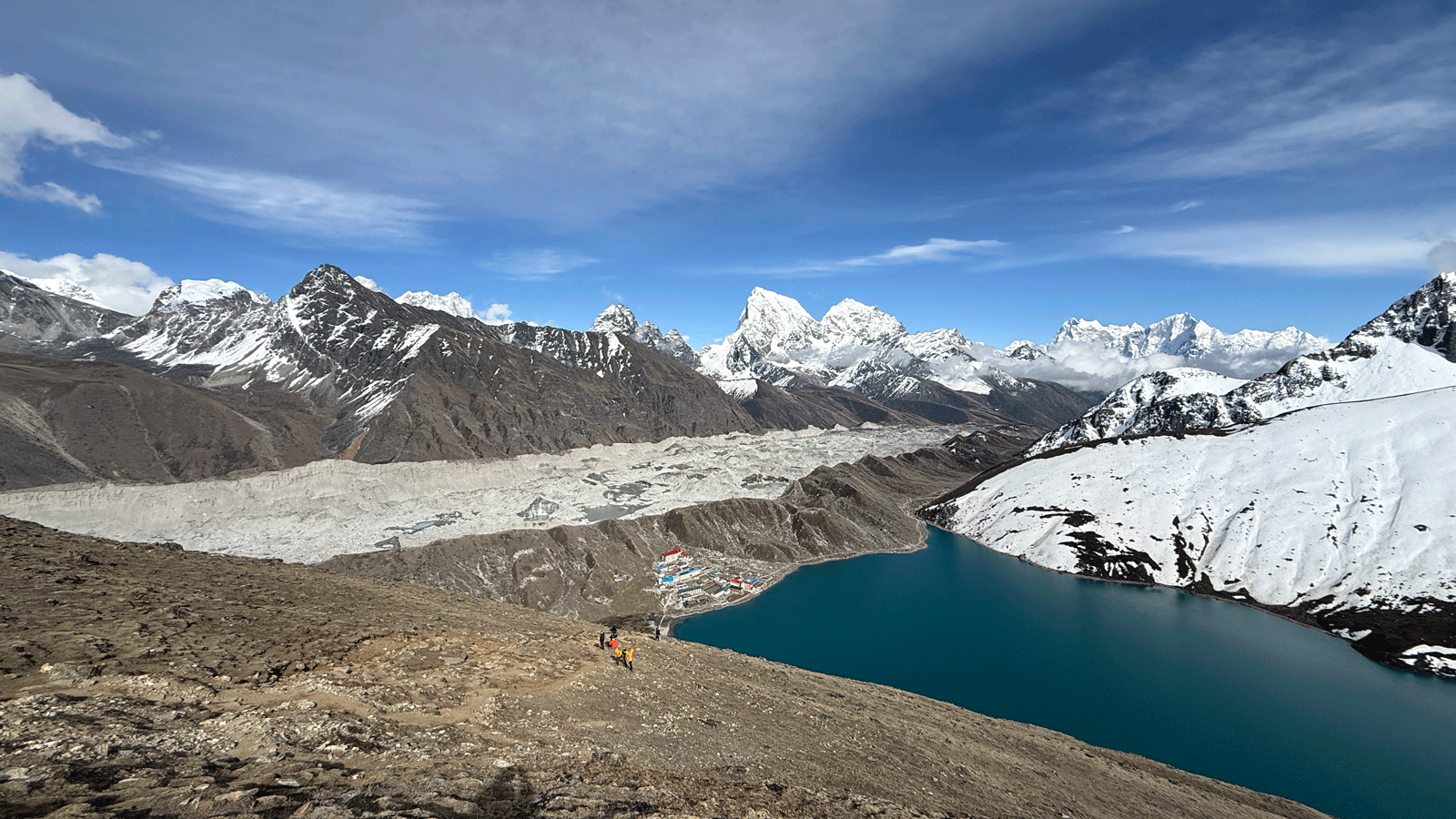
The Gokyo Ri Summit Sprint is a great choice if you want a short trek with amazing mountain views. It starts with a flight to Lukla, then takes you through villages like Phakding, Namche, Dole, and Machhermo. You’ll reach Gokyo Village, which sits beside the beautiful third Gokyo Lake (Longponga Tsho). Along the way, you’ll also see the second lake, Dudh Pokhari, a milky-white lake. The main highlight is an early morning hike to Gokyo Ri (5,357m). From the top of Gokyo Ri, you get a stunning sunrise view of Mount Everest, Cho Oyu, and the blue lakes below. After that, you return the same way.
view of gokyo valley
Route: Lukla ► Phakding ► Namche ► Dole ► Machhermo ► Gokyo Village (via Dudh Pokhari and Longponga Tsho) ► sunrise climb of Gokyo Ri ► return same way.
Renjo La Loop & Lakes
Renjo La Loop and Lakes trek starts on the same path as the one to Gokyo and the hike to Gokyo Ri. However, from there, it swaps the return route for a westward crossing over Renjo La Pass. From above, the pass offers a sweeping look at the entire lake chain before you descend into the secluded Bhote Koshi Valley and loop back to Namche. It’s a slightly longer, more challenging option with wilder scenery and no backtracking. On the way toward Lungde (4,380m), you’ll trace the shores of the Second and Third Lakes.
Route: Lukla ► Phakding ► Namche ► Dole ► Machhermo ► Gokyo Village ► Gokyo Lakes ► Renjo La Pass crossing ► Lungde► Thame loop back to Namche.
Note: You can also hike toward the Fourth and Fifth Lakes for glacier views and a quieter feel. That’ll add an extra day to our 13-day Gokyo Renjo La Pass Trek, but it’s worth the views.
Elevation & Rest Days
In the early stages of the trek, the Gokyo Lakes Trek and Gokyo Ri trek itinerary follow a similar elevation pattern. But there is a difference in elevation gain each day and acclimatization days. Both trek include a rest day in Namche Bazaar (3,440m) to help your body adjust to the height. However, the Gokyo Renjo La Pass trek gives you extra time to rest and explore in Gokyo Village during the excursion day to Gokyo Ri before ascending, which further enhances acclimatization.
Likewise, both treks take you to altitudes above 5,300m. As you keep walking, the trek continues with shorter daily elevation gains, such as 600m from Namche to Dole, 420m from Dole to Machhermo, and 320m from Machhermo to Gokyo Lake for gradual acclimatization. As for the summit day, Renjo La Pass trekkers face a steeper 800m ascent to Renjo La Pass itself before descending to Lungde. Meanwhile, trekkers on Gokyo Ri will climb Gokyo Ri, gaining 600m. With the added acclimatization day, the Renjo La trek provides a more gradual and manageable ascent.
Scenery & Highlights
Highlight
Appears on
Stand‑out moment
Emerald Gokyo Lakes (1‑5)
Both treks
Mirror‑flat turquoise mornings
Ngozumpa Glacier
Both
Longest glacier in Nepal
Gokyo Ri panorama
Both (climb optional on Renjo La trek)
360° of Everest, Lhotse, Makalu, Cho Oyu
Renjo La Pass vistas
Only Renjo La trek
Quiet Himalayan amphitheatre looking toward Nangpa La
As you trek through Sagarmatha National Park, the scenery shifts with every step. Lower sections of the trail wind through rhododendron and pine forests. You spot pheasants dart across the path and Himalayan monals flashing their colors. Going up past Dole and Machhermo, you might spot musk deer or Himalayan tahr grazing quietly in open alpine meadows and rocky moraines.
Difficulty & Trail Conditions
Now, you might also be wondering about the Renjo La Pass trek vs Gokyo Ri trek difficulty. We, along with other trekking agencies, rate them as moderate. Though they’re nearby, their challenges are very different. The Gokyo Ri route is relatively straightforward. It has a steady trail leading to a rocky, stair-like climb for the 5,357 m summit push. You return along the same path, so the terrain feels familiar on the way back.
On the other hand, the trek to Gokyo Lake first throws in a steeper 800 m climb on Renjo La pass day, with loose scree switchbacks on its west side. After that, it’s a long descent into the Bhote Koshi Valley. You need to start the pass day before dawn to avoid afternoon winds. You will need trekking poles and a good pace strategy to navigate uneven ground and altitude safely.
There’s no doubt that these routes require solid stamina and proper acclimatization. Renjo La is the more challenging option for most, largely due to its demanding pass day and remote location. If it’s your first high-altitude trek, build in extra rest time and prepare with cardio and leg strength training. Don’t forget to carry microspikes for autumn snow. Gokyo Ri, however, stays manageable all year round. You can do it with basic trekking fitness and steady pacing.
Ideal Trek Windows
Our senior guides recommend March to May and September to November as the best trekking seasons for the Gokyo Ri and Gokyo Renjo La trek, respectively. These months bring the clearest possible skies, stable weather, and mild temperatures. You’ll have an easier time climbing, be more comfortable, and, more importantly, enjoy the most beautiful reflections on the glacial lakes.
For trekkers seeking quieter trails, we recommend the first two weeks of December for the Renjo La circuit. Snow is more common over the pass during this time, but with microspikes, layered clothing, and an early start, it’ll be safe and rewarding. Avoid trekking in peak winter (late December to February) unless you’re prepared for challenges like deeper snow and unpredictable weather. Additionally, many accommodations are closed due to the cold weather and the off-season.
The Practical Bits about Teahouses, Wi‑Fi & Lukla Flights
During both treks, teahouse comfort is fairly consistent along the main route up to Gokyo, no matter when you trek. Expect small, clean rooms with twin beds, hearty meals like Dal Bhat, Momos, and Sherpa stew. Wi-Fi is good enough for a quick check-in, though speeds drop higher up, especially past Namche. Charging electronics often costs extra, so carry a power bank for more convenience. In colder months (late autumn and winter), pack a warm sleeping bag or liner, as indoor heating is rare.
After crossing Renjo La and descending into the Bhote Koshi Valley, the lodges get simpler. Their walls are thinner, menus are limited, and the internet is not available at most of the time. Here, you will feel especially cold during overnight stays, even in autumn and spring. You ought to bring extra layers and snacks. The upside, however, is a far quieter, untouched stretch with fewer trekkers compared to the Gokyo Ri out-and-back.
Both Gokyo Lakes and Gokyo Ri treks include flights to Lukla, either from Kathmandu or from Manthali, during peak traffic. Plus, flight delays can happen at any time of year. Talking about costs, the Renjo La circuit typically costs more because of the three extra days, higher trekking guide and porter wages, and safety gear like ropes for crossing the pass.
Permits & Environmental Impact
Both treks require two essential permits: the Sagarmatha National Park Permit and the Khumbu Pasang Lhamu Rural Municipality Permit. These trekking permits not only regulate visitor flow but also fund vital conservation and community projects. They aim to protect the fragile ecosystem and local Sherpa culture while also promoting tourism in the Gokyo region.
Trekking in the Everest region means walking through one of the world’s most delicate alpine environments. Following strict Leave-No-Trace principles is non-negotiable. This means you carry out all your garbage (including biodegradable waste) in a bag. Its purpose is to avoid disturbing wildlife habitat and preventing soil erosion and damage to vegetation. Water pollution is also a major concern. Bring your own reusable water bottles and use purification methods instead of buying plastic bottles.
The Renjo La trek crosses through the more remote and less frequented Bhote Koshi Valley. This makes it especially important for trekkers to practice eco-friendly behaviors. Its quieter, pristine landscapes rely heavily on responsible visitors to keep the environment intact. For this trek, we aim for small group sizes and interacting respectfully with local communities. Support family-run teahouses, as they also make a positive contribution to both the economy and the environment.
Cost Breakdown
Both treks offer incredible views of the Everest region, but their prices reflect differences in duration and logistics. The Gokyo Ri Trek (10 days) starts at USD 1,375 for solo trekkers, while the Gokyo Renjo La Pass Trek (13 days) starts at USD 1,455 per person.
The Renjo La circuit is slightly more expensive, around USD 100 more per person. This is due to the additional three trekking days, porter and guide wages, and contingency costs, such as safety ropes for the pass and porter insurance.
Price Comparison by Group Size
Hillary Step Trek also offers group trekking options. These can help you save up to USD 375 per person for the Gokyo Ri Trek and USD 355 per person for the Gokyo Renjo La Trek.
Here’s the price comparison:
Group Size
Gokyo Ri Trek (10 days)
Gokyo Renjo La Trek (13 days)
1 Pax
1,375
1,455
2 Paxes
1,105
1,215
3 Paxes
1,095
1,195
4–6 Paxes
1,050
1,170
7–12 Paxes
1,030
1,150
13–18 Paxes
1,000
1,100
Tips to Save on Both Treks
Join a group or bring friends, as per-person rates drop by up to USD 300 for larger groups.
Trek during the shoulder seasons (late September or late November) for potential discounts, quieter trails, and still-clear skies.
Book early to secure the best flight and accommodation rates before peak-season price hikes.
Who Should Choose Which?
Ideal Trekker Profile
Pick Gokyo Ri Trek if…
Pick Gokyo Renjo La Trek if…
Time in Nepal
< 2 weeks
≥ 2 weeks
Wanted challenge
Moderate
Moderate‑to‑Challenging pass day
Photo goals
Classic sunrise shot
Diverse lake + pass panoramas
Preference
Out‑and‑back simplicity
“Circle‑route” & explorer vibe
Route Variants
If you’re craving more than just Gokyo Ri or the Renjo La circuit, there are two extended treks worth considering:
Everest Base Camp Trek via Gokyo Lakes
This route combines the quiet beauty of Gokyo’s five lakes with the drama of Everest Base Camp. After the summit of Gokyo Ri for sunrise views, you cross the challenging Cho La Pass to reach the Khumbu Glacier and Everest Base Camp. EBC Trek via Gokyo Lakes is ideal for trekkers who want Gokyo’s serenity without missing Everest’s most famous highlight.
Everest Three High Passes Trek
This trekking trail is designed for experienced adventurers. It is the ultimate Everest region circuit, where you cross the Kongma La, Cho La, and Renjo La. Thus, it connects Gokyo, Everest Base Camp, and remote valleys in a single loop. Expect long, high-altitude days, epic panoramas, and fewer crowds once past the main trails. The Everest Three Passes Trek is perfect if you want the most immersive Everest experience.
Both routes add more challenge, altitude, and scenery, but reward you with an unmatched sense of accomplishment and variety.
Both the Gokyo Ri and Gokyo Renjo La Pass treks need a solid base kit. It includes layered clothing, a warm down jacket, waterproof boots, trekking poles, and a -10°C sleeping bag. However, there are a few notable gear differences between the two.
For Gokyo Ri, the packing list is a bit simpler. Standard trekking gear, microspikes for late-autumn icy mornings, and a good power bank will cover you. The trail is shorter and less remote, so you’ll find teahouses with basic supplies and food along the way.
For Renjo La, you need to pack for colder, lonelier conditions. The pass day can start pre-dawn at freezing temps, so extra thermals, a windproof shell, and insulated gloves are essential. Microspikes are strongly recommended for the scree and possible ice on the Renjo La path. And because Bhote Koshi Valley has fewer amenities, bring snacks, a water purification system, and spare batteries for headlamps and electronics.
Whichever trek you choose, keep your pack under 10–12 kg. If you’re hiring a porter, cap the load at 20–25 kg per porter. Light, layered, and smart packing will make both the summit and circuit routes far more enjoyable.
Conclusion
So, what’s the final call in the Gokyo Ri vs Gokyo Renjo La Trek debate? Both treks deliver the jaw‑dropping beauty of the Gokyo turquoise lakes of the Gokyo Valley and those iconic Everest‑region panoramas, but the feel is different.
If you’re short on time and want big views fast, trek to the Gokyo Ri. It’s a moderate trek and straightforward, with a classic sunrise climb and plenty of comfort along the way. But if you’ve got more time and stamina, the Renjo La circuit will be best. You’ll trade backtracking for a high, lonely pass and wilder landscapes, with fewer crowds and a touch more challenge.
Whichever you choose, Hillary Step Treks has expert‑crafted packages to make your journey smooth and memorable. Contact us today to learn more about the Gokyo Ri and Gokyo Renjo La Pass Trek package.