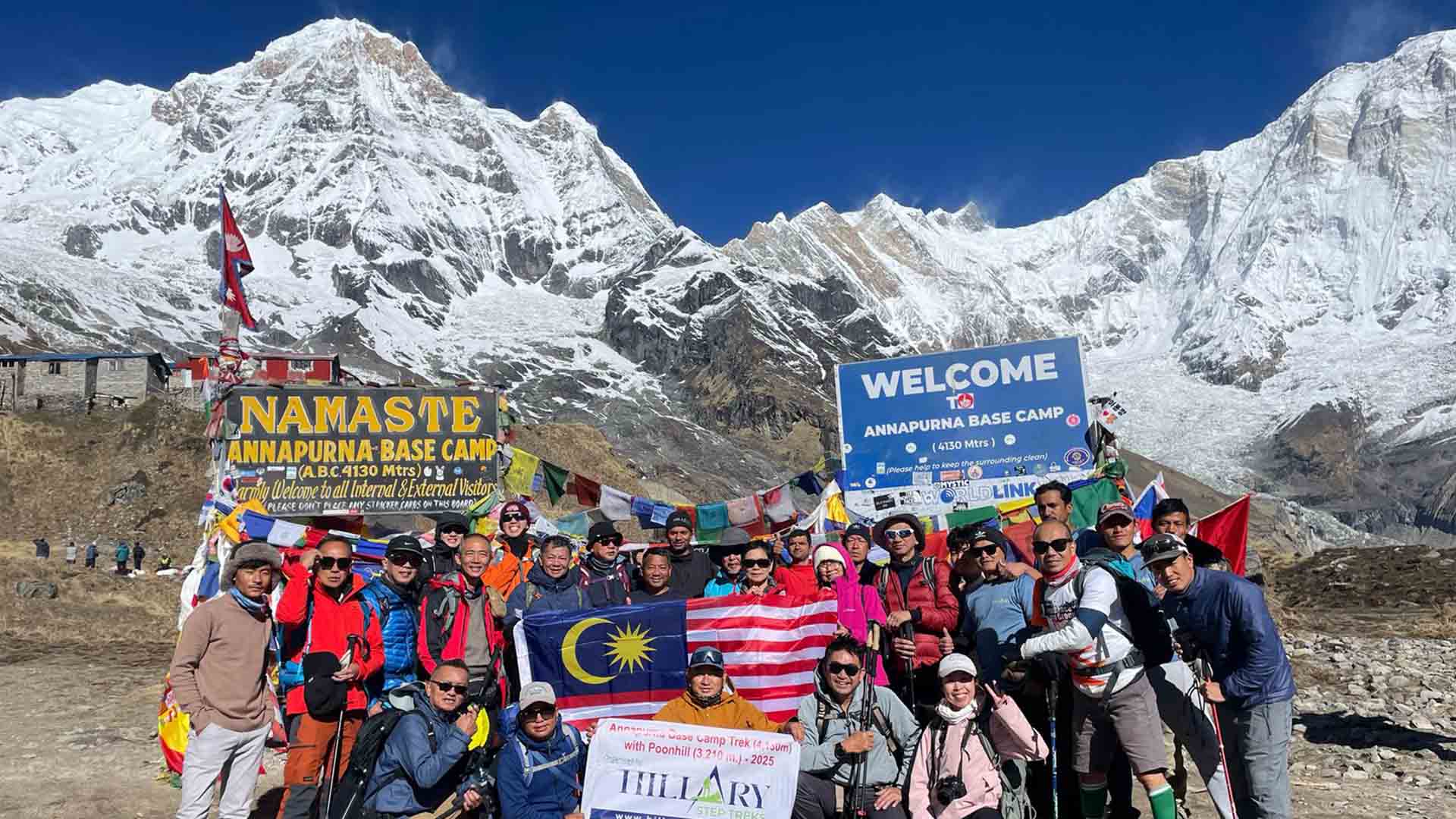
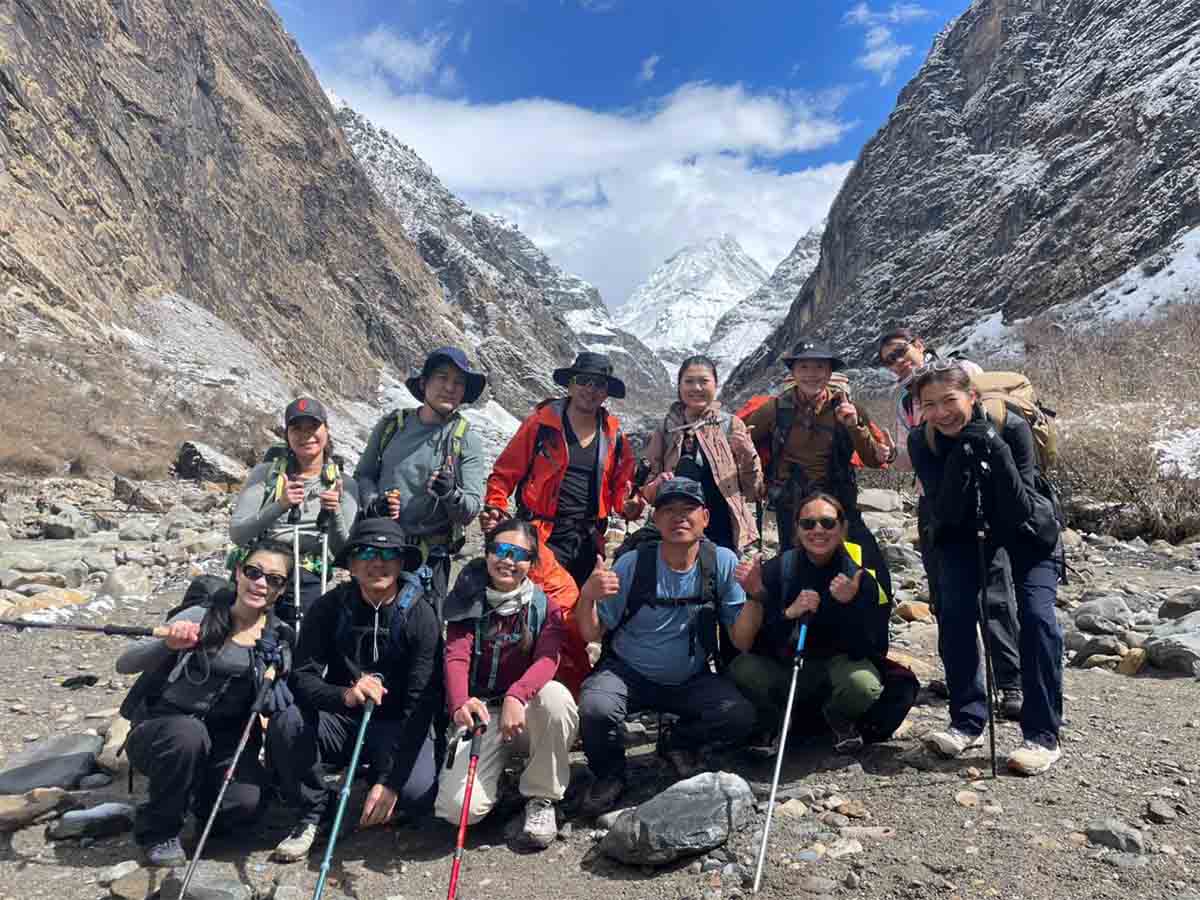
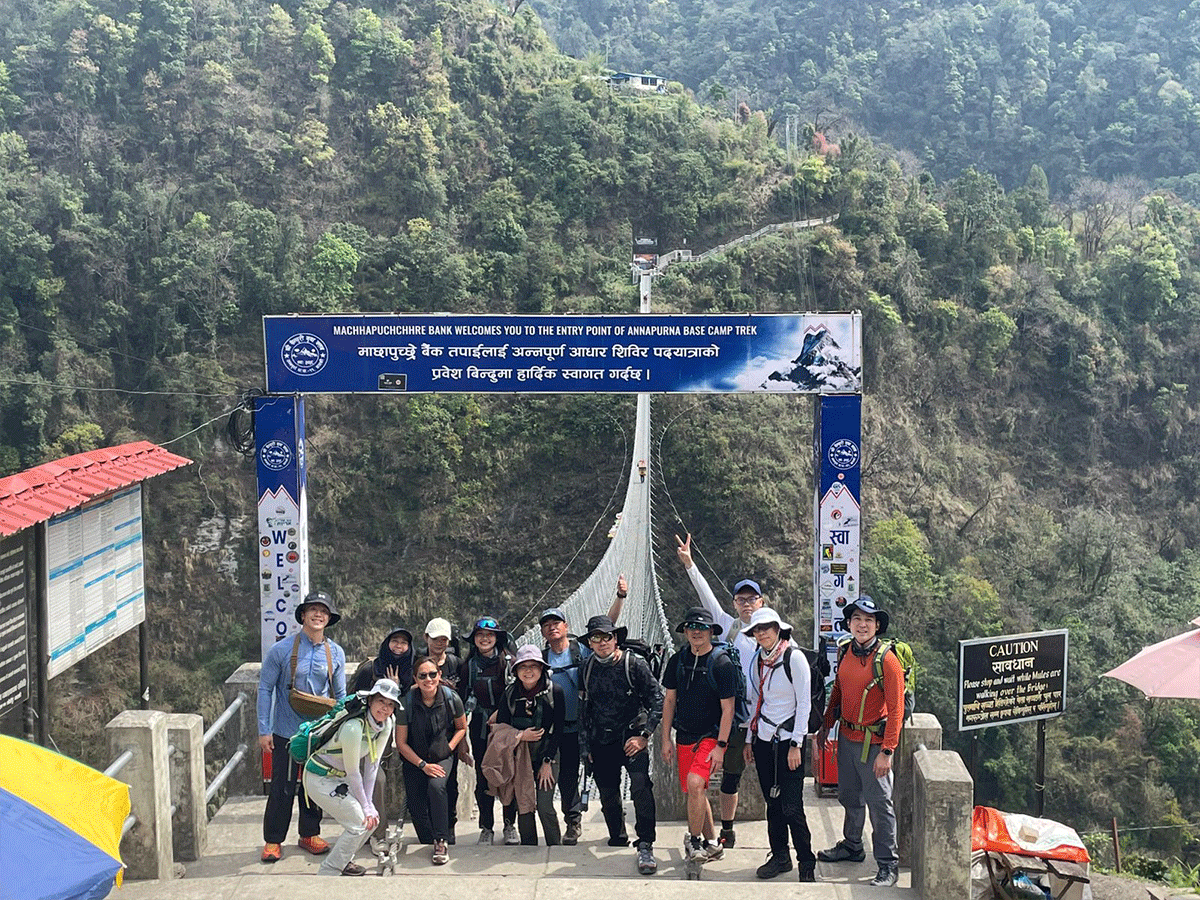
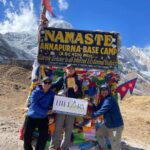
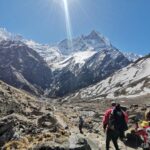
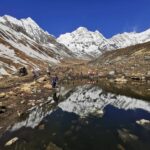
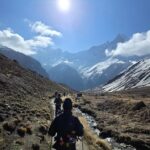
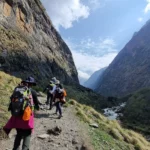
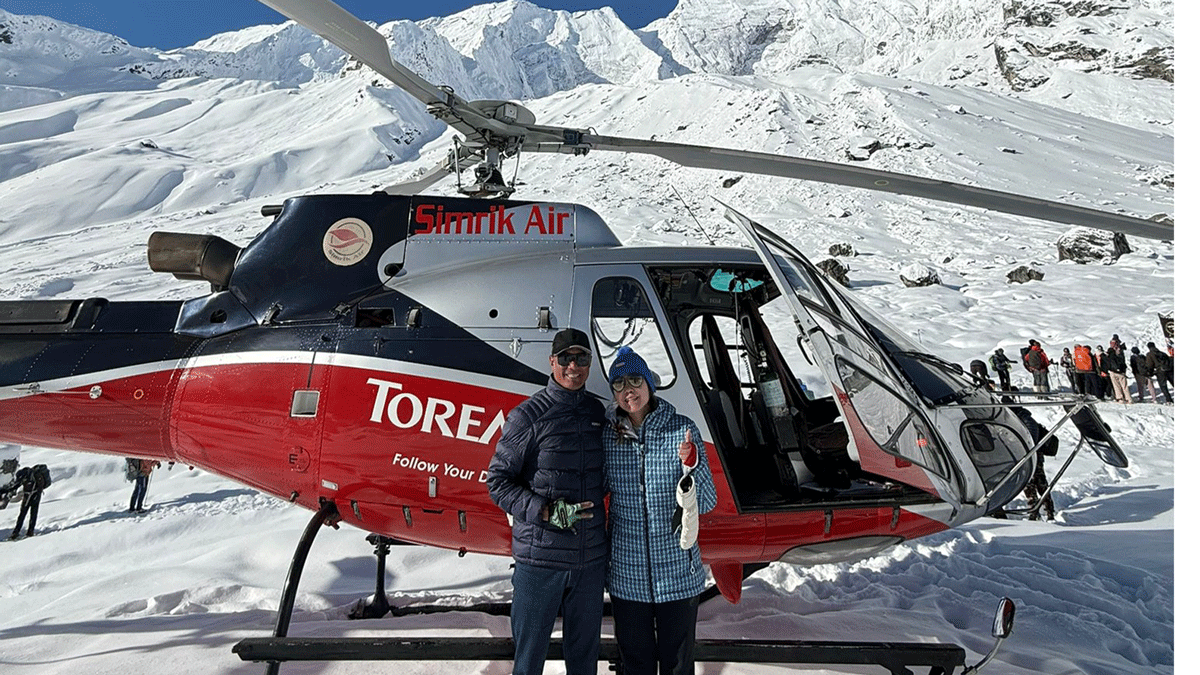
The 5 Days Annapurna Base Camp Short Trek offers a spectacular experience in the lap of the Nepalese Himalayas. The trek begins from Pokhara and goes through paddy fields, subtropical forests, and alpine pastures with Rhododendrons. As the trail ascends, trekkers gradually immerse themselves in the splendor of the Annapurna Sanctuary, surrounded by towering peaks such as Annapurna I (8,091m), Machapuchare (6,993m), and Hiunchuli (6,441m).
Throughout the trek, accommodations are provided in cozy teahouses that offer warmth and hospitality after each day’s trekking. The itinerary allows the trekkers the best of both worlds—rugged and easy terrain and enough time to rest and acclimate. In addition to the stunning landscapes, cultural interactions with locals, particularly the Gurung people, add a layer of education about the indigenous mountain folk and their hospitality.
Drive to Samrung and Trek to Chhomrong via Jhinu Danda
Lunch & DinnerLodge2,170m/7119 ft
The journey begins with a 2.5-hour drive from Pokhara to Samrung, offering scenic views of the lush countryside and distant mountain peaks. Once in Samrung, the trek starts with trekking for 2- 3 hours to Chhomrong, passing through Jhinu Danda, famous for hot springs. This first day is a trial and an intro into the Nepalese variously mountainous scenery ranging from rice paddies to heavy forests, meeting the extended Gurung community. The day then comes to a close in the charming village of Chhomrong, which lies on a slope and offers a great view of Annapurna South and the sacred Machapuchare.
Day
02
Trek to Himalaya from Chhomrong
Breakfast, Lunch & DinnerLodge2,900m/9514 ft
From Chhomrong, the trail descends to the Chhomrong Khola and ascends rather steeply through bamboo and rhododendron forests. The next day is devoted to the 7-hour trek, which moves deeper into the Annapurna Sanctuary; on the trail, trekkers cross the villages of Sinuwa and Bamboo. The trip continues, and there is an opportunity to see more of the forest, wildlife, and plant life. It is evening in the Himalayas, a village that lies at 2900 meters altitude on the lap of the hilltops.
The third day is one of the most challenging and exciting simultaneously, as the distance to be covered will be approximately 7-8 hours. The trail gets gradually higher, passing through the Himalaya and Deurali trail up to Machapuchare Base Camp (MBC), lying at 3,700m. The scenery around MBC is fantastic, and the Machapuchare mountain peak is considered sacred. Further up from here is the route that leads to Annapurna Base Camp (ABC), which stands at 4,130m.
Day
04
Hike from the Annapurna Base Camp to Sinuwa
Breakfast, Lunch & DinnerLodge2,340m/7677ft
Thus, after sightseeing and experiencing the beauty of ABC and its tranquility, the trek starts to head back to civilization. The 8-hour journey goes back to MBC and on to Deurali, Himalaya, Bamboo, and finally, Sinuwa.
The last day of the trek is usually a relatively long one of 4 to 5 hours, covering the distance from Sinuwa to Samrung, which is the start point of the trek. The path leads you through the familiar sceneries and presents an opportunity to ponder over the experiences and the views of nature one more time. When they get to Samrung, the two most extended treks can be covered in 5 hours by Jeep and again get dropped at Pokhara, terminating the trek. After reaching the destination, trekkers can find homely comfort in Pokhara and reflect on the adventurous journey through the Annapurna Base Camp.
Accommodations
4 Night’s Accommodations During the trek
Meals
All Standard Meals ( Breakfast, Lunch & Dinner/main course) Three times a day.
Transportations
Pokhara/Samrung and Samrung/Pokhara by Jeep
Extra
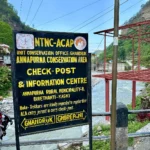
Annapurna Conservation Area Project (ACAP) permit
Trekker’s information management system (TIMS) cards
Experience government holder english speaking trekking guide
Porter (2 trekkers: 1 porter)
Guide and porter includes their salary, insurance, equipment, food and accommodation, transportation, etc.
Duffel bag and Sleeping bag ( return after trek)
Trekking Map
First aid kit
Water purification tablets safe drinking water
Seasonal fruits Everyday
Certificate
All government and Local Taxes
Not Included
International Airfare
Nepal entry Visa fees on arrival at Tribhuwan International Airport (15 Days $30, 30
Days $50, 90 Days $125 )
All accommodation and meals in Kathmandu and Pokhara (before and after journey)
Extra accommodation and meals in Kathmandu and Pokhara due to early return fromthe trek
Travel & Health Insurance
Emergency Helicopter Rescue Insurance
Kathmandu/Pokhara/Kathmandu transportation (if you ask, we can arrange it)
All hard and soft table drinks such as tea/coffee, Coke, Fanta, Beer, Water & desserts in trek
Hot Shower/Battery Charges/International call/WIFI & Internet on trek
We offer multiple departure options for the short ABC Trek that takes you to the base of the world’s 10th-highest peaks in just 5 days. So, what are you waiting for? Choose a convenient travel schedule and book the trip with us.
Why is the Annapurna Base Camp Short Trek the Best Option?
The Annapurna Base Camp Short Trek stands out as the best option for trekkers due to several key reasons:
Balanced Duration: It perfectly balances time commitment and trekking experience, making it accessible to many trekkers, including those with limited vacation time.
Scenic Highlights: Though it is comparatively shorter than the previous trek, it includes places like Chhomrong village, MBC, and ABC, along with the majestic views of the Himalayas like Annapurna I and Machapuchare.
Manageable Challenge: The trek provides a moderate physical challenge suitable for most fitness levels, with ample time for acclimatization.
Infrastructure: It follows a well-established route with reliable teahouse accommodations and dining options, ensuring comfort and convenience throughout the journey.
Cost-Effective: The ABC Trek is cost-effective. It takes fewer days for accommodation, meals, and guides than the other types of tourism. It costs less than longer treks but keeps the same experience.
Accommodation and Meals Options
During the Annapurna Base Camp Short Trek, trekkers stay in teahouses. They are basic lodges with essential amenities and a homely feel. They make trekkers comfortable and able to interact with others.
Twin-sharing rooms have shared wash facilities. They are joint sleeping arrangements. But you can get a higher price for private rooms with attached wash facilities. The higher you go, the simpler the lodges get, but they are cozy accommodations after a day of hiking.
Local foods are mainly served for breakfast, including dal bhat, noodles, soups, and fried rice. Many hot drinks are convenient to have in the relatively colder climate of the mountains.
Having some money with you is recommended because these areas rarely accept card payments. In conclusion, teahouses are critical to trekking culture in Nepal. They create a platform for social interaction with other trekkers and hosts.
Annapurna Base Camp Short Trek Transportation
The Annapurna Base Camp (ABC) Short Trek’s transportation mainly involves road travel. It starts from Pokhara. Trekkers take a scenic 2.5-hour drive by Jeep from Pokhara to Samrung, the trailhead.
After completing the trek, the return journey from Samrung to Pokhara also involves a 2.5-hour Jeep ride. People prefer this mode of transportation. The terrain remains rugged and mountainous.
This makes private Jeeps a comfy and reliable option. Those starting from Kathmandu must take a 6-7 hour drive or a 30-minute flight to Pokhara. Then, they begin the journey to Samrung.
The flights offer a quick and scenic alternative with stunning aerial views of the Himalayas. The transportation for the short ABC trek is well-organized. It ensures a smooth start and finish to the trek.
Best Time for Annapurna Base Camp Short Trek
Spring (March to May):
Autumn, also known as fall, is another season that advocates for the Annapurna Base Camp Short Trek since it is one of the most preferred seasons. These months are generally favorable because of the cool temperatures that the region experiences during those months. The temperature can be high during the day but becomes calm at night, which is suitable for trekking.
Another advantage of trekking during spring is that it is the time when rhododendrons and other wildflowers begin to bloom, brightening up the trekking routes with their beautiful colors. It is also relatively dry during this particular season, and the sky is clear; hence, trekkers can enjoy the impressive view of the Annapurna and Machapuchare peaks.
However, the expansion of these trails and teahouses is also a little crowded or full of tourists or visitors, as the case may be. However, many people find their beauty in blossoming plants and favorable climates, motivating them to elevate the trekking exercise.
Autumn (September to November):
However, another primary trekking season at Annapurna Base Camp is in autumn. This time of the year is best for trekking activities because the weather is stable, and temperatures are low post-monsoon. Most of the time, the skies are often clear; therefore, the views of the snowcapped peaks are always pristine and uninterrupted. This season also coincides with many Nepali festivals like Dashain and Tihar, which adds a bonus for the trekkers who can also get to celebrate the festivals of Nepal.
Like in spring, autumn is again considered the tourist season for trekking. Therefore, many trekkers are encountered on the trails and in teahouses. The weather is good enough, and the sky is clear, giving a beautiful view of the place’s culture; this is why autumn is recommended for the trek.
Winter (December to February):
Winter trekking to Annapurna Base Camp is less famous than other seasons because of low temperatures, more precisely at higher altitudes. During these months, the region receives a clear and fresh atmosphere, and sometimes, perfect weather for sighting mountains. But it must be remembered that trekkers will have to face frigid temperatures; days will be rather chilly, and at night, the temperatures are expected to drop further and can even freeze.
Snowfall can render some parts of the trail difficult or impossible, and certain portions become inaccessible quickly. The best thing that one can find with the winter trek is that there will be less competition for accommodation on the trails and in the local teahouses. Indeed, when prepared for the winter wonderland, the place is quite picturesque and tranquil. But, one needs warm clothes and planning.
Monsoon (June to August):
The monsoon season with heavy rain is the worst time for the trek. Doing the trials becomes challenging and risky. They will likely get muddy and slippery, causing landslides. This is because clouds often cover most mountains.
They have rain most of the time. This limits visibility. On the plus side, the terrain is green. There are flowers. It rains, so there is greenery and flowers on the trail. But leeches may be there, too.
The monsoon season also entails few people willing to trek. If you are eager to trek during this time of the year, you will get good value for your money. You will be all alone. It is OK to hike now. But it would help if you endured the rainy season.
You may need waterproof clothing, so be extra careful to avoid trail accidents. Nevertheless, greenery is one of the exciting things to anticipate when trekking during the monsoon season.
Porter and Guide in Short ABC Trek
Hiring a porter and guide for the Annapurna Base Camp (ABC) Short Trek is a great idea. It will make the experience safer and more enriching for me and those around me. It is always wise to have a guide to explain more about the place and lead you to the specific location of interest.
They also help in acquiring necessary permits and other necessary facilities and provisions. They complement your trip by giving cultural and natural information on the place of interest. Porters take up to 15-20 kg of your equipment.
This enables you to hike steep paths with minimal load and energy. It assists in making your trip a little less complicated. It also helps the local economy since it provides employment opportunities. Guards and porters are aware of the ground situation. Thus, the hike becomes much safer and offers a much broader accessibility.
This is more so for lone or altitude trekkers. They ensure that the traveling is efficient and entertaining and that one can fully appreciate the scenery and the achievement of getting to ABC.
Required permit for the Annapurna Base Camp Short Trek
For the Annapurna Base Camp Short Trek, trekkers need two main permits:
Annapurna Conservation Area Permit (ACAP): This permit is required to enter and trek within the Annapurna Conservation Area. It helps fund conservation efforts and management of the natural resources in the region.
Trekkers’ Information Management System (TIMS) Card: The TIMS card is mandatory for all trekkers in Nepal and helps maintain a record of trekkers’ information and their trekking routes. It also assists in providing emergency support and ensuring trekkers’ safety.
You get these permits from the Nepal Tourism Board office. They are in Kathmandu or Pokhara. You can also get them through authorized trekking agencies. It would be best if you carried these permits during the trek. Officials at checkpoints may check them.
Fitness and Preparation
Although shorter, the Annapurna Base Camp Short Trek requires good fitness due to the rugged terrain and high altitude gain. Trekkers should prepare for long hours of hiking that often involve steep ascents and descents.
Before the trek, regular cardio and strength training is recommended to build endurance and muscle strength. Running, cycling, and hiking with a weighted backpack can be particularly beneficial.
Mental preparation is also crucial. Trekking at high altitudes is tough and tiring, and proper acclimatization is essential to prevent altitude sickness. Basic gear includes sturdy trekking boots, layered clothing, a warm sleeping bag, and a good-quality backpack.
Trekking poles can also be helpful for stability on uneven terrain. Preparing adequately will ensure an enjoyable trekking experience at Annapurna Base Camp.
Trekking Insurance for the Annapurna Base Camp Short Trek
You need trekking insurance for the Annapurna Base Camp Short Trek. It covers many risks of high-altitude trekking. It covers medical emergencies. It also covers emergency evacuations, including helicopter rescues. It also covers trip cancellations, baggage loss, and travel delays.
When selecting insurance, ensure it covers high-altitude trekking up to 4,130 meters. You may need more than standard travel insurance. Reputable providers like World Nomads, IMG Global, and Global Rescue offer trekking-specific policies. Trekking insurance covers financial protection and peace of mind. It is a crucial part of preparing for the ABC trek.
Cost for the Annapurna Base Camp Short Trek
The cost of the Annapurna Base Camp Short Trek includes permits for trekking in the region. It also provides teahouse lodging. It includes meals (breakfast, lunch, dinner), guides, and porters. It provides transport from Pokhara to the trek start and back. It also includes extras like snacks, drinks, and tips.
On average, the total cost ranges from USD 400 to USD 700 per person. The actual cost can vary. It depends on the trekking season, group size, and added services. These services include private transportation or better accommodations. You should budget for travel insurance, equipment rental, and personal expenses. This is wise during the trek.
Equipment Checklist for 5 Days Short Annapurna Base Camp trek
Upper Body
A long-sleeve thermal base layer
Trekking shirt
Insulation layer
Fleece jacket
Warm Down Jacket
Gloves
Waterproof jacket
T-Shirt lightweight
Head
Beanies and ear warmers
Sunhat & Scarf
Headlights with extra batteries
Face
Sunglasses with UV protection
Sunscreen
Dust Masks
Lip Balm
Face /Body wipe
Legs & Boots
Trekking Pants two pairs
Waterproof jacket
Trekking boots
Sport Shoes
Gaiters
Crampons (If snow or Ice)
Slippers
Thermal Leggins
Underwear & thick Socks
Essentials Gear
Trekking pole
Sleeping bag
Towels
Raincoat
Water bottle
Backpack or Day pack
Toiletries
Quick drying towel
Toilet paper
Toothbrush
Toothpaste
Soap
Shampoo
Small mirror
Nail cutter
Personal accessories
Money
Camera
Phone
Watch
Power bank
Extra batteries for the Camera
Extra
Diary & Pen
Books
Extra Passport copy and Photos
Binocular
Firsts Aid Kits
Note: The above list can be customized as per the seasons and necessity of the trekkers.
The Annapurna Base Camp trek is considered moderately challenging. The trail involves significant elevation gainmreaching up to 4,130 meters. It includes steep ascents and descents, especially through stone staircases. So, only trekkers with a good level of physical fitness and mental determination can complete the trek successfully.
2.
What should I pack for the Annapurna Base Camp Short Trek?
Pack the essentials. This includes trekking solid boots. Also, layered clothes for varying temperatures, a waterproof jacket, a good sleeping bag, a backpack, trekking poles, a first aid kit, water purification tablets, and personal toiletries. These items ensure comfort, safety, and preparedness for the trek’s challenges.
3.
Is acclimatization necessary for the Annapurna Base Camp Short Trek?
Yes, acclimatization is crucial even on shorter treks like the 5-day ABC trek. The rapid altitude gain can lead to altitude sickness. It’s essential to monitor symptoms, stay hydrated, and rest adequately to reduce risks and ensure a safer trek.
4.
Is it safe to trek to Annapurna Base Camp?
Yes, trekking to Annapurna Base Camp is safe. This is especially true with experienced guides and porters. They provide navigation help and local knowledge. They also respond to emergencies. They make the trail safer and more fun.
5.
Can I trek to Annapurna Base Camp solo?
Yes, you can trek solo. But it’s much safer and more accessible to hire a guide and porter. Guides offer local insights, help navigate the trail, and provide emergency assistance, ensuring a smoother and richer trekking experience.
6.
How do I prepare physically for the Annapurna Base Camp Short Trek?
Prepare with regular cardio exercises. These include running or hiking. Strength training is also needed to build endurance. Hiking with a loaded backpack helps simulate trekking conditions. Start training 2-3 months before the trek. This will improve stamina and reduce strain during the journey.
7.
Do I need travel insurance for the Annapurna Base Camp Short Trek?
Yes, obtaining travel insurance is highly recommended for the Annapurna Base Camp trek. The insurance will cover medical emergencies, including helicopter evacuation, as the trek reaches high altitudes where such services might be necessary.
8.
What is the trekking distance each day on Annapurna Base Camp Short Trek?
On average, trekkers cover about 8 to 10 kilometers per day on the Annapurna Base Camp trek. The daily trekking hours can range from 5 to 8 hours, depending on the specific segment of the trail and individual pace.
9.
Are there age restrictions or recommendations for the Annapurna Base Camp trek?
There are no strict age limits. But, trekkers should consider the trek’s physical demands and altitude. Older adults and children should ask a healthcare provider for advice. They should consider walking more slowly or having shorter trekking days.
10.
Can I extend or customize the Annapurna Base Camp Short Trek itinerary?
Yes, agencies can customize the itinerary. They do this based on preferences and fitness levels. You can arrange extensions to nearby places like Ghorepani and Poon Hill. There are also other trails you could do in the Annapurna region. But you will need extra days and permits.
Traveler Reviews of the Annapurna Base Camp Short Trek
Just finished a 5-day trek to Annapurna Base Camp with Hillary Step Treks and couldn’t have asked for a better experience. If you’re thinking about trekking in the Himalayas, go with Hillary Step Treks (more details below) for a good deal and great service. I’ll absolutely book with them again.
We booked about a month out, and Hari made everything super easy despite the short timeline. They were flexible with gear (you can use theirs or bring your own), and the whole booking process was smooth.
The guide Milan and porter Bishal were the best. I was a little nervous going in because I’ve had altitude issues before, but Milan said we’d keep things easy. We maintained a steady pace and the whole trek was very manageable. He really knows what he’s doing and is incredible kind and humble. Each day he made sure we had a safe hike with great vibes. In the evenings we had plenty of solo time to recharge before the next day’s adventure.
Bishal brought such a fun energy to our journey. He shared great Nepalese music with us and even learned some Russian phrases for my husband, which was a highlight. Then we ended up all learning a little Nepalese over some popcorn, juice and local wine on the last night (if you know you know).
The views were unreal (especially near MBC), but what really made the trip stand out was the comradery and outstanding service.
*we’re a moderately fit 30s couple that hikes often but we saw a ton of people 10-80 hiking the trail. As long as you have a good guide you’ll be fine hiking ABC.
Highly recommended ABC trekking with Jay and Dawa and the group of porters! Both of them guide us and ensure our group safety. Thanks for the wonderful experience and made the whole trekking trip so fun. Hillary team provided all the necessary equipments like sleeping bag and duffel bags so no worries trekking with the company.
I had an amazing trek with my guide Dawa and porter Bishal. They take care of me so much along the trek and we reached the ABC and go back home safely.
It was an unforgettable trip. From the moment we landed in Kathmandu to completing the ABC trek and heading back to the city, everything was smoothly handled by Jay and the team. The whole trek was well-organized. Jay, Dawa, and the porters were incredibly supportive, making sure everyone in the group felt comfortable and motivated throughout the trek. The journey felt safe, smooth, and truly memorable. Highly recommended to anyone considering ABC trek!
Well planned, excellently executed and well organised trip by Hari and his team. They are friendly, accommodating, extremely helpful, experienced and generous. Our group had an amazing and unforgettable trek at Annapurna Base Camp
Excellent private tour. Our guide was incredibly knowledgable and gave us a fantastic day during the trek. We are well traveled and have high standards, and we were very happy with our tour guide.
It was an unforgettable trip. From the moment we landed in Kathmandu to completing the ABC trek and heading back to the city, everything was smoothly handled by Jay and the team. The whole trek was well-organized. Jay, Dawa, and the porters were incredibly supportive, making sure everyone in the group felt comfortable and motivated throughout the trek. The journey felt safe, smooth, and truly memorable. Highly recommended to anyone considering ABC trek!
Discover the essential travel requirements for Nepal, including visa procedures, current travel restrictions, and health and safety guidelines. Our travel expert will guide you through the latest entry requirements based on your departure country and passport, ensuring you’re prepared for your Himalayan adventure.